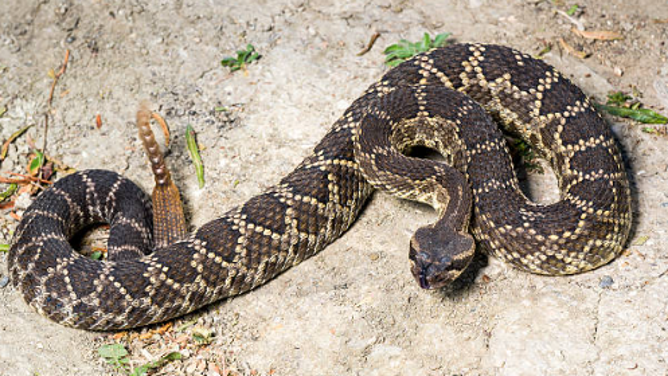
SLITHERY THREAT: Members of Colorado Parks and Wildlife are warning the public to be cautious around rattlesnakes while outdoors, as the reptiles are waking from brumation and becoming active for spring. #Snakes #Outdoors #Colorado #Animals #FOXWeather
COLORADO – As millions of Americans get more comfortable with the spring warmth, the emergence of sleeping reptiles is occurring in places such as Colorado, wildlife experts warn the public.
The spring months of March and April are typically when rattlesnakes emerge from brumation, as members of the Colorado Parks and Wildlife are warning people to be cautious while spending time outdoors.
According to the Colorado Parks and Wildlife, rattlesnakes are usually very forgiving during an encounter and will stay away before they resort to a venomous bite in self-defense.
“During the coldest months of the year, they shelter in winter dens and usually resume activity in late March or early April,” read a statement from Colorado Parks and Wildlife. “Once active, adult snakes may migrate several kilometers from their dens in search of food.”
MISSION VIEJO, CA – MARCH 24: A rattlesnake near Beebe Park in Mission Viejo on Tuesday, March 24, 2026.
(Leonard Ortiz/MediaNews Group/Orange County Register / Getty Images)
It’s often during these times of migration that these snakes use pavement and other hard surfaces, such as trails, for basking in the sun.
Unfortunately, this often leads to encounters with people, as rattlesnakes hunt in the late afternoon and evening once conditions are warm enough.
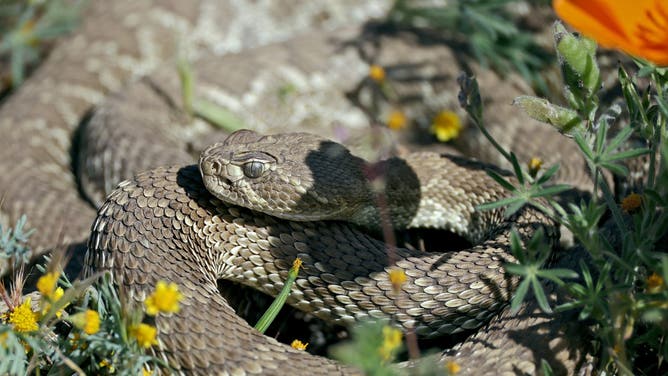
Lancaster, Ca., March 22, 2026: Two Mojave “Green” rattlesnakes tangle together as visitors nearby enjoy time amongst California poppy wildflower fields south of Highway 138 (W. Ave. D) in Lancaster, California on Saturday, March 22, 2026. The Mojave “Green”rattlesnake is becoming much more active in this habitat as the days warm up.
(Raul Roa / Los Angeles Times / Getty Images)
The typical diet of a rattlesnake consists of small mammals, lizards, birds, spadefoot toads, and sometimes carrion, according to Colorado Parks and Wildlife.
‘SO MANY SNAKES:’ RECENT RAIN CREATES OASIS FOR REPTILES ALONG POPULAR TEXAS HIKING TRAIL
What to do during a rattlesnake encounter
Wildlife experts suggest these tips if you encounter this dangerous reptile:
- Stay calm & give it plenty of space (plus let others know you have encountered a snake).
- Keep an eye out along the trail, including around large rocks & spots where a snake might be sunning itself.
- Watch where you step or reach with your hands.
- Stand still if you think you hear a snake, until you’ve located the snake; then move away.
THESE 5 STATES HAVE SOME OF THE MOST SNAKE-FILLED WATERS IN THE NATION
How to Avoid Rattlesnakes
Members of the National Park Service provide tips on staying safe while outdoors:
- Walk or hike in areas where the ground is clear, so you can see where you step or reach with your hands.
- If you think you hear a rattlesnake, stand still until you’ve located the snake, then move away.
- Don’t rely on hearing a rattle – baby rattlesnakes don’t have a rattle but are just as venomous and adult snakes’ rattles can break off.
- Wear protective clothing such as long heavy pants and high boots.
- Wear gloves when using your hands to move rocks or brush.
- Watch where you step, and never put your hands in areas where you cannot see.
- Ledges, cracks or holes are common areas where rattlesnakes can be found resting.
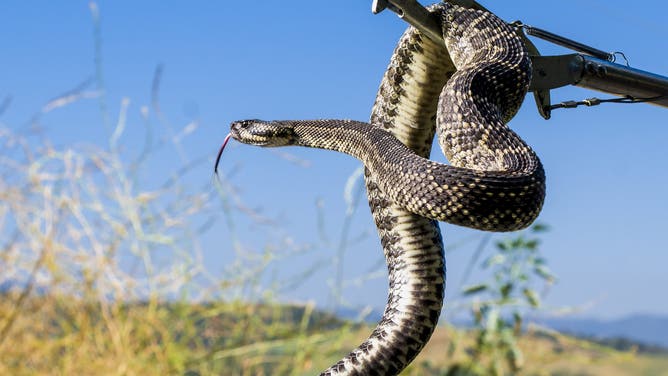
MISSION VIEJO, CA – MARCH 24: A captured rattlesnake held with snake tongs by Jason Magee of OC Snake Removal in Mission Viejo on Tuesday, March 24, 2026.
(Leonard Ortiz/MediaNews Group/Orange County Register / Getty Images)
Stepping back just a couple of feet could be enough to convince a rattlesnake that you are no longer a threat.
If you are walking with a dog or children in a wilderness environment prone to rattlesnakes, be sure to keep them very close by and don’t let them climb over rocks or through brush-filled areas.
It is worth keeping a dog on a shorter leash and avoiding letting them sniff in holes and rock piles, where snakes may live.
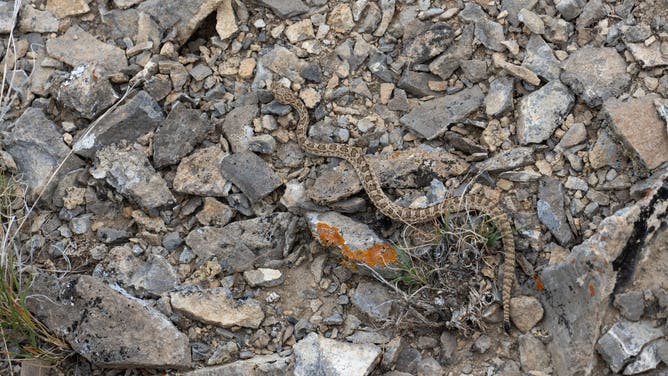
Young Prairie Rattlesnake (Crotalus viridis), SW Montana.
(Marli Miller/UCG/Universal Images Group / Getty Images)
These creatures are not built for speed and will lie still waiting for hours or even days for a prey animal to pass by.
SEE IT: FLORIDA SHERIFF’S DEPUTY HELPS CORRAL 7-FOOT GATOR TRYING TO CROSS BUSY HIGHWAY
Due to their coloration and hunting traits, these creatures can blend into their surroundings very well, making them easy to stumble upon, and this could be a deadly mistake.