The warmer and earlier spring will extend the growing season for farmers, but for the rest of us, it also means an extended allergy season. FOX Weather Meteorologist Kiyana Lewis talks about how allergy season is off to a blockbuster start and is expected to last longer.
As millions of Americans settle into the spring season, it brings a new opportunity to enjoy the outdoors and pleasant warmth, but not without allergies getting in the way.
This spring is expected to bring an especially long allergy season.
ALLERGY SUFFERERS, YOU MIGHT BE CLEANING YOUR HOUSE ALL WRONG
According to experts at Climatecentral.org, warming trends lead to more freeze-free days each year, giving plants more time to grow and release loads of pollen. Experts have observed that most U.S. regions have experienced longer, frost-free growing seasons.
In order for a day to be considered freezing, it must be a minimum of 32 degrees, according to the National Weather Service. Temperatures of at least 32 degrees are ideal for plant growth and ripening.
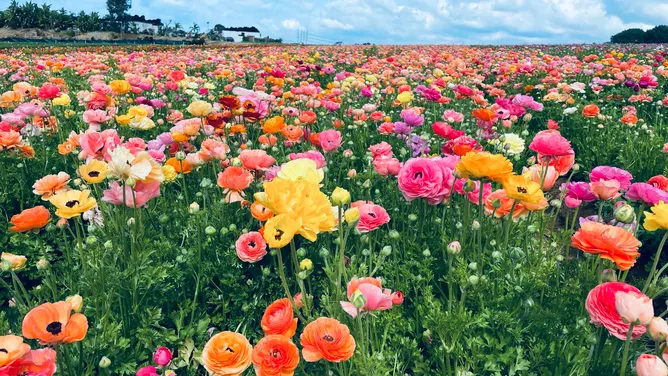
Flower field in Carlsbad, California.
(iStock / Getty Images / Getty Images)
A warmer, earlier spring means a longer growing season for plants to release large amounts of pollen, which is bad news for people with allergies.
According to the Centers for Disease Control and Prevention (CDC), pollen is the grains or tiny seeds of flowering plants, trees and grasses. These seeds can be carried by the wind and cause symptoms such as red, itchy/watery eyes, sneezing, congestion and a runny nose.
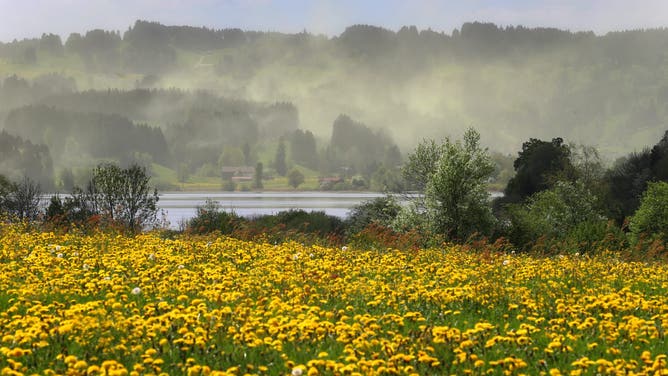
29 April 2018, Germany, Missen: Pollen from the trees of a coniferous forest floating in the wind around the Niedersonthofener Lake. Dandelions blooming in the foreground.
(Karl-Josef Hildenbrand/picture alliance / Getty Images)
Using temperature data collected by Climate Central from 198 U.S. cities, they found that the length of the freeze-free season has increased since 1970.
ALLERGY SEASON IS WORSE THAN EVER. HERE ARE THE 10 WORST ALLERGY CAPITALS IN THE US FOR 2026
Data shows that the freeze-free growing season has lengthened by at least 14 days nationwide, with the Northwest experiencing 31 extra days, the most of any region.
“Believe it or not, across the board, everyone is dealing with these allergies,” FOX Weather Meteorologist Kiyana Lewis said.
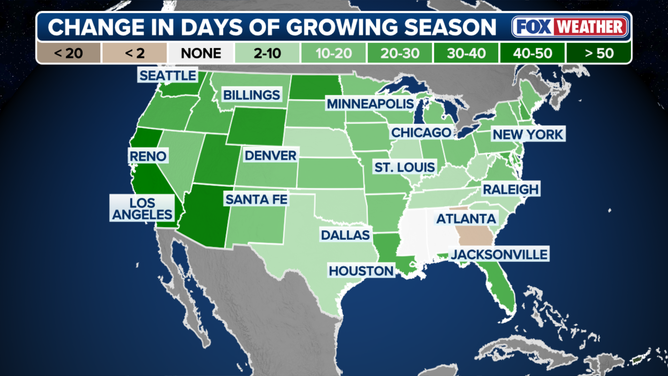
This image shows the change in the number of days in the growing season across the U.S.
(FOX Weather)
The constant changes in temperature, with quick warm-ups from brief cold weather, cause people’s allergies to flare up and a longer season overall as plants are given more time to thrive.
LARGE INCREASE IN TICK BITES REPORTED AT HOSPITALS ACROSS THE US AS SPRING WARMTH KICKS IN
How to prevent allergy symptoms
Experts at the National Institute of Environmental Health Studies suggest these tips to endure allergy season:
- Avoid the outdoors between 5 and 10 a.m. Save outside activities for late afternoon or after a heavy rain, when pollen levels are lower.
- Keep windows in your home and car closed to lower exposure to pollen. To keep cool, use air conditioners and avoid using window and attic fans.
- Be aware that pollen can be transported indoors on people and pets, so wash your hands before touching your eyes.
Simple tips such as checking the pollen forecast before going outdoors and changing your clothes afterward are great ways to start being proactive this spring.