Thursday, April 23, 2026
No Result
View All Result
LJ News Opinions
  • Home
  • U.S.
  • Politics
  • World News
  • Business
  • Entertainment
  • Sports
  • Technology
  • Health
  • Opinions
  • Home
  • U.S.
  • Politics
  • World News
  • Business
  • Entertainment
  • Sports
  • Technology
  • Health
  • Opinions
No Result
View All Result
LJ News Opinions
No Result
View All Result
Home Opinions

Peak of the Lyrid meteor showe expected to light up the night sky

by LJ News Opinions
April 20, 2026
in Opinions
0
Share on FacebookShare on Twitter


NASA Ambassador Tony Rice explains why the Lyrid meteor shower might be difficult to see this year because of the nearly full Moon.

Space lovers and skywatchers have much to look forward to this month, with a plethora of activity already occurring in April.

Beginning on April 21 and 22, the annual Lyrid meteor shower will occur and reach its peak on the first night of the space storm.

Observers will be able to view around 18 meteors per hour dazzling the night sky.

THE BEST CELESTIAL EVENTS IN 2026 YOU WON’T WANT TO MISS

According to NASA, this meteor shower comes from the debris left behind by Comet Thatcher, which was first discovered on April 5, 1861, by A.E. Thatcher.

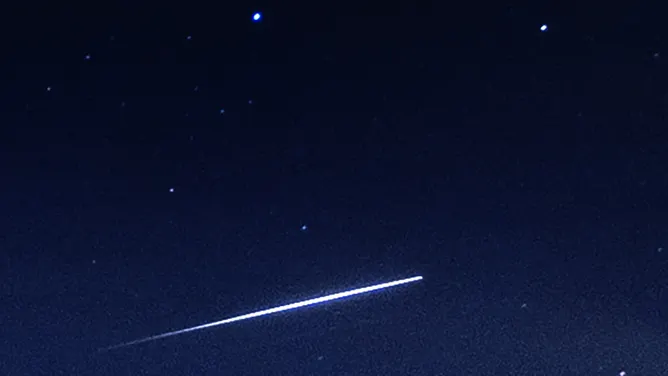
A Lyrid meteor is seen in the sky above Lee Park in Liverpool, Merseyside, on April 22, 2025.

(Peter Byrne/PA Images via Getty Images / Getty Images)

It takes about 415.5 years for the comet to orbit the sun once, and it last came closest to the sun in 1861.

THIS RARE INTERSTELLAR COMET IS SPEWING MASSIVE AMOUNTS OF WATER INTO SPACE

When comets orbit around the sun, the debris they emit gradually spreads into a dusty trail, according to NASA.

The dust or debris left behind by Comet Thatcher will eventually hit the atmosphere and burn up, creating the “shooting stars” type of dazzling sky show that people love.
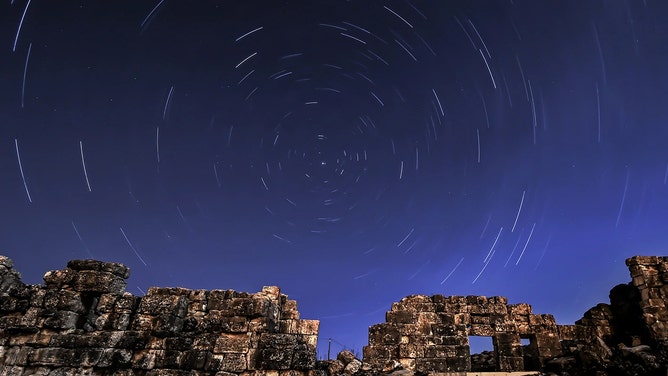
The April Lyrids, a meteor shower lasting from April 16 to April 26 each year, is seen over the ancient city of Aizanoi in Kutahya, Turkey on April 23, 2014.

The April Lyrids, a meteor shower lasting from April 16 to April 26 each year, is seen over the ancient city of Aizanoi in Kutahya, Turkey on April 23, 2014. 

(Fatma Selma Kocabas Aydin / Anadolu Agency / Getty Images)

The meteor shower will take place near a star called Vega, the fifth-brightest star in the night sky.

APRIL SKYWATCHING GUIDE: SEE THE FIRST FULL MOON OF SPRING, SPOT MERCURY, MARVEL AT A METEOR SHOWER AND MORE

The fourth meteor in one week was spotted streaking across the night sky from Warren, Michigan, on Monday night.

Most of the U.S. will experience little cloud coverage by the end of the night, near the peak of the meteor shower, except for the West Coast and parts of the South.

The peak of the meteor shower will occur after midnight and before dawn on April 22.


Source link

Tags: Earth & SpaceNASASpace WeatherStay22sunUS
LJ News Opinions

LJ News Opinions

Next Post

Carnival Cruise passenger, 67, found dead while snorkeling off the coast of Australia during excursion

Recommended

Israeli strikes in Lebanon 'grave violation' of ceasefire, Iran minister tells BBC

2 weeks ago

Chiefs trade for Patrick Mahomes’ backup after uncharacteristic six-win season: reports

1 month ago

Popular News

    Connect with us

    LJ News Opinions

    Welcome to LJ News Opinions, where breaking news stories have captivated us for over 20 years.
    Join us in this journey of sharing points of view about the news – read, react, engage, and unleash your opinion!

    Category

    • Business
    • Entertainment
    • Health
    • Opinions
    • Politics
    • Sports
    • Technology
    • U.S.
    • World News

    Site links

    • Home
    • About us
    • Contact

    Legal Pages

    • Privacy Policy
    • Cookie Privacy Policy
    • Terms of Use
    • Disclaimer
    • California Consumer Privacy Act (CCPA)
    • DMCA
    • About us
    • Advertise
    • Contact

    © 2024, All rights reserved.

    No Result
    View All Result
    • Home
    • U.S.
    • Politics
    • World News
    • Business
    • Entertainment
    • Sports
    • Technology
    • Health
    • Opinions

    © 2024, All rights reserved.