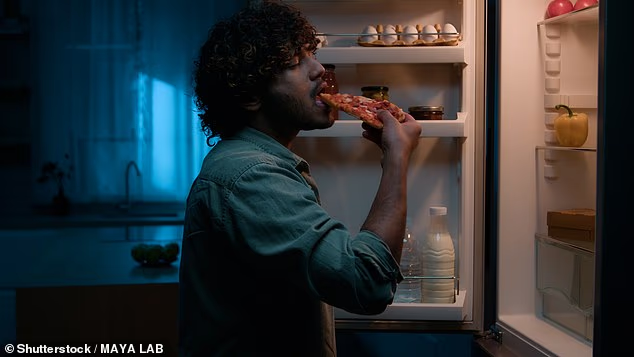
If you’re planning a takeaway this evening, you might already be looking forward to tomorrow’s leftovers.
But as delicious as cold pizza is, there’s also the risk of food poisoning if you’re not careful.
That’s according to Dr Primrose Freestone, a microbiologist at the University of Leicester, who has revealed the surprising leftovers that are ‘high risk’ to keep in your fridge.
Alongside cold pizza, the scientist has urged caution over risotto, burritos, and fried rice.
And if you’ve got half a tin of baked beans knocking about, this could also leave you at risk of food poisoning, the expert warns.
‘Food poisoning is caused by eating food that has become contaminated with pathogenic bacteria, fungi or viruses,’ she explained in an article for The Conversation.
‘Although most people know that food poisoning can be caused by poorly cooked foods or risky food preparation habits, improperly stored leftovers are also a key cause.
‘It’s therefore extremely important you take care when storing leftovers to avoid harming your health.’
If you’ve got leftover pizza, it needs to be refirgerated within two hours of being delivered, according to the expert
1. Leftover pizza
While cooked pizza might seem harmless, it can give you food poisoning in a number of ways – including via the dried herbs and spices.
‘Surprisingly, the dried herbs and spices that people often sprinkle on their pizzas (such as basil, pepper and oregano) can be susceptible to microbial contamination,’ Dr Freestone explained.
‘This contamination can occur during the harvesting and production phases, or due to improper storage by consumers.
‘Some of the foodborne pathogens that can potentially survive on dried herbs include bacteria that can cause food poisoning, including Salmonella, Bacillus cereus and Clostridium perfringens.
‘Even if these dried herbs have been sterilised by the heat of a freshly baked pizza, if left at room temperature for too long after cooking these or any of the other pizza toppings, can provide the perfect snack for potentially harmful germs.’
If you’ve got leftover pizza, it needs to be refirgerated within two hours of being delivered, according to the expert.
‘If the pizza is left at room temperature for more than a few hours, germs will grow quickly. This can make the pizza unsafe to eat the next day – no matter how tasty it might still look or smell,’ Dr Freestone warned.

Cooked chicken is ‘highly perishable’ once it has cooled down, thanks to its high water and nutrient content and low acidity, which favours the growth of bacteria
To avoid contamination from airborne germs, make sure you cover your pizza before it goes in the fridge – and eat it within two days.
2. Leftover chicken
We all know about the dangers of eating raw chicken – but what about when it’s cooked?
Cooked chicken is ‘highly perishable’ once it has cooled down, thanks to its high water and nutrient content and low acidity, which favours the growth of bacteria.
‘To stay safe, once you’ve removed your cooked chicken from the oven or rotisserie packaging, any that you aren’t planning to immediately eat should be covered and refrigerated as soon as possible after cooling,’ Dr Freestone said.
‘Ideally, it should spend no more than two hours at room temperature.’
While leftover pizza needs to be eaten with two days, you’ve got slightly longer with leftover chicken.
‘Cooked chicken can be stored for up to three days in the fridge,’ Dr Freestone said.

Highly acidic foods such as canned tomatoes can be stored for five to seven days, as the acid inhibts the growth of bacteria
However, if you notice blood in any parts of it, absolutely don’t eat it – whether it’s cold or reheated.
‘This indicates it has been under–cooked and may be contaminated with germs,’ the expert added.
3. Leftover rice dishes
Whether it’s fried rice, risottos or burritos, leftover rice dishes have a major risk of food poisoning.
‘Uncooked rice can contain spores of Bacillus cereus, a common food poisoning bacteria that prefers starchy foods, Dr Freestone explained.
‘Although Bacillus cells are killed by the heat of cooking, their spores are heat resistant and can survive.
‘If a cooked rice dish is then left at room temperature for more than two hours, the Bacillus spores have time to develop into bacteria and multiply.
‘These spores are also able to release toxins into the cooked rice, which can potentially cause severe vomiting and diarrhoea lasting up to 24 hours.’
If you do want to save any rice–based leftovers, the expert advises covering them and refrigerating them.
Unfortunately, you don’t have long to eat them safely.
Dr Freestone added: ‘Cooked rice can be eaten cold, but only if has been cooled quickly after cooking and stored as quickly as possible in the fridge.
‘It’s also best to consume cold cooked rice within 24 hours as B cereus spores can germinate during longer storage periods.’
4. Leftover canned foods
Finally, make sure you’re careful with leftover canned foods.
While these are fine to keep in the original can, they’ll need to be covered and refrigerated to avoid contamination with airborne germs.
How long they’re safe to eat will depend on the food.
Highly acidic foods such as canned tomatoes can be stored for five to seven days, as the acid inhibts the growth of bacteria.
However, low–acidity foods, such as meats, fish, fruit, vegetables and pasta, can only be stored for up to three days.
Dr Freestone concluded: ‘Leftovers can be safe to eat cold. Just make sure you refrigerate them as quickly as possible after cooking and consume within a day or two.’