United States President Donald Trump has said that Washington is engaged in “productive” talks with Iran. Publicly, Iranian officials have rejected Trump’s claims, calling them fake news designed to ease oil prices.
Behind the scenes, Egypt, Turkiye and Pakistan have established an indirect channel of communication between American and Iranian officials in the past few days, two senior diplomatic sources in the region told Al Jazeera. Still, regardless of the small window for diplomacy that may have emerged, experts remain sceptical over the prospects for a ceasefire as the positions of the warring parties remain far apart.
The Iranian leadership’s stance on what concessions to extract from the US appears to have hardened since the start of the war on February 28, when the US and Israel attacked Iran, killing its then Supreme Leader Ayatollah Ali Khamenei.
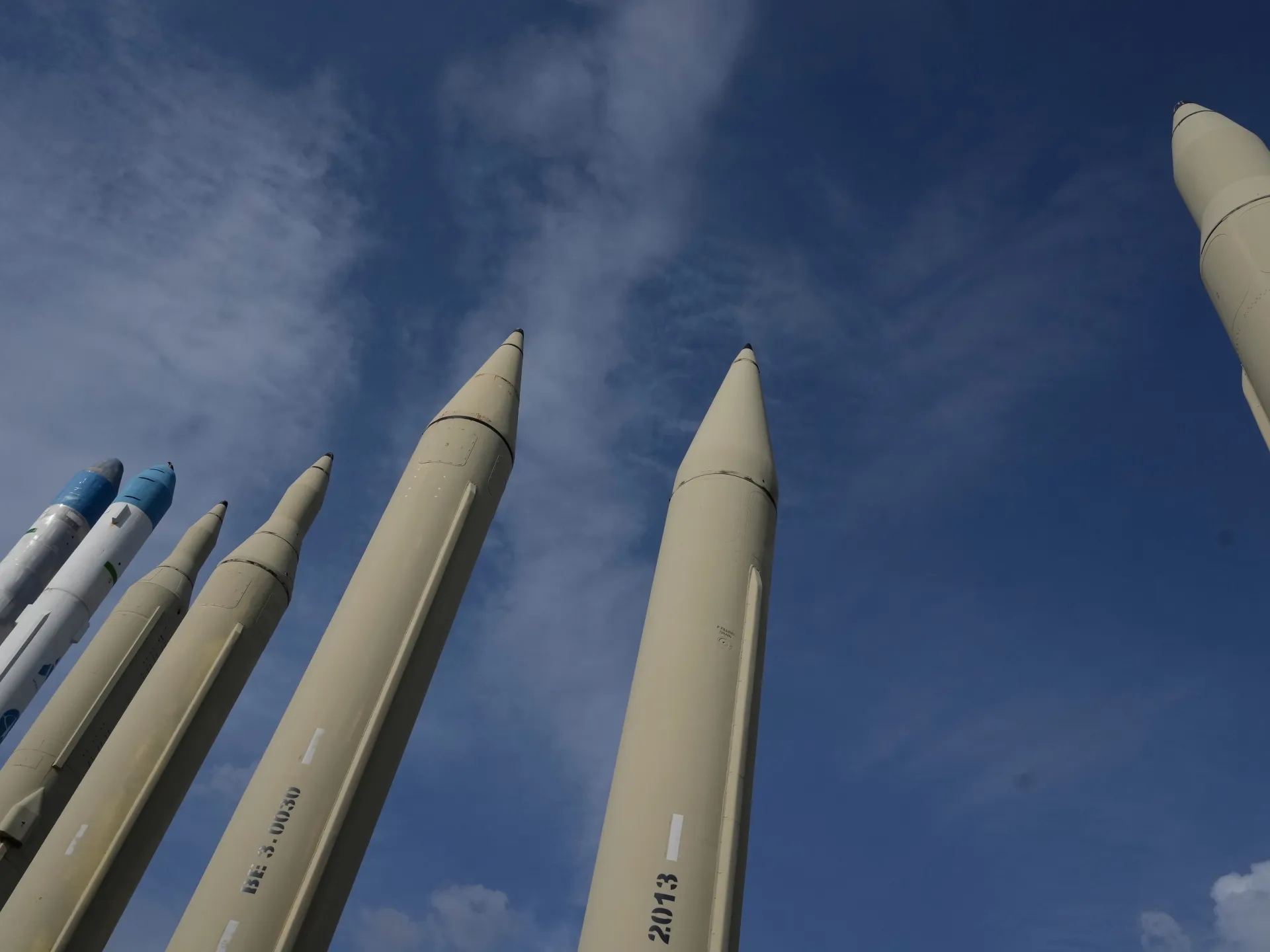
The US and Israel insist that their nonstop attacks since then have significantly “degraded” Iran’s military capabilities – the Pentagon says 90 percent of Iran’s missile capacity has been wiped out. But Iran has shown it can still fire when it wants, and with precision.
In the Strait of Hormuz – a waterway through which a fifth of global oil exports pass – hundreds of vessels remain paralysed. And across the region, Iran has adopted an “eye for an eye” policy to re-establish deterrence and make sure that any threat is followed by action.
Just last week, Iranian forces hit Qatar’s main gas site – wiping out 17 percent of its export capacity – immediately after an Israeli attack on Iran’s South Pars field. After an attack on Iran’s Natanz nuclear power plant, two Iranian ballistic missiles pierced through Israel’s defence systems, hitting the southern cities of Arad and Dimona, wounding more than 180 people.
Iran’s aim now, say experts, is not merely a ceasefire but a post-war order that restores deterrence and secures long-term economic and security guarantees.
Iran’s new red lines
Iran’s political and military officials have said in recent days that they want payment repatriations, firm guarantees that Iran won’t be attacked again and a new regulatory framework for passage in the Strait of Hormuz.
Negar Mortazavi, a senior fellow at the Washington, DC-based Center for International Policy, says Tehran would seek to end the war on its own terms while extracting sanctions relief, reparations for damage and economic leverage.
“This chokehold on the Strait of Hormuz is now giving them ideas – ‘maybe we can charge passage fees like some other places in the world’ – there are those discussions in Iran,” Mortazavi said.
Iran is unlikely to forfeit that leverage without major concessions, analysts say. That is especially so, given how Iran feels the war has helped it win some economic relief that it didn’t get through diplomacy. On Friday, the Trump administration temporarily waived sanctions on the purchase of 140 million barrels of Iranian oil at sea in an attempt to ease oil prices.
What does the US want?
One of the various reasons the US president listed to justify launching a war on Iran was to prevent Tehran from getting a nuclear bomb – despite having claimed to have obliterated Tehran’s nuclear programme during the 12-day war last year.
On Monday, Trump said he still wants Iran to give up the more than 400kg of uranium enriched to near-weapons grade. Iranian officials say the stock is buried under the rubble of one of the nuclear sites struck by the US.
In the past, the US also wanted Tehran to dismantle its ballistic missile programme and stop supporting armed groups across the region. According to one of two sources who spoke to Al Jazeera, Washington has now proposed that Iran keep 1,000 medium-range missiles in its arsenal, a change compared with previous demands.
But any diplomatic breakthrough would have to emerge amid a complete lack of trust from the Iranian side. Trump bombed Iran twice while his envoys were negotiating with Iranian representatives – in June 2025 and February 2026 – and he has repeatedly said that his goal is regime change.
Questions over Iran’s negotiators
It is also unclear who in Iran would be in charge of any negotiations – direct or indirect – with Washington, after US and Israeli attacks killed prominent members of the Iranian leadership, including Ali Larijani, who was the interlocutor to many mediators from other countries.
On Tuesday, Iran appointed Mohammad Bagher Zolghadr as secretary of Iran’s Supreme National Security Council. Zolghadr is a former Islamic Revolutionary Guard Corps (IRGC) commander and the secretary of the advisory Expediency Council since 2023. His appointment suggests that any Iranian negotiations are going to be more tightly aligned with the IRGC ‘s threat perception and priorities, said Babak Vahdad, a political analyst focusing on Iran.
“Put bluntly: this looks less like a system preparing for compromise, and more like one preparing to manage prolonged confrontation,” Vahdad said.
Some experts have argued that Trump’s postponement of attacks on Iran earlier this week was aimed at calming down oil prices, which have jumped by more than 50 percent since the start of the war, while waiting for thousands of US Marines to reach the Middle East. Last week, 2,500 Marines, along with an amphibious assault ship, were deployed to the region. In mid -March, the Trump administration had also ordered the deployment of the Japan-based USS Tripoli, another amphibious assault ship believed to have on board thousands more Marines.
Trump has remained vague on whether he plans to send troops on the ground, but he has mulled the idea of seizing Iran’s Kharg island in the north of the Gulf, from which 90 percent of Iranian oil is exported.
“Diplomatic talk is one thing; what I see on the ground is something else,” said Abdulkhaleq Abdulla, a professor of political science from the United Arab Emirates.
Gulf states, as well as other international partners, would never accept a scenario where Iran retains control of the Strait of Hormuz – something that would give Iranians the upper hand on Gulf energy exports for the foreseeable future, said Abdulla.
And since it’s unlikely that Tehran will drop its leverage over the strait, there are few diplomatic solutions left: “It’s the duty of the international community to take it back, and there is one way to do it, the military way,” said Abdulla.