Brits are getting just six hours and 27 minutes of shut–eye per night on average, a new study reveals.
A poll has found the average person is getting by on far less than the recommended amount of sleep.
While people say they ideally want seven hours and 44 minutes of kip per night, the research shows they’re falling short by 77 minutes.
This equates to 468 hours – 20 full days – of sleep lost over the course of 12 months.
The data also shows that one in eight haven’t had a lie–in in over a year, while 14 per cent of over–65s say they’ve never had one at all.
And it could explain the nation’s grogginess and burnout levels, researchers said.
The findings, revealed by Premier Inn, come ahead of the clocks going forward later this month.
‘Our research shows Brits love nothing more than a slow, unhurried morning – and yet so rarely get one,’ a spokeswoman said.
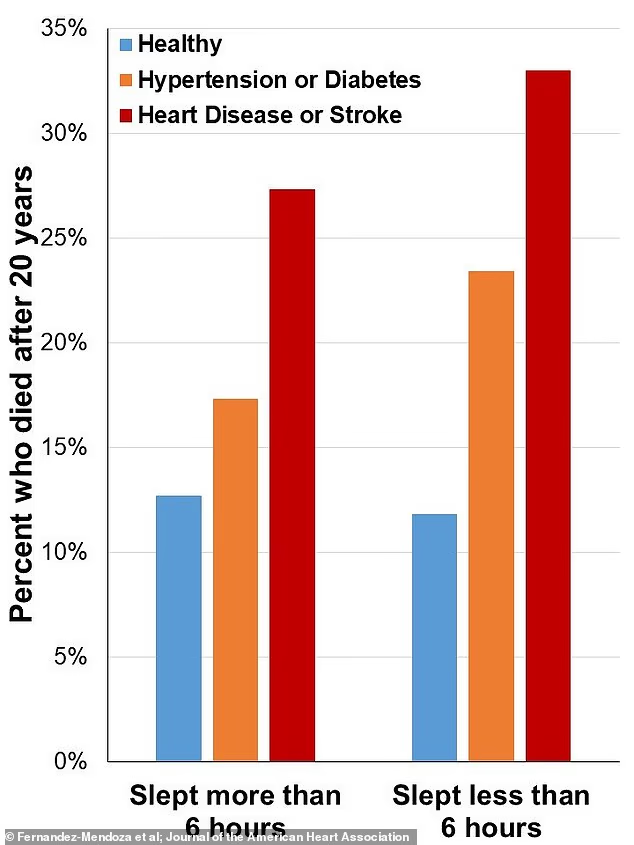
Previous studies have found that getting less than six hours of sleep per night can raise the risk of heart disease, stroke, hypertension and diabetes
The poll of 2,000 people also revealed that when it comes to lie–ins, the nation’s typical snooze ends at 8:58am.
Liverpool takes the crown as the UK’s lie–in capital, with a third of adults managing to sleep in on a weekly basis.
At the opposite end of the spectrum, Brighton and Hove appear to be the nation’s most sleep starved, with a quarter of adults admitting they haven’t had a lie in for over a year.
According to NHS guidelines, most adults need seven to nine hours of quality sleep to function at their best.
It says you are getting enough sleep if you feel rested and alert during the day, and do not rely on caffeinated drinks to stay awake.
During the clock change, which will take place at 1am on Sunday 29 March, the clocks will move ‘forward’ by one hour.
The study found that half of 25–34–year–olds say the clock shift throws their routines entirely off course.
Rather than a small seasonal adjustment, they say the lost hours feels more like a minor catastrophe.

Experts previously revealed what happens to our bodies when we only get six hours of sleep per night. This ‘Brit from the future’ suffers from chronic back pain, thinning hair, sagging skin, swollen legs, baggy eyes and muscle atrophy (thinning of muscle mass) in the arms and legs
While the clock change will mean an extra hour of light in the evening – which can encourage people to get outside and soak up some vitamin D – there are several downsides.
Experts have warned the disruption and sleep loss may raise the risk of heart attacks and strokes.
The tradition has also been linked to a surge in car accidents, while tiredness can cause people to feel more stressed, anxious or irritable.
The British Sleep Society emphasizes that sleep is central to health and wellbeing and the enforced changes can interfere with our ability to regulate our shuteye.
Dr Eva Winnebeck, Lecturer in Chronobiology at the University of Surrey, has previously said: ‘What we often don’t realise is that Daylight Saving Time (DST) changes our schedules, moving them forward by one hour while daylight remains the same.
‘DST forces us all to get up and go to work or school one hour earlier. In seasons with fewer daylight hours, it means most of us have to get up and commute in the dark.’
The Society argues that natural daylight in the morning is crucial for maintaining an alignment of our body clocks with day and night, which is essential for optimal sleep and overall health.
However, not everyone agrees.
Finn Burridge, Science Communicator at the Royal Observatory Greenwich, said: ‘Moving the time ahead reduces the burden on the energy grid as the need for artificial lighting in spring and summer is reduced.
‘It is also better for tourism and provides a boost to ‘PM’ activities as the extra daylight in the evenings allows for people to do more after work.’
To help people cope with the clock change, Premier Inn is extending checkout from 12pm to 1pm for guests staying that night.
‘The clocks will take an hour from us this spring, but this year we’re giving it back,’ the spokeswoman said.