Some infants are being plonked in front of a screen for more than three hours per day, a damning study has warned.
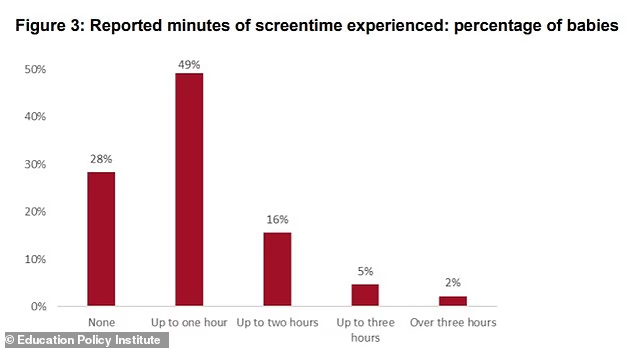
Researchers have found that nearly three-quarters of nine-month-old babies watch programmes on a TV, smartphone or tablet on a daily basis.
The average screen time reported in the study was 41 minutes, rising to 47 minutes for those in single-parent households.
But some are exceeding three hours of screen time a day, the experts warned.
These children are significantly less likely to regularly experience things like going on trips outside, being read to or singing.
The study, carried out by the Education Policy Institute (EPI), used data from more than 8,000 families.
While 80 per cent of babies with no screen time go on trips outside every day, this falls to 60 per cent for babies with over three hours of daily screen time.
The likelihood of looking at books together also fell when screen time exceeds two hours.
The study found that 2 per cent of nine-month-old babies had more than three hours of screen time every day

Babies are more likely to have screentime if they are an only child and if they live in a single-parent household, the research showed
‘This research is one piece of an expanding jigsaw of up-to-date evidence, and adds new information for a very recent, nationally representative cohort of infants,’ Dr Tammy Campbell, director for early years, inequalities and wellbeing at EPI, said.
She said there needs to be further research into why use is so high among the group of babies experiencing over three hours a day.
However, she added: ‘Instead of simply focusing on demonising any use, and cutting minutes, policy-making and guidance should help families use digital tools to enhance development, bonding, and enjoyment of babyhood.’
The Government is expected to publish guidance on screen time for under-fives in April.
Education Secretary Bridget Phillipson has said around 98 per cent of children were watching screens on a daily basis by the age of just two – with parents, teachers and nursery staff saying children were finding it harder to hold conversations or concentrate on learning.
Earlier this year, research from the government found that higher screen use for under-twos is linked to poorer language development.
A study found that children with the highest screen time – around five hours a day – could say significantly fewer words than those at the other end of the scale who watched for around 44 minutes.
‘Like so many parents, I’ve had evenings where you give in when your little one wants “just one more” episode of their favourite show’ Ms Phillipson said. ‘But we’re beginning to see the risks when ‘just one more’ starts to add up.’