Geoff Bennett:
The decision by the International Energy Agency, or IEA, to tap into oil reserves is historic in its size and scope; 400 million barrels dwarfs the number of barrels that were released after Russia invaded Ukraine.
But there are many questions about whether this more ambitious effort will stop a surge in oil and gas prices if the war endures.
To explore some of these questions, we’re joined now by Clay Seigle, a senior fellow in the Energy, Security and Climate Change Program at the Center for Strategic and International Studies.
Thank you for being with us.
So the IEA has not laid out a clear timeline for when this release could begin, but in your view, how quickly could it hit the market and how much relief could it provide?
Clayton Seigle, Center for Strategic and International Studies: Good evening.
The oil that is expected from the IEA’s strategic drawdowns could hit the market relatively quickly. It’s a little bit of a function of whether industry, meaning the oil companies that are connected to those reserves, are ready to receive those barrels or if they have other commercial operations that are taking up bandwidth.
But, for the most part, as soon as the decision is made, within days, that oil can begin flowing to industry.
Geoff Bennett:
And President Trump has said that the U.S. will tap the Strategic Oil Reserve. Of course, as you well know, those strategic reserves are typically used for short-term disruptions, not prolonged crises. How much can this effectively stabilize prices?
Clayton Seigle:
It all depends on the duration of the disruption.
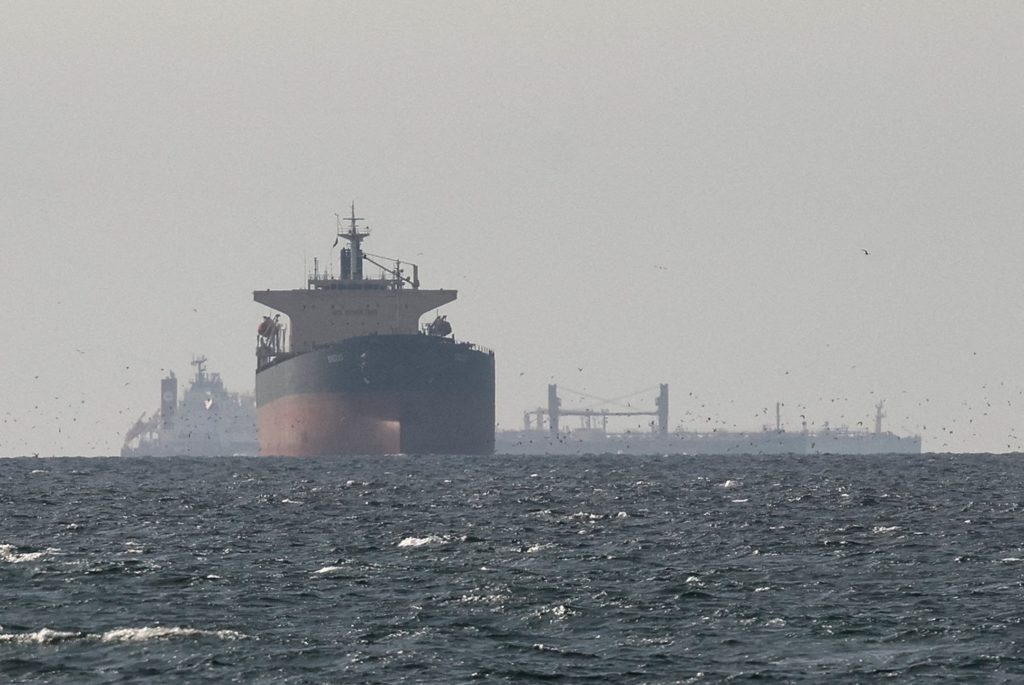
So the 20 million barrels per day of oil that come from the Mideast Gulf and supplied world markets is really must-have for global economic prosperity and the kind of prices, inflation, economic conditions that we’re used to.
So what a measure like drawing down reserves from the International Agency and the Strategic Petroleum Reserve can do is buy us more time. They can extend a lifeline for us to complete the operation in the Gulf and reach a postwar settlement with the Iranians that will bring security back to the region and allow those exports to flow again.
So it can buy us more time, but it’s not a substitute to getting those exports going again. It’s really just a temporary measure.
Geoff Bennett:
A lifeline, yet not a substitute. How much oil, how much of America’s reserves could be tapped here?
Clayton Seigle:
Well, the reserve is only about 60 percent full, following that big drawdown that you mentioned from 2022. And the thing about the Strategic Petroleum Reserve is it’s designed to draw down very quickly, which is what was done a few years ago.
But because of the plumbing and other considerations, it can only be refilled very gradually. And that’s why we’re only at about the 60 percent level. So I think that U.S. policymakers will probably be very judicious in deciding the volumes that they want to commit to this, but also, again, with an eye toward how soon the cause of the problem, which is the blockage in the Middle East Gulf and the Strait of Hormuz, can be resolved.
Think of the lifeline like this. If you lose your job, and maybe we all have, hopefully, you have an emergency fund or rainy day fund in the bank that you can use to pay the bills until you get a new paycheck. It’s not instead of getting a new job and a paycheck. It’s in addition to for the short term.
So you still need to get that job and the paycheck going again. And the world still needs to get that oil from the Mideast Gulf flowing to market.
Geoff Bennett:
Yes.
The IEA has only done this five times before, including twice after Russia’s invasion of Ukraine. How much difference did those releases actually make for supply and prices?
Clayton Seigle:
That was a really interesting case study from 2022 because the market was facing the prospect of five million barrels per day of Russian oil potentially being removed from the market.
And, famously, crude prices soared to $130 per barrel, United States pump prices, what we pay at the gasoline station, $5 a gallon. And that’s the nationwide average. It was a lot higher in certain states. But that was all just fearing five million barrels a day disappearing. At the end of the day, those Russian barrels didn’t disappear from the market.
They were just reshuffled to other buyers around the world. And so once that happened, the oil that had been released from the drawdowns stayed on the market and kept prices lower for longer.
Geoff Bennett:
Beyond tapping the reserve, what other tools do governments actually have to stabilize energy markets in a crisis like this?
Clayton Seigle:
You know, the supply-side interventions are pretty limited in their potential to help. And so the Trump administration is reportedly considering a lot of different tools in the toolkit, everything from the Treasury potentially intervening in the oil futures market to put a short position to backstopping insurance for the oil and gas cargoes that have been stranded, pending safer conditions to transit through the Gulf and the strait.
And then there’s also consideration of other measures, like waiving certain environmental specifications on the handling and processing of refined products like gasoline, jet fuel, diesel.
But I just have to stress that all of these measures can really only buy us a little bit more time and partially offset the missing barrels from the Mideast Gulf. There’s also some measures that folks in the region are taking. And so Saudi Arabia in particular has the ability to redirect some of its Gulf exports, not all of them, but some of their exports from the Strait of Hormuz and bypass that area and send it out through the west coast of Saudi Arabia into the Red Sea.
But those volumes are also limited. And then you potentially have to deal with other threats to shipping, notably from the Houthi militia that has plagued commercial shipping for years in that part of the world. We could see that again.
Geoff Bennett:
Clay Seigle, thanks so much for your insights.
Clayton Seigle:
Thank you.