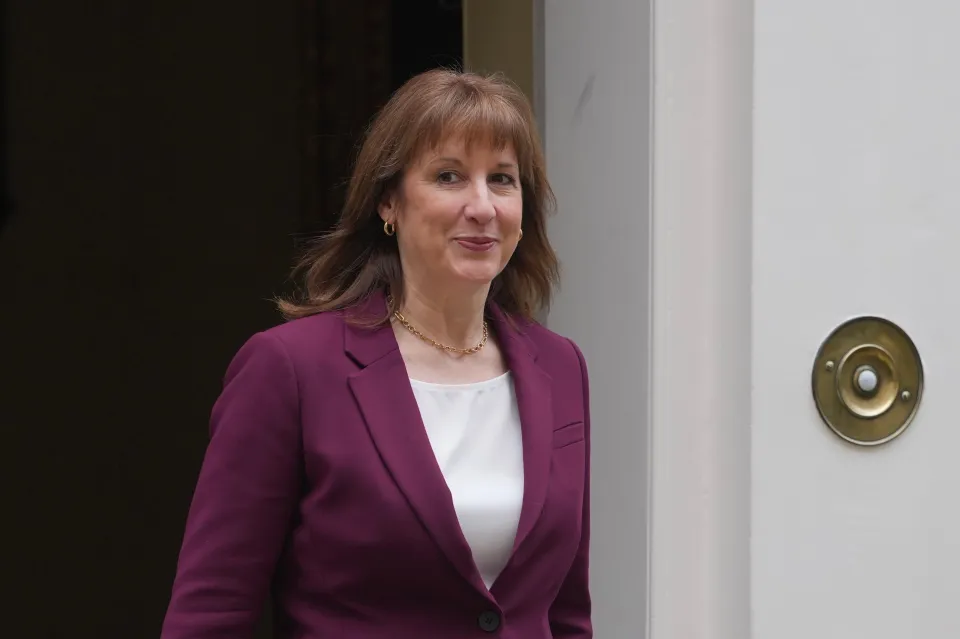
HOUSEHOLDS could receive financial help from Rachel Reeves to help pay rising energy bills amid the Middle East conflict.
The Chancellor has indicated that help could be on its way to help Brits deal with the increased cost of living triggered by the war in Iran.
Reeves said that “nothing is off the table” when it comes to helping families and businesses after the surge in oil prices.
She stated that the public finances were in a far better position than at the outbreak of the Ukraine war.
Ministers are under increasing pressure to intervene as analysts indicate typical bills could rise by some £344 in July.
She said: “Nothing is off the table at this stage and we are looking at targeted support as well as broader measures but it is just too early to say what is needed.”


Quizzed by MPs on the Treasury select committee, she added: “We will always make sure that we do everything we can to protect consumers, but also to ensure our national security as an economy.
“We are in a stronger position than when I became Chancellor to respond to shocks like these and we are in a stronger position in many ways than when Russia illegally invaded Ukraine.”
She added: “We are looking at a whole range of different scenarios. One reason why any future package – if it were necessary – would be more affordable is that we are now less reliant on international energy price movements than we were before Russia invaded Ukraine because we have invested more in homegrown, renewable energy.
“Of course we are working on different ways in which to protect people including more targeted support.”
She also said that uncertainty over the conflict was “not good” for the British economy leading to trade being disrupted.
She added: “It’s certainly not good for the British economy to have trade disrupted, and especially when so much oil and gas comes from that part of the world.
“But the best thing that we can do as a Government is to seek to de-escalate this conflict.”
She said “the quicker we can de-escalate, the better it will be for all of those different economic variables”.
But she added that the UK economy was in a stronger position to deal with the crisis but said it was far too early to judge its impact.
She said it “it is too soon to be able to tell what the impact of this is”.
But it comes after the Office of Budget of Responsibility said yesterday that inflation could now hit 3 per cent by the end of the year – higher than the expected 2 per cent.
Reeves said that she wants the US to return to the negotiating table with Iran to end the conflict.
Professor David Miles, of the OBR said there were risks of bailing out households and firms as borrowing costs could increase.
He told MPs yesterday: “The risk of doing that is that the view amongst the people who you have to persuade to buy the UK government bonds is: ‘well, they’re not serious about getting back to a position for fiscal sustainability’.”