Geoff Bennett:
Well, it was a day of major volatility in global energy markets and a moment of real concern for consumers. Oil prices briefly surged overnight, coming close to $120 a barrel, levels we haven’t seen since 2022.
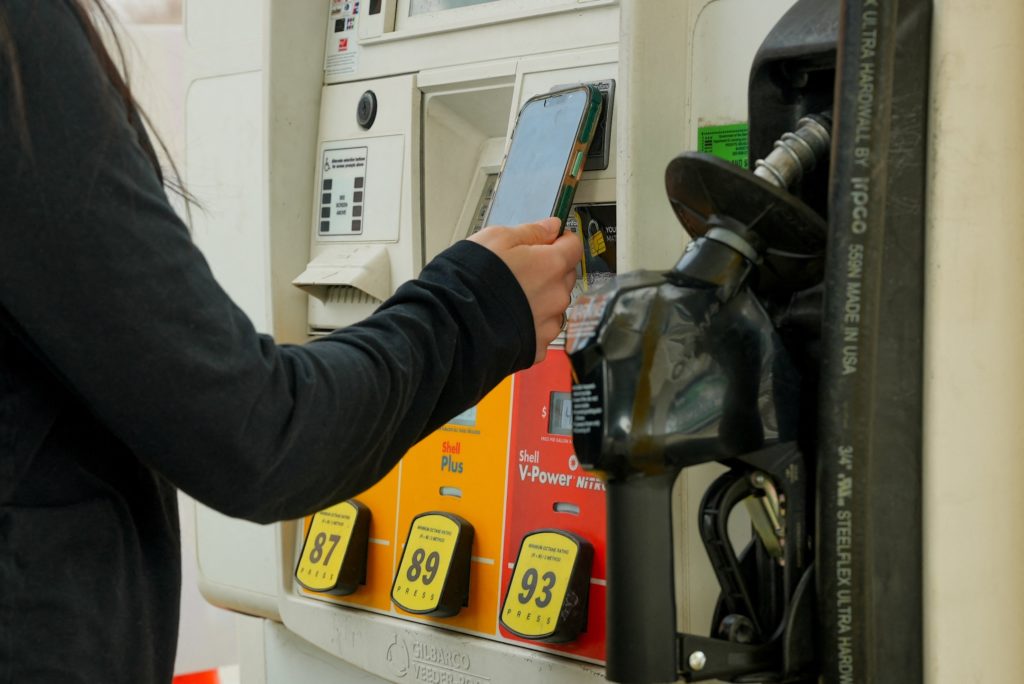
But, by the end of the day, prices had fallen sharply, finishing closer to $87 a barrel. Even so, that’s still much higher than before the war started, when oil was trading closer to $72 a barrel. Drivers are already feeling it. The national average price of gasoline per gallon has risen nearly 50 cents since the conflict started.
We’re joined now by Daniel Yergin, vice chairman of S&P Global and a widely watched expert on energy, geopolitics and economics. He’s the author of several books, including “The Prize: The Epic Quest for Oil, Money & Power.”
Thanks for joining us.
Daniel Yergin:
Thank you.
Geoff Bennett:
We have seen extraordinary volatility in oil markets, prices briefly spiking overnight before falling later today. What’s driving these swings right now?
Daniel Yergin:
What drove the prices up, of course, was the shutting of the Strait of Hormuz, through which pass 20 percent of world oil and 20 percent of LNG, liquefied natural gas, amplified by the fear of attacks on the very extensive infrastructure on the Arab side of the Gulf.
That was what drove prices to the level you’re talking about. Now they’ve come down because the president says that this war may soon be over. And prices now — you compared them to ’72, but if we really go back to where the prices were before the military buildup began, which is around $60 or so, they’re still a good deal higher, but nowhere near that $120 that you were talking about.
Geoff Bennett:
You wrote recently in The Financial Times that the world could be facing a potential nightmare scenario. I hear you say the markets are responding to the president’s latest comments, but what’s the level of concern that this conflict could last far longer than the president is projecting?
And if it does, how disruptive would that be for global energy supplies?
Daniel Yergin:
Well, what would get one to the nightmare scenario would be an extended period of the closure of the Strait of Hormuz combined with extensive damage to the infrastructure.
And that would be the type of thing that would send prices up high, higher than what you were talking about, would hit financial markets, and could well as in — we saw in the 1970s, it could push the world into recession. That’s the nightmare scenario.
But if as of the last couple of hours, there’s been a receding from that specter.
Geoff Bennett:
The energy secretary, Chris Wright, said yesterday he believes that oil tanker traffic through the Strait of Hormuz could resume normally soon. Take a listen.
Chris Wright, U.S. Energy Secretary:
A large tanker went through the Gulf about 24 hours ago, through the Straits of Hormuz. So we’re still focused right now on continuing to attrit their missile and drone capability to reduce their ability to disrupt traffic, to attack their 10 neighbors that they have been attacking. And that work is going tremendously well.
Geoff Bennett:
Do you share that optimism? Just today, as we sit here and speak, President Trump is addressing reporters and he suggested that there might be naval protection for tankers. Would that be appropriate or necessary?
Daniel Yergin:
Well, that certainly would recall what has happened in decades past when there were convoys that escorted it. And one big tanker did pass through the Strait of Hormuz yesterday. It’s about a day away from arriving in India. But there’s still — I mean, for people shipping, most people are not shipping oil because they’re still worried about attacks. They’re worried about drones.
They’re worried about explosive speedboats. And until their sense of security is there and insurance rates come down, we won’t see that passage. But that’s the question of really how the overall war goes.
Geoff Bennett:
If energy costs continue to climb, where might Americans feel it the most beyond the gas pump?
Daniel Yergin:
I think it’s really in — the gas pump is where you’d feel it more. But it shows up in a lot of other things. People don’t think about it, but energy is a big cost going into food, our agriculture. About 70 percent of the cost of food, it’s been estimated, comes from energy. And that would show up in transportation and processing.
But, of course, the one that people see every day is that — is those numbers on the signs outside the gasoline stations.
Geoff Bennett:
The president made the case that there’s still plenty of oil on reserve. What should Americans understand about the difference between the physical supply and the fear that the markets reacted to overnight?
Daniel Yergin:
Well, you’re quite right that there is a difference at markets that the price that you see, that the price that gets posted is what people are bidding because they’re worried. And people start bidding for oil, bidding up the price of oil and natural gas.
But you mentioned storage, that we have a system of strategic reserves that was actually established after the oil crisis of the 1970s to deal exactly with this type of situation. And of course, now there’s discussion among the U.S. and among other Western countries who belong to the International Energy Agency about actually releasing oil from those strategic stockpiles.
Geoff Bennett:
What are you watching beyond the president’s rhetoric to get a sense of where the market really is?
Daniel Yergin:
Well, that’s a very good question.
I mean, obviously, you look at price, and then also whether you start seeing where the shortfalls show up. And actually you asked the impact for Americans. The biggest impact has actually been in Asia so far, because 80 percent of the oil that comes out of the strait goes east to Asia, over 90 percent of the LNG. And so we really get the rebound of the impact of shortages in Asia.
But you know who the biggest beneficiary of the very high prices is Vladimir Putin, who makes a lot more money, which he can then use to fund his war in Ukraine.
Geoff Bennett:
Daniel Yergin of S&P Global, thank you for sharing your insights with us.
Daniel Yergin:
Thank you.