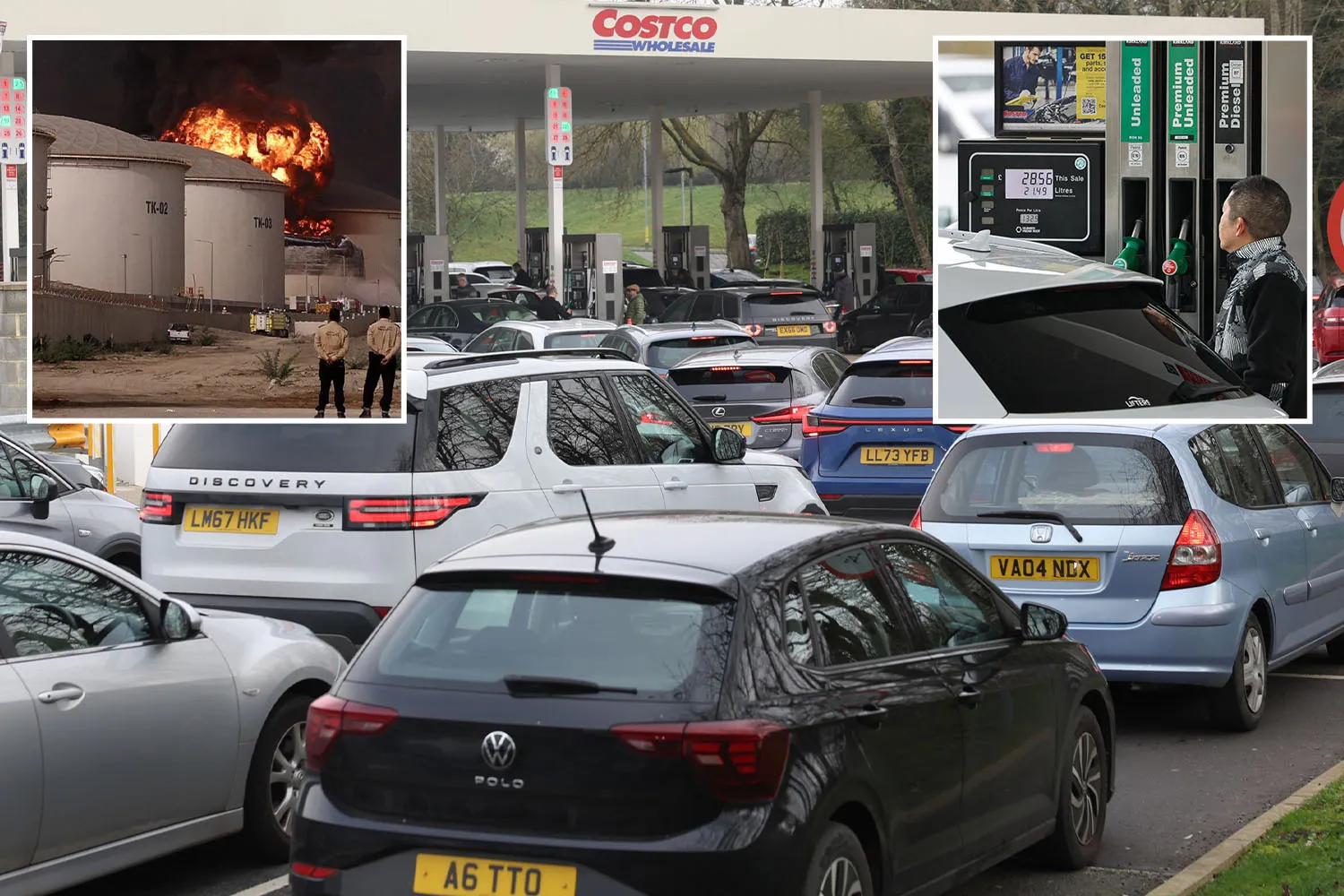
MOTORISTS have been warned to drive less to save fuel as oil prices soar.
Crude oil has already reached over $100 a barrel today — climbing to as high as $119.50 as the new week’s trading began.
There are fears petrol prices could top the record of 191.5p per litre if oil as Middle East war rages on.
It is a 29% rise and surpasses the $116 high when the Ukraine war caused a spike in 2022.
Keir Starmer also warned this morning the war “will impact on our economy” the longer the Middle East conflict drags on.
Chancellor Rachel Reeves will hold talks with her G7 counterparts later as Brits brace themselves for eye-watering energy prices.
And the AA warned that drivers should “consider cutting out some non-essential journeys and changing their driving style to conserve fuel”.
Meanwhile fellow experts at the RAC said Brits should avoid “harsh accelerating and braking” to “help eke out every last mile and save money”.
Simon Williams, the head of policy at the RAC, said: “Unleaded is almost certainly going to reach an average of 140p in the next week or so while diesel looks highly likely to climb to at least 160p a litre.”
The ongoing conflict in the Middle East has effectively closed the Strait of Hormuz, a key trading route that usually carries around a fifth of the world’s oil exports.
Meanwhile, Iran has vowed that it will attack any tankers that are headed for Europe, Israel and the US.
The impact of this is already being felt closer to home, with prices at the pumps rising and the stock market falling.
Petrol now costs £1.38 a litre, 6p more than when the conflict began on February 28, according to the RAC.
Meanwhile, the cost of diesel has risen from £1.42 a litre to £1.51 – an increase of 9p.
If the Strait of Hormuz continues to be restricted then prices at the pump could rise even further.
Meanwhile, Goldman Sachs, has warned that oil could hit around $150 (£112) per barrel by the end of this month.
It means the cost of filling a family car with petrol could rise above the £100 mark for the first time since the invasion of Ukraine.
And millions of Brits will also be worried that the conflict will push up the cost of their energy bills.
Economist Paul Johnson told Times Radio that “we can all look forward to another couple of slightly miserable years” and said rising energy prices will “make us all worse off”:
“I’m afraid there just is no doubt that if energy prices are up, the UK and other countries dependent on energy will just be worse off, at least for the period that they’re higher,” he said.
“Now, let’s hope that they come back down again. If they come down quickly, then not much damage done.
“But if they stay up for a significant period of time, then we can all look forward to another couple of slightly miserable years.”
The energy price cap, which controls the maximum amount energy suppliers can charge you for each unit of energy you use, is currently set at £1,758 a year.
But it is set to fall to £1,641 a year from April until June, which means that customers will be protected from any immediate price rises.
Meanwhile, households that are on fixed tariffs will be protected from price increases until their current deal ends.
But from July energy bills could rocket by £160 a year, according to Cornwall Insight.
As a result, the average household could see their bill climb to £1,801 a year.
An Ofgem spokesperson said: “We will continue to monitor the impact on the market closely, but the energy sector is now in a much stronger position than before.
Suppliers’ financial resilience has come a long way – moving from net negative assets during the crisis to £5.4billion adjusted net assets today.
“This protects consumers by acting as a buffer so suppliers can weather unexpected shocks.”
More to follow… For the latest news on this story keep checking back at The Sun Online
Thesun.co.uk is your go-to destination for the best celebrity news, real-life stories, jaw-dropping pictures and must-see video.
Like us on Facebook at www.facebook.com/thesun and follow us from our main Twitter account at @TheSun.