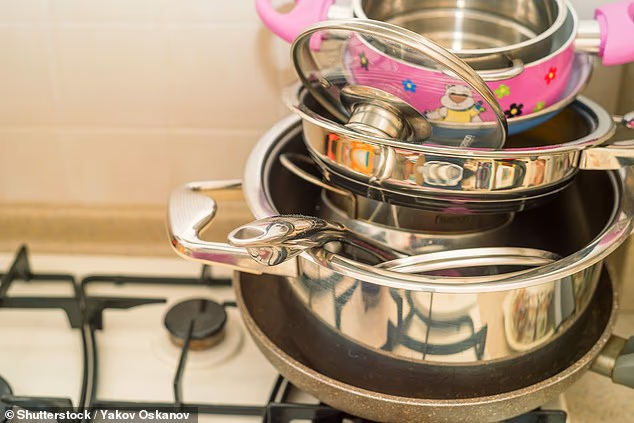
They’re heavy, bulky and awkward to put away – but you should never pile your pans on top of each other, an expert has warned.
Kitchen storage is a challenge in most homes and stacking items may seem like the most obvious solution.
But Chris Townsend, a home moving expert, said this is one of the most common and damaging kitchen mistakes people can make.
He warned the weight and friction involved with putting pots and pans on top of each other can cause a surprising amount of damage over time.
‘The inside of your pans takes the brunt of the damage when they’re stacked,’ Mr Townsend, from Three Movers, said.
‘Every time you place one pan inside another and shift them around, you’re creating friction that gradually wears down the surface.
‘For non–stick pans, that damage can happen faster than most people realise.’
He said pans can also be at risk from scratching and warping – but revealed there are ‘smarter ways’ to store them.
While stacking pots and pans may seem like the obvious solution to kitchen storage issues, it can be very damaging (file image)
Non–stick coatings are among the most vulnerable to stacking damage, he said, as the base of one pan sitting directly on the cooking surface of another will scratch and chip the coating over time.
Once a non–stick surface is compromised, the pan becomes both less effective and potentially unsafe to cook with.
‘People often assume their pans have simply worn out, when the real issue is how they’ve been stored,’ he explained.
Heavier pans – particularly cast iron or stainless steel – can also warp the pans beneath them when stacked.
Warping affects how evenly a pan sits on the hob, which in turn leads to uneven heat distribution which can be difficult or impossible to reverse, he added.
Even hardy pans, such as enamelled cast–iron versions, can chip away if another heavy pan is repeatedly dropped or slid onto them.
‘Cast iron and enamelled cookware are investments built to last decades if looked after properly,’ Mr Townsend said. ‘A chipped enamel surface can rust, and at that point the pan is very difficult to salvage.’
So, how should we store our pans?

A ceiling–mounted or wall–hung pot rack can also be a space–efficient way of storing your pans, Mr Townsend said (file image)
If your kitchen has deep drawers or cupboards, storing pans side by side rather than stacked can help protect them, Mr Townsend said.
A ceiling–mounted or wall–hung pot rack can also be a space–efficient way of storing your pans while ensuring they stay protected.
Vertical pan organisers, either freestanding or fitted in a cupboard, allows pans to stand upright and separately from one another.
‘A pan divider inside a cupboard can make a huge difference,’ Mr Townsend explained.
‘Your pans aren’t touching, they’re easy to grab, and you’re not dragging them across each other every time you cook.’
Finally, if you absolutely have to stack, felt or silicone pan protectors placed between cookware prevent direct contact and significantly reduce the risk of scratching.
They’re a cheap fix for those who prefer to keep pans in a drawer or cupboard.
‘If you absolutely have to stack, use protectors between each pan,’ Mr Townsend concluded.
How to clean a burnt saucepan
- Fill the saucepan with enough water to cover the burnt bits.
- Add a dishwasher tablet.
- Put the pan back onto a medium heat and let the water simmer for 10 minutes.
- Rinse out and wipe away any residue with a soft sponge.
- Wash as normal to get a sparkling saucepan achieved with relatively little elbow grease.

Experts at Which? have revealed the surprisingly simple way to clean a burnt saucepan – and it requires minimal elbow grease