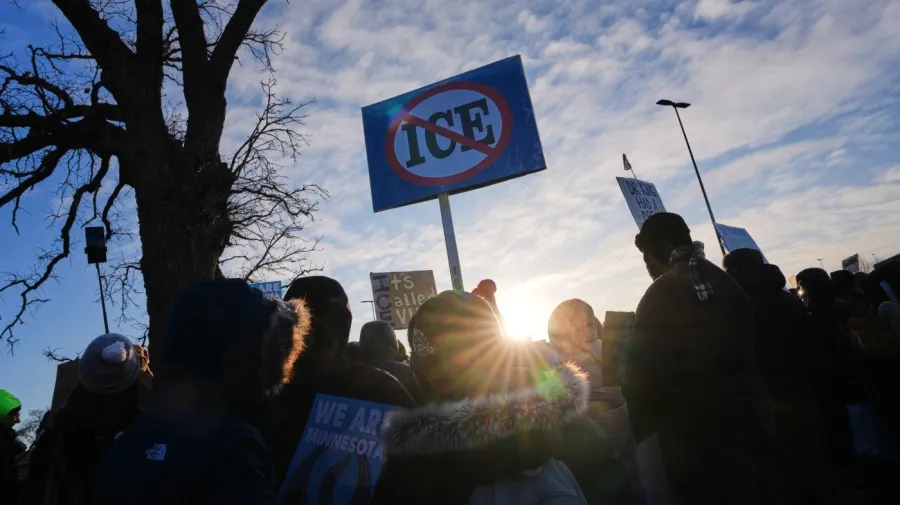
A federal judge on Saturday rejected an effort by Minnesota Attorney General Keith Ellison (D) to block the surge of immigration resources the Trump administration has sent to the state.
In a 30-page decision, U.S. District Judge Katherine Menendez ruled that Ellison is unlikely to succeed in claims that the surge violates the 10th Amendment, which protects states’ rights against federal infringement.
“Plaintiffs ask the Court to extend existing precedent to a new context where its application is less direct — namely, to an unprecedented deployment of armed federal immigration officers to aggressively enforce immigration statutes,” Menendez wrote.
“None of the cases on which they rely have even come close,” the judge added.
Menendez is an appointee of former President Biden.
Minnesota has become the latest hotspot in President Trump’s aggressive immigration crackdown, which has involved sweeping enforcement efforts in various blue cities across the country.
First announced in December, the government has said roughly 3,000 personnel from Immigrations and Customs Enforcement (ICE) and Customs and Border Protection (CBP) are on the ground as part of “Operation Metro Surge.”
But the effort has taken a turn since last weekend’s fatal shooting of ICU nurse Alex Pretti, the second time this month that a U.S. citizen was shot and killed by federal agents in the North Star State.
Ellison had filed the lawsuit alongside the cities of Minneapolis and St. Paul before Pretti’s death. Menendez considered it at a hearing on Monday.
The plaintiffs claimed the surge violated the 10th Amendment’s anti-commandeering doctrine, which the Supreme Court has held prevents the federal government from compelling states to implement federal regulatory programs.
Minnesota argues that “Operation Metro Surge” forces it to divert police resources and pressures the state to drop its “sanctuary city” policies.
Menendez ruled that the suit isn’t without merit — even suggesting at one point that immigration agents have engaged in racial profiling and used excessive force — but she said the case isn’t clear enough to authorize sweeping preliminary relief as it moves forward.
Beyond the issue of the immigration surge’s constitutionality, the judge was also bound at this stage to consider the harms on both sides. Menendez wrote that issuing an injunction would impose significant harm on the federal government in its immigration agenda.
She went on to note that an appeals court earlier this week paused another injunction she had imposed in a different case that restricted ICE’s tactics while responding to protests.
“If that injunction went too far, then the one at issue here—halting the entire operation—certainly would,” the judge added.