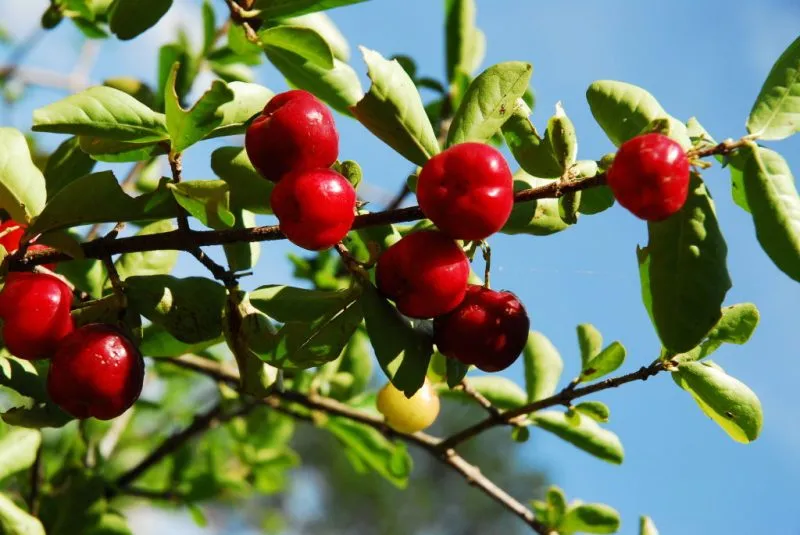
TAMPA, Fla. (WFLA) — A “superfruit” that thrives in the Caribbean, South and Central America and is valued for its health benefits could be Florida’s newest crop.
Researchers at the University of Florida are collaborating with a Brazilian colleague to advance the genetic understanding of Acerola, also known as the Barbados cherry, and cultivate it in the Sunshine State.
The University of Florida’s Institute of Food and Agricultural Sciences said the cherries are rich sources of vitamin C, carotenoids, anthocyanins and phenolic compounds with antioxidant and anti-inflammatory properties.
“These nutritional benefits have elevated acerola to superfood status, making it marketable for fresh consumption, desserts, supplements or juice,” said Felipe Ferrao, who’s leading the project for UF/IFAS. “They can contain up to 100 times more vitamin C than oranges, making them a powerful candidate for enhancing and supplementing our diet.”
Scientists are trying to grow the fruit in three major field trials in Florida: at the UF/IFAS Plant Science Research and Education Center in Citra, at a farm in Pierson and at the UF/IFAS Tropical Research and Education Center (TREC) in Homestead.
The report from UF said researchers want to find out if the fruit will perform well under varying climates, soil types and management systems across Florida.
“Our central goal is to determine the best regions and practices for growing acerola, while understanding how climate conditions influence fruit quality and nutritional value,” Ferrao said.
Researchers said the cherries could potentially help mitigate the ongoing crisis in citrus production and become an alternative crop for producers.
“We envision acerola could as a viable crop for agricultural future, contributing to economic growth and food security,” Ferrao said.