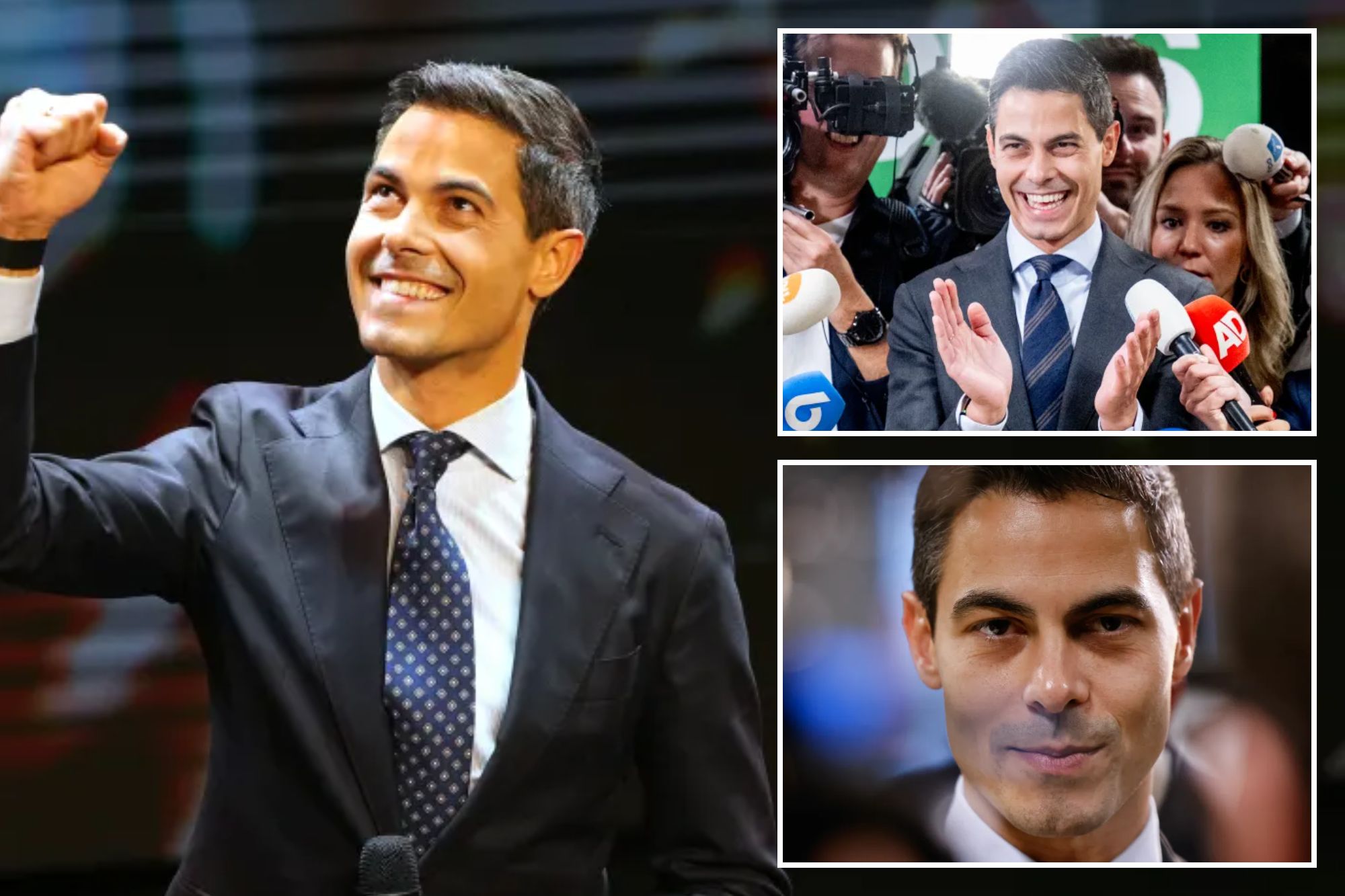
VOTERS in the Netherlands are on the edge of witnessing history as Rob Jetten is poised to become the country’s next PM.
The 38-year-old centrist candidate has pulled off a stunning surge to rival far-right leader Geert Wilders, with the two deadlocked after an incredibly tight Dutch election.
With fewer than 2,000 votes separating them, Jetten’s D66 party looks set to edge ahead once overseas ballots are counted.
It puts him in line to become the Netherlands’ youngest and first openly gay prime minister.
The some 100,000 overseas postal votes that will only be tallied Monday or Tuesday before a final result can be called.
Historically, expats have tended to prefer D66 over the PVV, so Wilders seems unlikely to overtake.
Read more on the Netherlands


Jetten told cheering supporters in Leiden: “This is a historic election result, because we’ve shown not only to the Netherlands but also to the world that it is possible to beat populist and extreme-right movements.”
Wilders, 62, whose anti-Islam Freedom Party (PVV) lost 11 seats from its 2023 high, has threatened legal action if Jetten begins coalition talks before final results are certified.
He warned on X: “We will do everything to prevent this.”
But all major parties have ruled out working with Wilders, meaning Jetten’s path to power – however narrow – looks clear.
A “grand coalition” of centrist and left-leaning forces is now the most likely outcome.
Jetten’s rise has been meteoric.
Two years ago, his D66 limped to just nine seats, but now it stands at 26.
His easy grin, relentless TV presence, and upbeat slogan Het kan wel (“Yes we can” in Dutch) have turned him into the face of optimism in a fatigued political landscape.
After casting his vote in The Hague, Jetten said: “I want to bring the Netherlands back to the heart of Europe because without European cooperation, we are nowhere.”
He’s also managed to distance himself from both the chaos of Wilders’ short-lived coalition and the stiff image that once earned him the nickname “Robot Jetten.”
When told of his success, he laughed: “Sometimes it can work out really crazy in politics.”
A self-described “progressive patriot,” Jetten has courted the political centre by waving the Dutch flag and promising to “show that we can be proud of our country.”
He has vowed to tackle the housing crisis, which currently has a shortage of some 400,000 homes.
Jetten also aims to restore what he calls “a sense of progress and stability” after years of turmoil.
Behind the polished smile lies a political nerd from Brabant who once worked for the national rail network and idolised past liberal leaders.
As a young man, Jetten represented The Netherlands as an athlete and ran as a pace-maker for multiple Olympic Champion Sifan Hassan.
He is currently engaged to Argentine field hockey player Nicolás Keenan, with a wedding planned next year.
Supporters call him a “mini-Mark Rutte,” echoing the easygoing pragmatism of the former prime minister and current Nato chief.
But Jetten’s fans say his brand of politics, described as pragmatic, cheerful, and European-minded, offers a new kind of Dutch centrism.
With just a handful of ballots now standing between him and victory, Rob Jetten has become the unexpected poster boy for moderate politics in an age of extremes.
On the streets of Amsterdam, voter Sanne-Louisa de Bruin said she felt “actually hopeful and that’s nice after two years of feeling quite sceptical and not going anywhere.”


“I’m relieved with this result. I think we now have a basis for a coalition that is actually able to fix major issues in the Netherlands,” added the 31-year-old, who said she works in energy transition.
“I hope the rest of Europe follows.”