After nearly 10 years, NASA’s Jupiter explorer Juno is likely no longer operating, with its latest mission extension ending during the ongoing U.S. government shutdown.
The Juno spacecraft launched from Florida in 2011, arriving at the Jovian system in 2016 and completing its first orbit. This spacecraft was built like a tank with titanium to withstand the intense radiation from Jupiter. The design also required unique engineering to provide power so far from the Sun with three solar planes spanning nearly 30 feet each.
Juno’s primary mission was completed in 2021 and then extended through Sept. 30 with 42 additional orbits of the Jovian system, including flybys of moons Ganymede, Europa and Io.
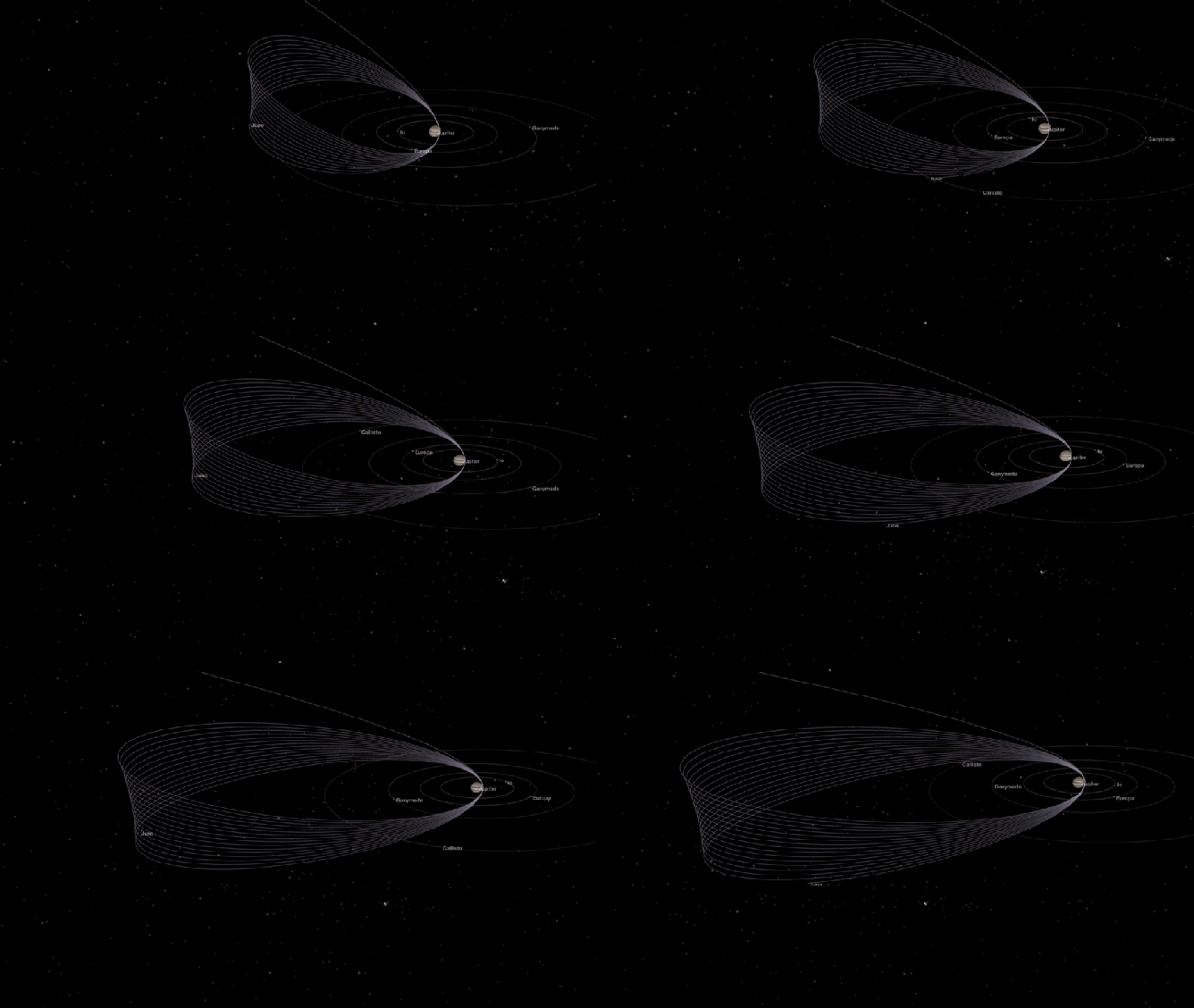
GIF showing Juno’s orbit around Jupiter. (NASA/JPL-Caltech)
The government shutdown started on Oct. 1, and with an ongoing stalemate, NASA has been unable to provide an update on Juno. Under the proposed White House budget, the Juno mission was among dozens of science missions on the chopping block if the space agency’s budget is slashed by 47%.
In a statement from Sept. 17, a NASA spokesperson said, “Juno’s mission was extended to September of 2025. This is the most recent update. Regarding the future of the mission, NASA will abide by the law.”
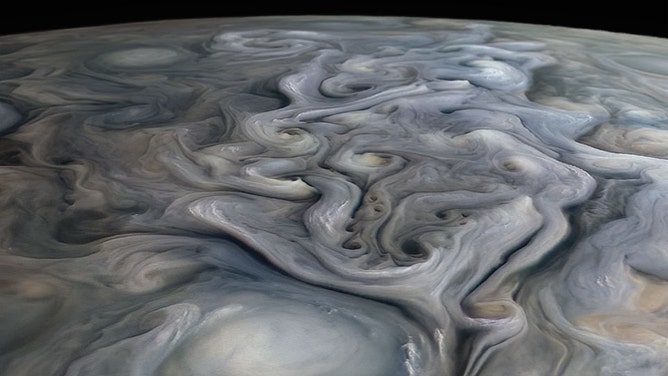
The featured image of Jupiter’s clouds was composed from images and data captured by the robotic Juno spacecraft as it swooped close to the massive planet in August 2020.
(NASA/JPL-Caltech/SwRI/MSSS. Processing: Processing: Kevin M. Gill / NASA)
If this is truly the end for Juno, the mission provided more than 9 years of incredible data of the weather beneath the Jovian clouds and critical information about its moons, helping to set up NASA’s mission launched in 2024 to Jupiter’s moon Europa and the European Space Agency’s Jupiter ICy moons Explorer (JUICE) mission.
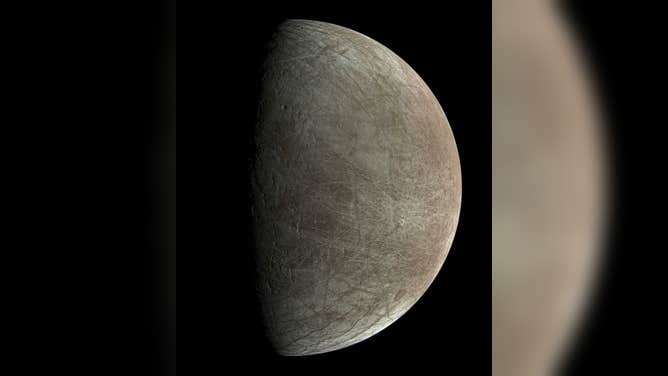
This view of Jovian moon Europa was created by processing an image JunoCam captured during Juno’s close flyby on Sept. 29, 2022.
(Image data: NASA/JPL-Caltech/SwRI/MSSS Image processing by Björn Jónsson CC BY-NC-SA 2.0 / NASA)
JunoCam, the primary camera on Juno, was a citizen science win, allowing people around the world to help hone in on target areas to photograph. As JunoCam imagery was uploaded, amateur astronomers and space fans could download and process images, like this incredible image of lightning above Jupiter.
Most recently, Juno came within 930 miles of the moon Io, imaging its poles for the first time and revealing details of the volcanic surface below, including discovering a new volcano.
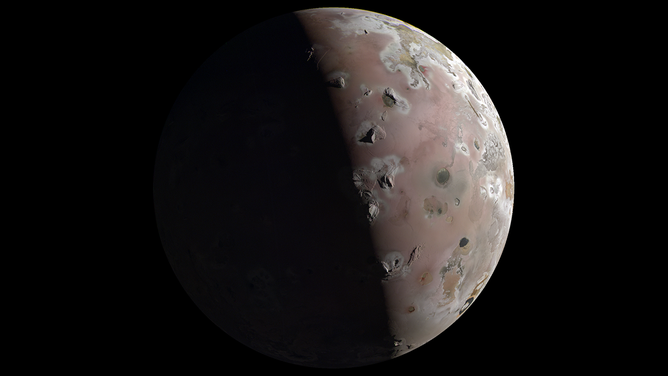
Image of Io acquired by JunoCam during Perijove 57.
(NASA / SWRI / MSSS / Jason Perry © CC NC SA / NASA)
Ultimately, the radiation from Jupiter did wear on the spacecraft, and it began to show in images. The images showed signs of radiation damage by orbit 47, and by orbit 53, nearly all the images were corrupted, NASA said.
In 2023, the team used an experimental technique called annealing to heat parts of the spacecraft before slowly cooling them.
“After orbit 55, our images were full of streaks and noise,” said JunoCam instrument lead Michael Ravine of Malin Space Science Systems. “We tried different schemes for processing the images to improve the quality, but nothing worked. With the close encounter of Io bearing down on us in a few weeks, it was Hail Mary time: The only thing left we hadn’t tried was to crank JunoCam’s heater all the way up and see if more extreme annealing would save us.”
The experiment worked for flybys of Io in December 2023, but radiation impacts on the JunoCam began reappearing again around orbit 74.
As of September, Juno was on orbit 76 of the Jovian system.
Unlike the dramatic end of other NASA planetary missions like Cassini, which plunged into Saturn at the end of its mission, Juno will degrade naturally, eventually being consumed by Jupiter’s atmosphere.