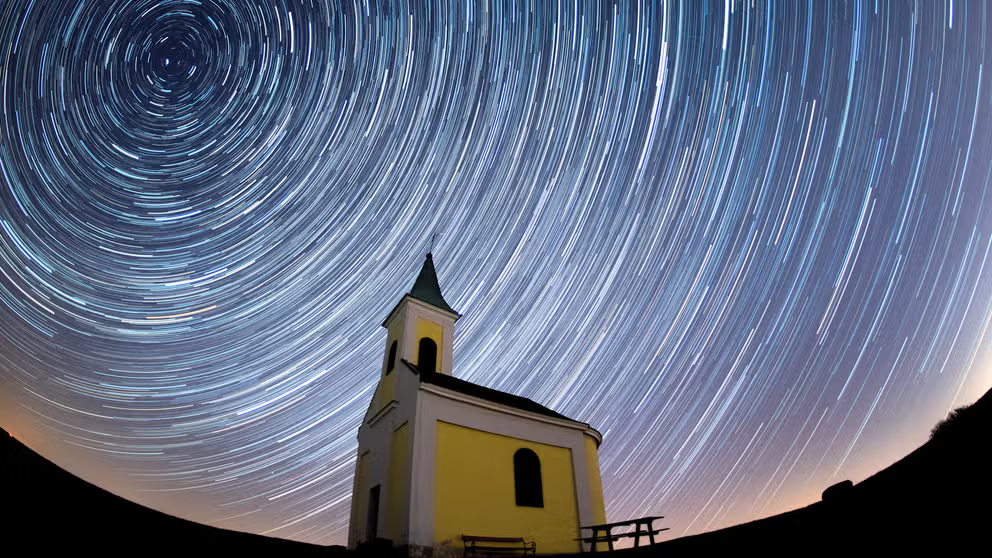
A waning heat dome prowling the U.S. with record-breaking temperatures this week makes after dark the best time to be outside right now. That gives you a great reason to try and spot some meteors this week, when two usually less-impressive meteor showers peak with impeccable timing.
On Tuesday night into early Wednesday, skygazers will be treated to dueling meteor showers converging as the Alpha Capricornids and the Southern Delta Aquarrids both reach peak activity.
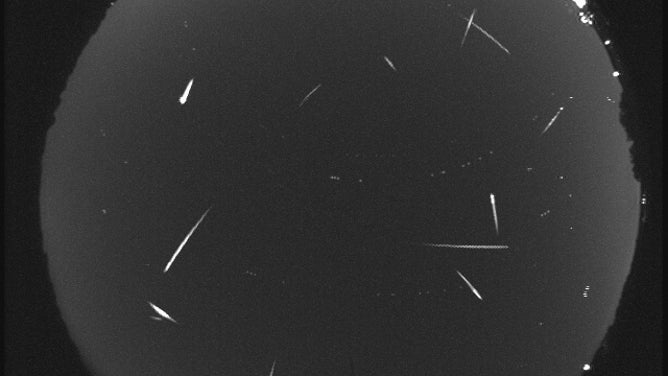
This image composite from July 30, 2014, shows 14 bright meteors seen from Huntsville, Alabama, and includes Southern Delta Aquariids, Alpha Capricornids and the Perseids.
(NASA/MSFC/MEO / NASA)
The Alpha Capricornids, which are produced by the comet 169P/NEAT, began in early July and continue until Aug.13, according to the American Meteor Society (AMS). The Southern Delta Aquariids, which are produced by the comet P/2008 Y12, began on July 18 and run through Aug. 12.
BEES WEARING QR CODES TRACKED BY AI CAMERAS TO HELP RESEARCHERS SAVE THEM IN THE WILD
Both meteor showers produce a handful of meteors per hour. According to the AMS, hourly rates on Wednesday morning should be between 5 and 10 meteors.
To view the Southern Delta Aquarid meteors look in the direction of the constellation Aquarius in the southern part of the sky.
While the Southern Delta Aquariids and the Alpha Capricornids are usually less impressive shows, this year’s timing is on their side.
Both meteor showers are set to peak from Tuesday night into Wednesday, when the Moon will be in a waxing crescent and first-quarter phase, about 25% full.
A dark sky is key to spotting meteors across the night sky. Moving away from city lights and other light pollution sources can also help, but if the Moon is full it’s extremely hard to spot these normally faint meteors.
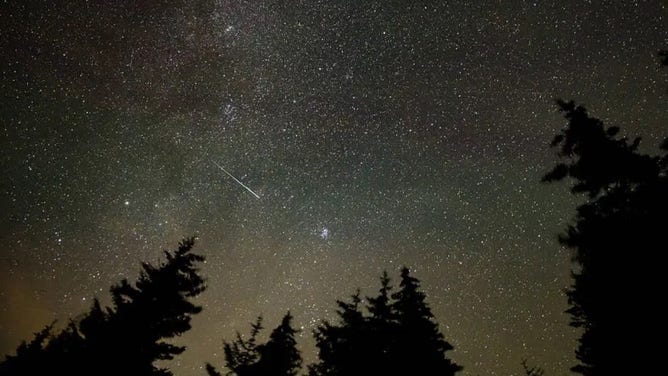
FILE: Perseid meteor shower on Wednesday, Aug. 11, 2021, in Spruce Knob, West Virginia.
(NASA / NASA)
There are currently three meteor showers active this summer. The Perseid Meteor Shower began on July 17 and continues through Aug. 24.
METEOR STRIKE MAY HAVE TRIGGERED A LANDSLIDE IN THE GRAND CANYON SOME 56,000 YEARS AGO
The beloved Perseid Meteor shower peaks on Aug. 12 and 13 this year. This dependable meteor shower comes from Comet 109P/Swift-Tuttle and produces about 25 meteors per hour. Under dark skies, between 50 and 100 meteors per hour are visible, according to NASA.
However, this year, the Perseids’ most active nights happen just a few days after the full Moon. A nearly 90% full Moon will wash out the best meteor shower of the summer, with only the brightest meteors visible.
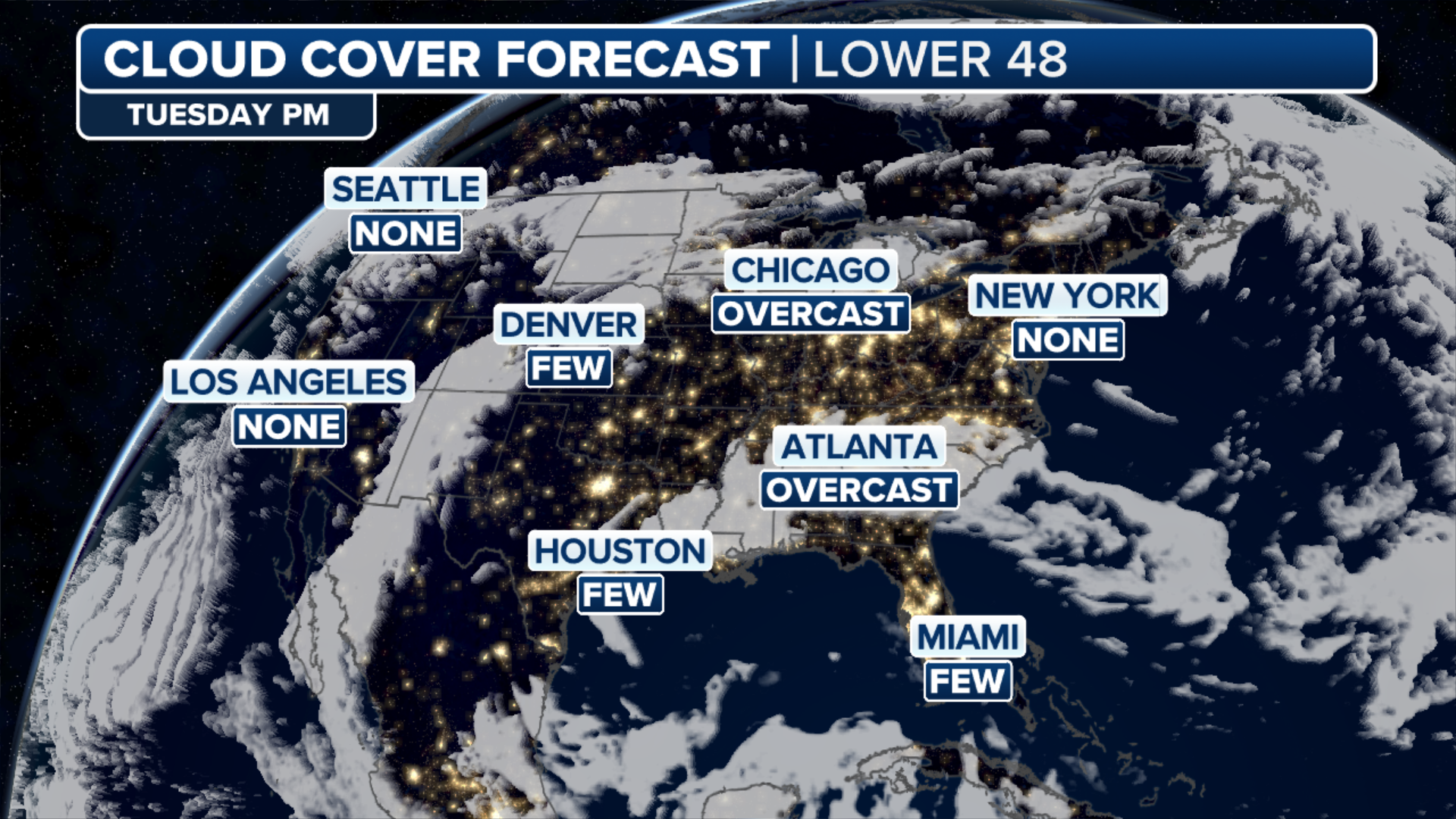
(FOX Weather)
In addition to less moonlight and avoiding light pollution, a clear sky is also key to observing these celestial events.
According to the FOX Forecast Center, the Upper Midwest, parts of the Southeast and the Gulf states will be shrouded in clouds. Meanwhile, the rest of the country has a mostly clear sky for the meteor shower.
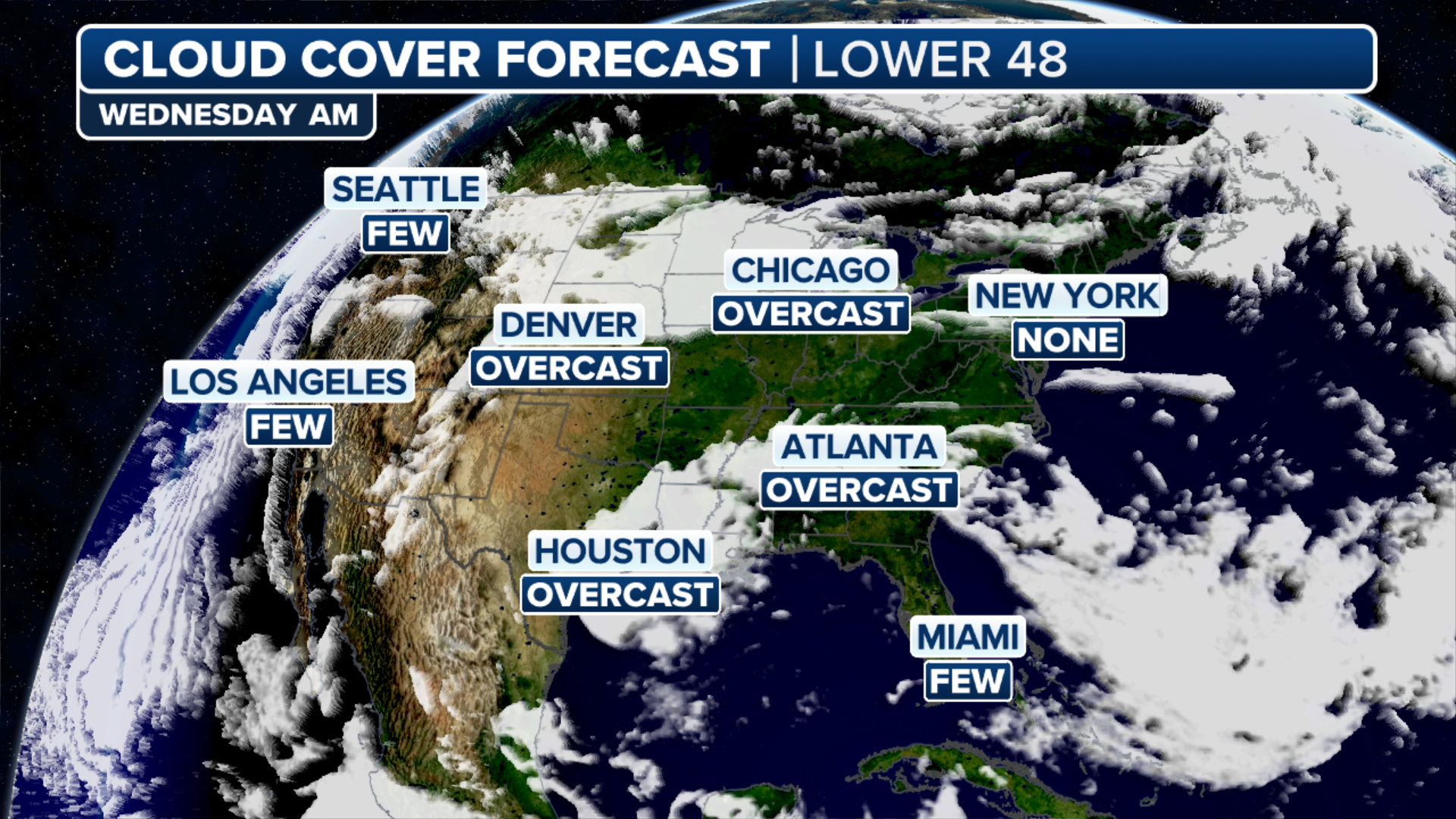
(FOX Weather)
With three ongoing meteor showers, this week might be your best chance to spot a few with a little patience. The next big meteor showers won’t occur until this fall, but at least it should be cooler to enjoy skygazing.