
Saturday, March 7, 2026
No Result
View All Result
LJ News Opinions
  • Home
  • U.S.
  • Politics
  • World News
  • Business
  • Entertainment
  • Sports
  • Technology
  • Health
  • Opinions
  • Home
  • U.S.
  • Politics
  • World News
  • Business
  • Entertainment
  • Sports
  • Technology
  • Health
  • Opinions
No Result
View All Result
LJ News Opinions
No Result
View All Result
Home Opinions

Southern delta Aquariids, alpha Capricornids to light up night sky on same night later this month

by LJ News Opinions
July 16, 2025
in Opinions
0
Share on FacebookShare on Twitter


Dashcam footage shows a meteor streaking across a clear blue sky over Anderson, South Carolina, on Thursday. 

The summer sky will light up later this month as two meteor showers, the Southern delta Aquariids and alpha Capricornids, are set to peak on the same night.

The alpha Capricornids, which are produced by the comet 169P/NEAT, are currently in full swing, according to NASA. The Southern delta Aquariids, which are produced by the comet P/2008 Y12, will begin on July 18.

Skygazers will be treated with the two showers converging on the night of July 29 and into early July 30, according to the American Meteorological Society.
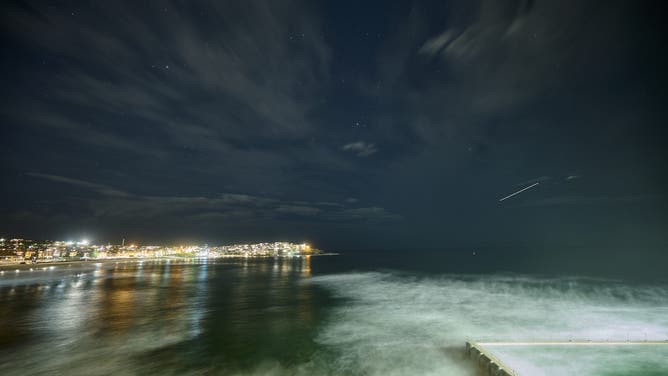
The night sky is illuminated by a meteor shower on July 28, 2022 in Sydney, Australia.

The night sky is illuminated by a meteor shower on July 28, 2022 in Sydney, Australia.

(Saverio Marfia / Getty Images)

The Southern delta Aquariids are a strong shower that will produce about 20 meteors per hour during its peak, the AMS said. The alpha Capricornids will not produce as many, reaching only about 5 meteors per hour, but the meteors that will be visible will be quite bright.

The Southern delta Aquariids, as their same suggests, will be most visible from the Southern Hemisphere, particularly from the southern tropics. However, the AMS notes that they will still be visible to those in the Northern Hemisphere looking toward the southern skies.

Luckily for skygazers, the alpha Capicornids will be equally visible to those on both the Northern and Southern Hemispheres, the AMS added.
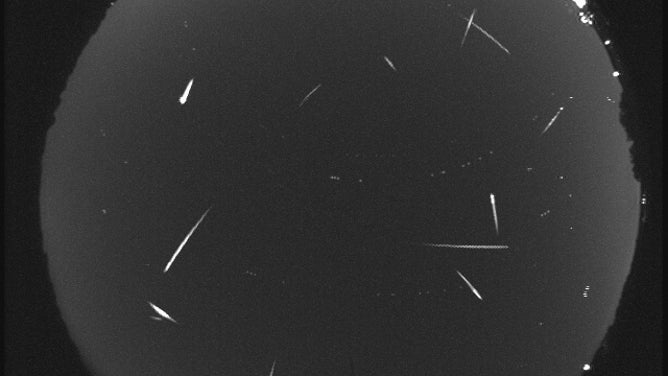
This image composite from July 30, 2014, shows 14 bright meteors seen from Huntsville, Alabama, and includes Southern Delta Aquariids, Alpha Capricornids and the Perseids.

This image composite shows 14 bright meteors seen from Huntsville, Alabama on July 30, 2014. It features the Southern Delta Aquariids, Alpha Capricornids and the Perseids.

(NASA/MSFC/MEO / NASA)

HOW TO WATCH FOX WEATHER

Views of the fireballs are expected to be clear on the dark night sky – weather permitting, of course – as the Moon will only be 27% full. This means the brightness of our lunar satellite will not detract from the brightness of the Southern delta Aquariids and alpha Capicornids.


Source link

LJ News Opinions

LJ News Opinions

Next Post

EastEnders star Charlie Brooks, 44, looks almost unrecognisable as she shows off incredible weight loss while slipping back into skimpy mini dress she bought over two decades ago

Recommended

Ex-Catalan leader Carles Puigdemont returns to Spain after 7 years as a fugitive

2 years ago

At least 76 people killed in a hotel fire at a ski resort in Turkey

1 year ago

Popular News

    Connect with us

    LJ News Opinions

    Welcome to LJ News Opinions, where breaking news stories have captivated us for over 20 years.
    Join us in this journey of sharing points of view about the news – read, react, engage, and unleash your opinion!

    Category

    • Business
    • Entertainment
    • Health
    • Opinions
    • Politics
    • Sports
    • Technology
    • U.S.
    • World News

    Site links

    • Home
    • About us
    • Contact

    Legal Pages

    • Privacy Policy
    • Cookie Privacy Policy
    • Terms of Use
    • Disclaimer
    • California Consumer Privacy Act (CCPA)
    • DMCA
    • About us
    • Advertise
    • Contact

    © 2024, All rights reserved.

    No Result
    View All Result
    • Home
    • U.S.
    • Politics
    • World News
    • Business
    • Entertainment
    • Sports
    • Technology
    • Health
    • Opinions

    © 2024, All rights reserved.