Venus may be hiding asteroids that could be catastrophic if they were to hit Earth, according to some researchers.
A new study published in the journal Astronomy and Astrophysics has shown that Venus has at least 20 co-orbital asteroids that could potentially approach the Earth.
The study was led by Valerio Carruba from the University of São Paulo in Brazil. In it, researchers stated that some asteroids could pose a collisional hazard to Earth. There are allegedly many asteroids that could come close to or hit our planet, with one considered a potential “city-killer.”
Some asteroids ‘undetected’: Study
The study also showed that these asteroids could be difficult to spot, which would make it more challenging to predict how they might impact Earth, if at all. There are also asteroids that scientists are not yet aware of.
“There are still undetected asteroids in the inner Solar System with the potential to cause significant damage to Earth,” experts said.
“While surveys like those from the [Vera] Rubin Observatory may be able to detect some of these asteroids in the near future, we believe that only a dedicated observational campaign from a space-based mission near Venus could potentially map and discover all the still ‘invisible’ PHA [potentially hazardous asteroids] among Venus’ co-orbital asteroids,” the researchers continued.
Daily Galaxy reports that the Vera Rubin Observatory is expected to start full operations in July. The observatory could make it easier to find potentially dangerous asteroids, but with the sun’s position, there will only be limited times to do so.
2024 YR4 has slight chance of hitting Earth: Scientists
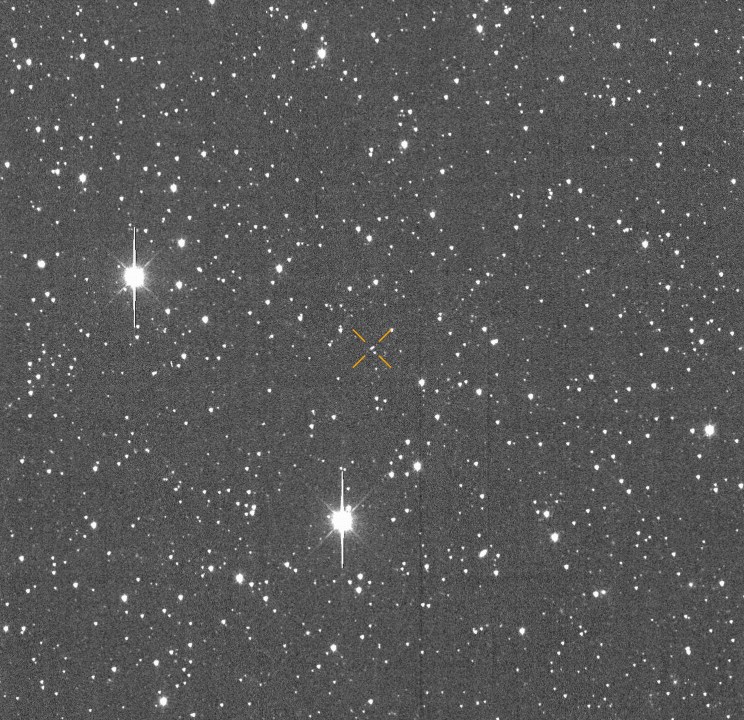
NASA first discovered “2024 YR4,” a 174-to-220-foot-wide asteroid, in December and found it only had roughly a 1% chance of impacting Earth in 2032, NewsNation local affiliate KTLA reported. The asteroid is about the size of a 10-story building, according to researchers.
“In the unlikely event that 2024 YR4 is on an impact trajectory, the impact would occur somewhere along a risk corridor which extends across the eastern Pacific Ocean, northern South America, the Atlantic Ocean, Africa, the Arabian Sea, and South Asia,” the Jet Propulsion Laboratory said in a January release.
By February, NASA had downgraded the chances of YR4’s collision with Earth to 0.004, saying it no longer poses a “significant threat” in 2032. But its chances of a Lunar impact started to rise in the months that followed.
As of April 2, 2025, the chance of 2024 YR4 hitting the moon on Dec. 22, 2032, rose from 1.7% in late February to 3.8%. If it did make an impact, however, scientists have said that it wouldn’t alter the moon’s orbit.