The Summary
- The annual Perseid meteor shower has begun and will peak the night of Aug. 12.
- Typically one of the most dramatic meteor showers of the year, it produces shooting stars at a high hourly rate.
- The Perseids occur when dust particles and leftover debris from a comet known as 109P/Swift-Tuttle burn up in Earth’s atmosphere.
One of the best meteor showers of the year is underway, offering a chance to see shooting stars in the summer night sky.
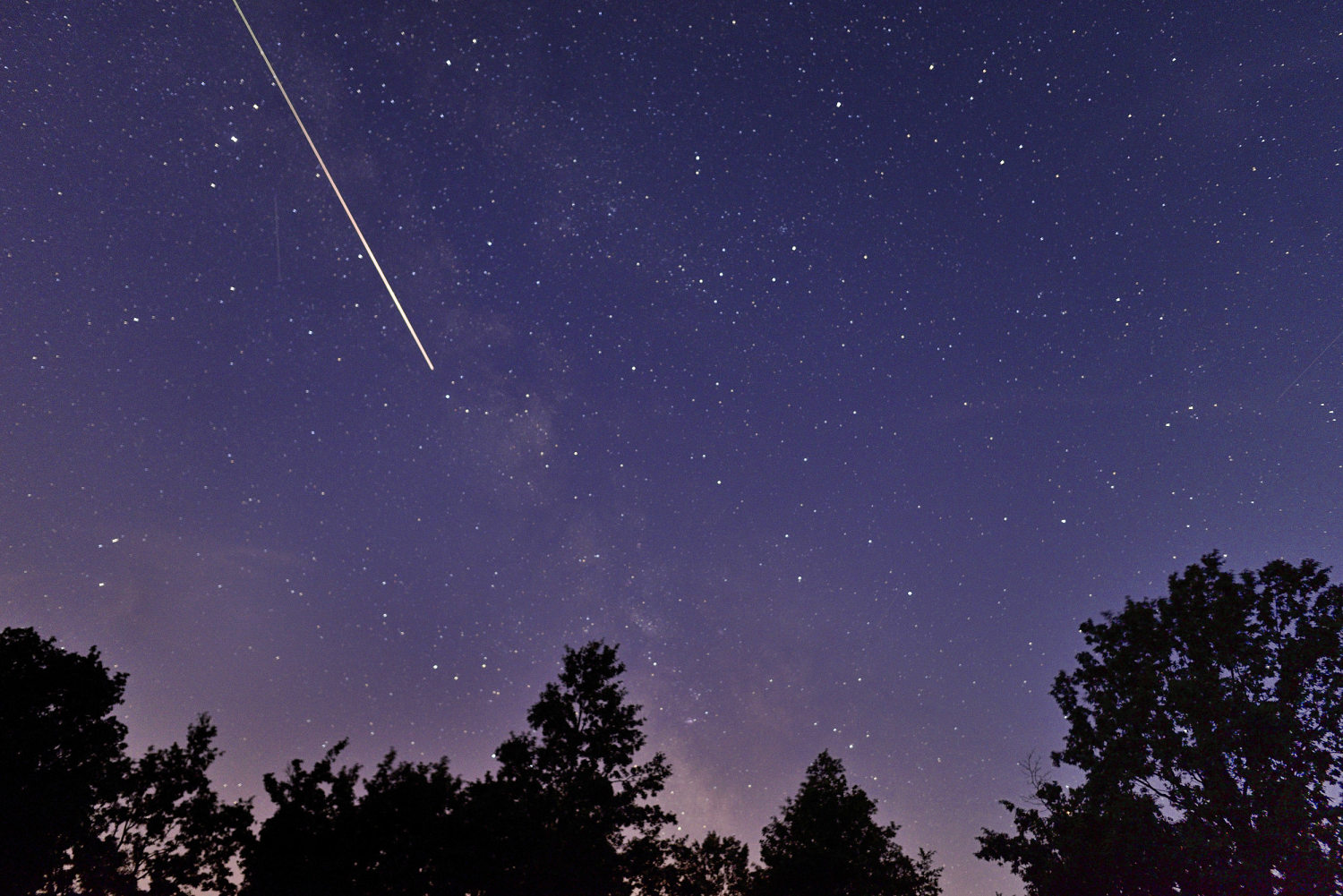
The annual Perseid meteor shower kicked off Sunday and will last through late August. This year’s shower will peak the night of Aug. 12, into early morning on Aug. 13.
The Perseid meteor shower is typically one of the most dramatic because it produces bright meteors at a high hourly rate. At the shower’s peak, skywatchers could see as many as 100 per hour from dark locations (weather permitting).
The shower’s timing during summer in the Northern Hemisphere makes it a popular event because the skywatching can be enjoyed in warm conditions.
Meteors are often called “shooting stars,” but the celestial display comes from small bits of debris in space that burn up in Earth’s atmosphere.
The Perseid meteor shower occurs when Earth passes through a cloud of dust particles and leftover debris from a comet known as 109P/Swift-Tuttle, which was discovered in 1862. The streaks of light are created as the pieces hit the atmosphere and vaporize, leaving behind bright trails as they disintegrate.
The Perseids get their name because the shooting stars appear to stream from a point in the sky where the constellation of Perseus is located, according to NASA. The constellation rises in the northeast, but meteors should be visible all over the sky if conditions are clear.
In the Northern Hemisphere, the best times to view the Perseids will be from around midnight until dawn, after the moon sets.
For prime viewing, observers should pick a dark and unobstructed spot away from city lights or other light pollution.