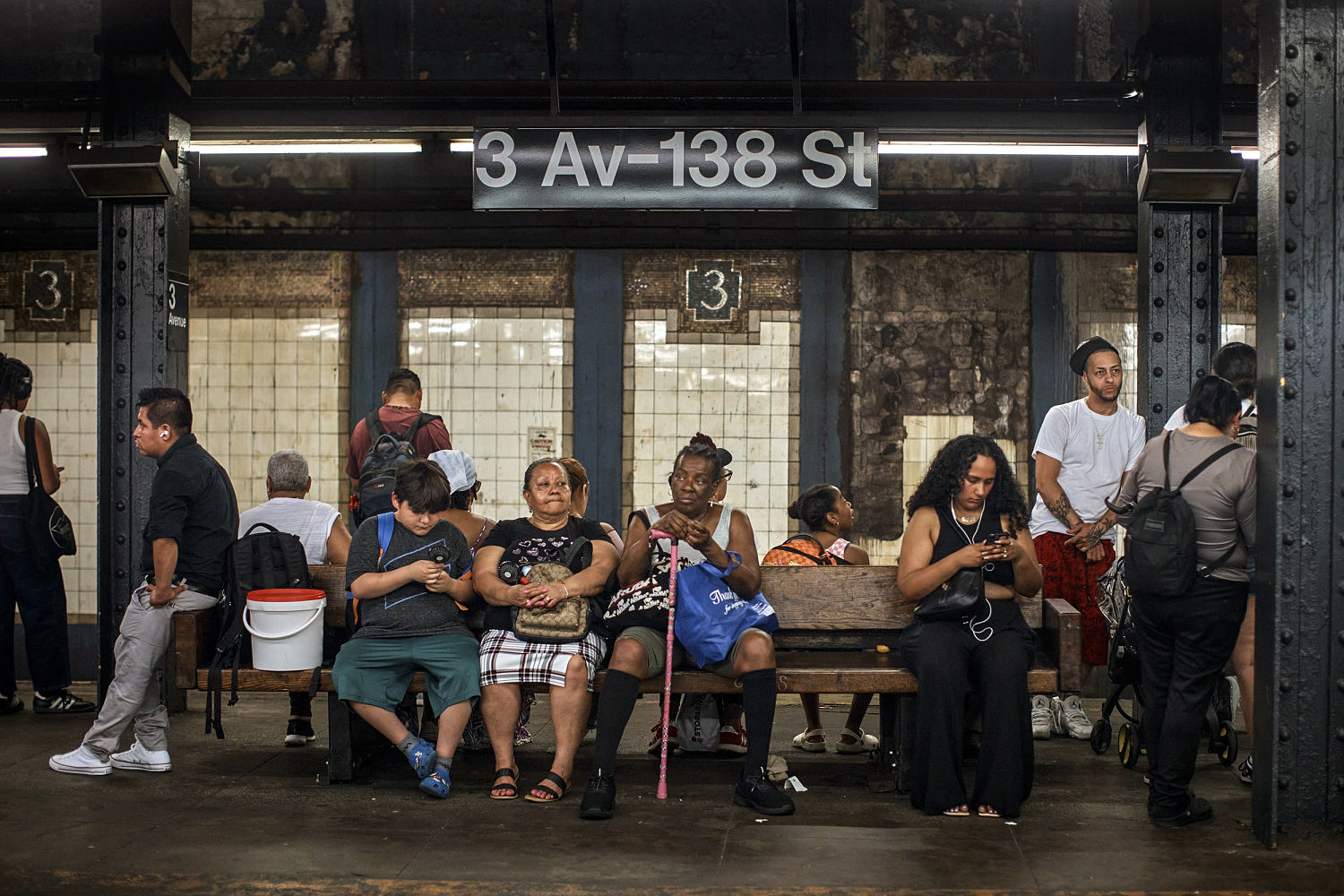
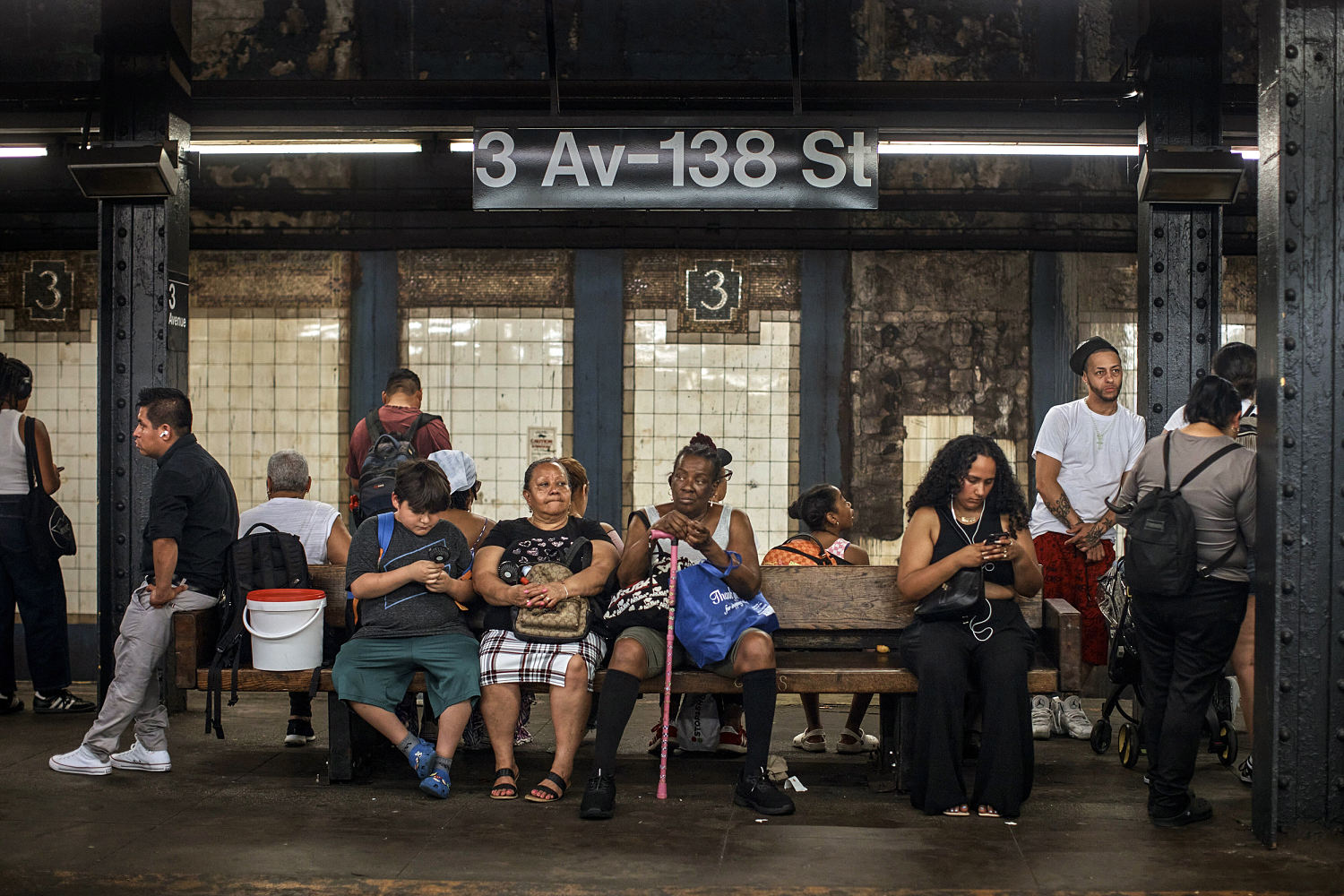
Today, the South Bronx has some of the city’s lowest per-capita green space and is crisscrossed by power plants, waste stations and highways that cause severe noise and air pollution. Residents face high rates of infant mortality, cognitive issues, heart disease and asthma — so much so that Mott Haven is sometimes nicknamed “ asthma alley.” These conditions heighten heat vulnerability.
“Environmental racism in the South Bronx is in full view,” said Arif Ullah, executive director of the environmental justice group South Bronx Unite.
Similar inequities have been identified across the country. In 2022, a Boston University analysis of 115 metropolitan areas from San Jose, California, to Louisville, Kentucky, and Hartford, Connecticut, found that air conditioning was less likely to be available in places with more residents who identify as either Black or African American or Hispanic or Latino.
In a bid to combat climbing temperatures, New York City Mayor Eric Adams activated the city’s heat emergency plan on June 18 for a week, designating hundreds of locations as air-conditioned facilities where residents can cool off during the day.
New York City Emergency Management Commissioner Zach Iscol said the city is distributing “cool kits” and indoor thermometers. He urged more funding for a program that helps low-income residents with heating and cooling needs. It has already received 21,000 applications this year.
For individuals with limited mobility, installing air conditioning — which actually raises outdoor temperatures — or reaching cooling centers may not be possible. In areas such as Brownsville, the South Bronx and East Harlem, residents also report that going outside to cool off means risking encounters with crime and drug activity.
Selene Olivaria, who has lived in the South Bronx for nine years, brought her two grandchildren, 9 and 4, to cool off in the fountains at Willis Playground. She said the opioid epidemic has resulted in drug users shooting up in the bathrooms. She worries that a child could pick up a needle.
Environmentalists say one solution to beating the heat in sprawling cities is planting more trees, creating green spaces like parks and meadows and covering rooftops with plants.
“Lower-income, communities of color, often immigrant communities — that’s where we need to be focusing,” Ulfelder said. Majority people-of-color neighborhoods have 33 percent less tree canopy than predominantly white neighborhoods. That can make them up to 13 degrees hotter (7 degrees Celsius) than neighborhoods 2 miles away.
Last fall, the New York City Council passed laws adding trees to the city charter’s sustainability plans and requiring the city to develop an urban forest plan to increase tree cover from 22 to 30 percent by 2035.
On a recent sweltering day, Howard Shillingford, a 58-year-old janitor who grew up in the South Bronx, said he has “never felt the heat like this.” It’s especially bad when he cleans school stairwells, which often have windows that don’t open.
“Oh my god, those staircases are like ovens,” Shillingford said while reading news on a computer at Mott Haven’s public library, another cooling center.
Residents of heat-vulnerable neighborhoods are resourceful. Berrios keeps a wet towel on the back of his neck. Olivaria sprays her grandchildren with toy water guns. Jorge Morales, a 54-year-old graffiti artist and South Bronx native, showers twice a day and rinses his chihuahua, Buggsy, in the sink. Sometimes residents unscrew fire hydrants, letting water gush across sidewalks and into the streets.
“I don’t like the waste of water, but it’s what people here do. It’s a survival technique,” said Morales, who is Puerto Rican and Cuban, as he charged his phone at the same library.
Extreme heat is likely to become the new normal, experts say, and it must not be underestimated. Last year, the U.S. experienced the most heat waves since 1936.
“The way things are going, the heat waves in 2044 are going to be so much worse than they are now,” said Jones, the science historian. “This isn’t an anomalous heat wave. This is the taste of what’s to come.”
For more from NBC BLK, sign up for our weekly newsletter.