
Sunday, September 6, 2026
No Result
View All Result
LJ News Opinions
  • Home
  • U.S.
  • Politics
  • World News
  • Business
  • Entertainment
  • Sports
  • Technology
  • Health
  • Opinions
  • Home
  • U.S.
  • Politics
  • World News
  • Business
  • Entertainment
  • Sports
  • Technology
  • Health
  • Opinions
No Result
View All Result
LJ News Opinions
No Result
View All Result
Home Opinions

Indonesia fires: The volunteer firefighters risking their lives to defuse ‘carbon bombs’

by LJ News Opinions
September 6, 2026
in Opinions
0
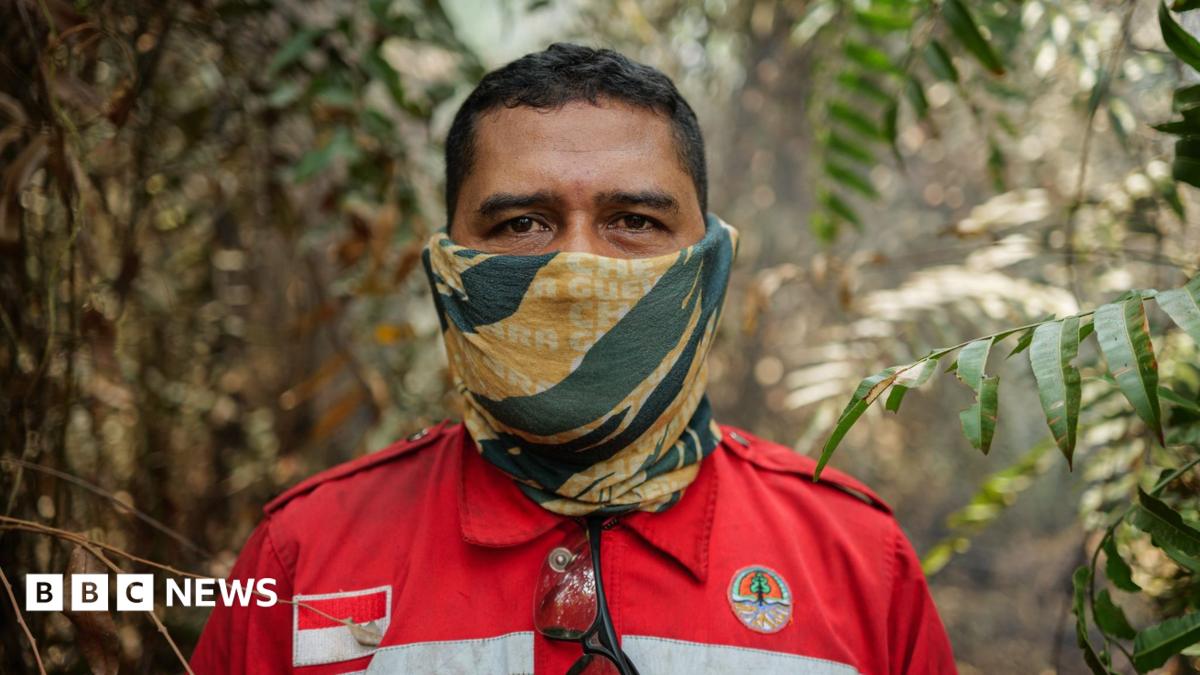
A man in red firefighting uniform patched with Indonesia's flag, and with a yellow and green neck gaiter pulled over his face, stands in a forest and looks into the camera
Share on FacebookShare on Twitter


Indonesia is in the throes of a wildfire catastrophe.

Amid a so-called “Super El Niño” that has supercharged local drought conditions, thousands of active fire hotspots are spreading and multiplying across the country, fuelling a transnational haze crisis that is the region’s worst in more than a decade.

But what makes Borneo’s fires particularly worrying is the fact that they are burning through one of the world’s largest tropical peatland ecosystems.

This 4.5-million-hectare swathe of forest and swamp, under normal conditions, serves as a valuable reservoir for ancient carbon.

When these peatlands catch fire, they risk releasing millions of tonnes of carbon dioxide, carbon monoxide and methane into the atmosphere – a “pulse” of greenhouse gas emissions that has earned them the sobriquet of “carbon bomb”.

“Peatlands are incredibly effective carbon stores because their waterlogged conditions slow decomposition, allowing carbon to accumulate underground for thousands of years,” explains Dr Nisa Novita, a peatland researcher at Indonesian conservation NGO Yayasan Konservasi Alam Nusantara (YKAN).

“But this also means they can become a ‘carbon bomb’ when they are drained or burned, because that carbon can be rapidly released into the atmosphere.

“Tropical peatlands in Indonesia are among the world’s most effective natural carbon stores. The deeper the peat, the greater the carbon stock – and in Kalimantan, we have found peat deposits that can exceed 20 metres in depth.”

A peatland that deep has been known to harbour more than 6,000 tonnes of carbon – roughly equivalent to the annual CO₂ emissions of 4,800 cars – per hectare. And when it burns, says Dr Nisa, that fossilised carbon can be released into the atmosphere “very rapidly”.



Source link

LJ News Opinions

LJ News Opinions

Next Post
Close up shot of college student writing notes on book at classroom

India's high-stakes exam system faces a crisis of trust

Recommended

ICE acting director will resign at the end of May, DHS officials say

5 months ago

Congress races to patch $3B Veterans Affairs shortfall

2 years ago

Popular News

    Connect with us

    LJ News Opinions

    Welcome to LJ News Opinions, where breaking news stories have captivated us for over 20 years.
    Join us in this journey of sharing points of view about the news – read, react, engage, and unleash your opinion!

    Category

    • Business
    • Entertainment
    • Health
    • Opinions
    • Politics
    • Sports
    • Technology
    • U.S.
    • World News

    Site links

    • Home
    • About us
    • Contact

    Legal Pages

    • Privacy Policy
    • Cookie Privacy Policy
    • Terms of Use
    • Disclaimer
    • California Consumer Privacy Act (CCPA)
    • DMCA
    • About us
    • Advertise
    • Contact

    © 2024, All rights reserved.

    No Result
    View All Result
    • Home
    • U.S.
    • Politics
    • World News
    • Business
    • Entertainment
    • Sports
    • Technology
    • Health
    • Opinions

    © 2024, All rights reserved.