
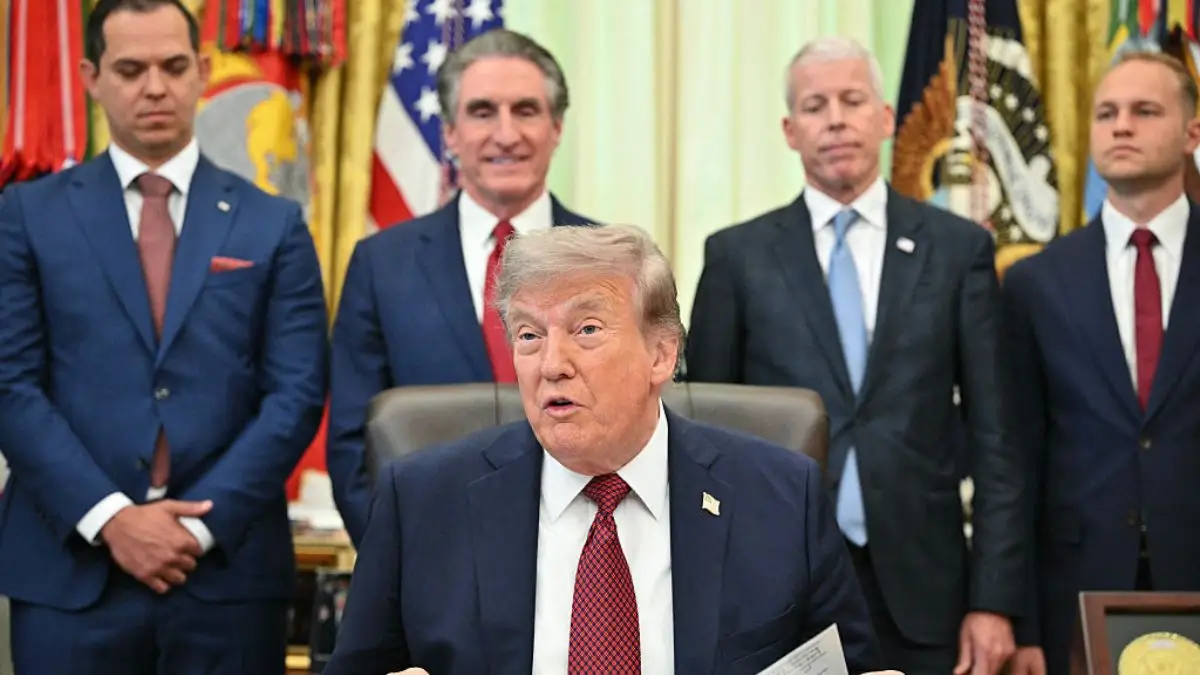
The departures are starting to look less like routine administration turnover and more like a warning light flashing inside the West Wing.
One aide after another has packed up this summer, including some of the people President Donald Trump has relied on most heavily to defend him, manage Congress and shape his administration’s message.
Now, with another senior official submitting his resignation and more departures reportedly being considered, the question hanging over the White House is whether Trump’s famously tight inner circle is becoming too small to keep his administration on course.
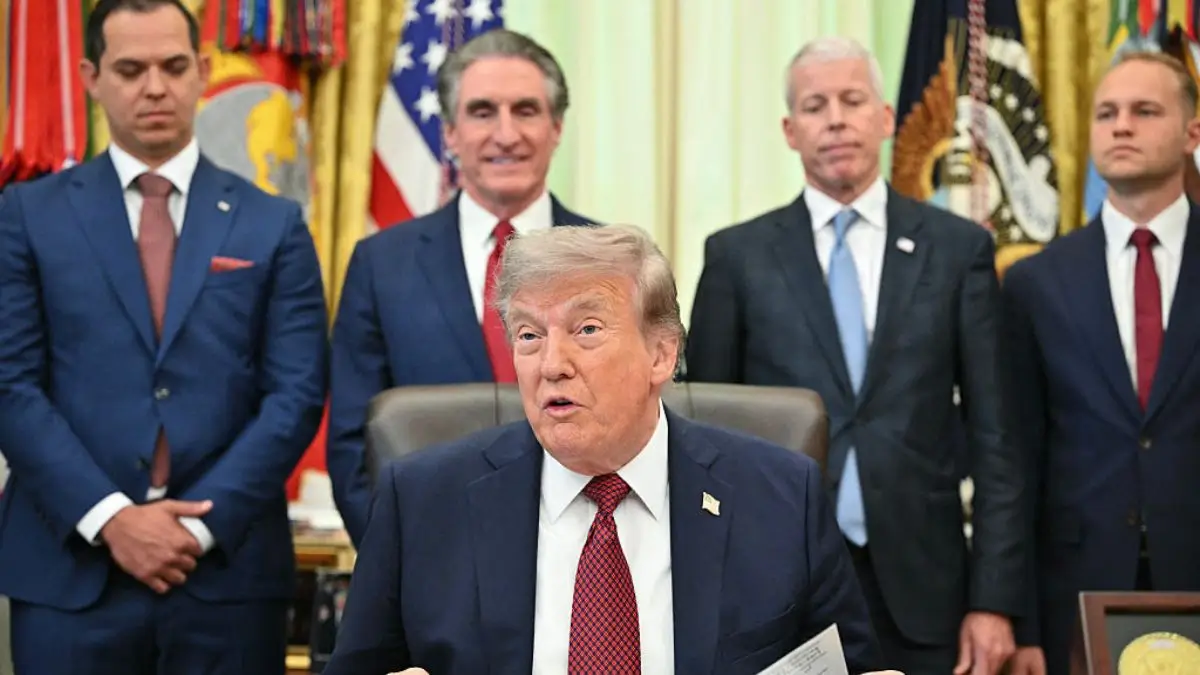
Eight White House aides have announced their exits this summer, leaving Trump with an increasingly narrow group of advisers he trusts as his administration faces a difficult stretch heading into the 2026 midterm elections.
The departures have fueled reports of growing disorder inside the West Wing, while Trump confronts a struggling war in Iran, a trade fight with Canada, low approval ratings and the possibility that Democrats could retake Congress in November.
“You’ve begun to see a deterioration of the tight ship that was run in the first year,” one person close to the White House told Semafor, according to the Daily Beast.
The insider nevertheless argued that the turnover could ultimately be good for Trump, saying some members of the old guard “are f—ing obese now, from the power and from the influence.”
Among the most notable departures was Press Secretary Karoline Leavitt, one of Trump’s most visible and loyal defenders. She has since announced plans to work for MAGA Inc., the Trump-aligned super PAC where she previously served as spokesperson. Trump has said she will become “one of my top outside advisors,” allowing her to leave the briefing room without necessarily leaving Trump’s inner political circle.
James Blair, another senior Trump aide, stepped down in April to run the administration’s outside political operation for the midterms. Meanwhile, White House Director of Legislative Affairs James Braid has announced his own departure.
Other recent departures include Deputy Press Secretary Abigail Jackson, Deputy National Security Adviser Andy Baker, Director of Cabinet Affairs Lea Bardon, Stephen Miller adviser Emily Underwood, Director of Media Affairs Sonny Joy Nelson, Deputy Director of Legislative Affairs Pace McMullan, and Sriram Krishnan, who helped shape the administration’s artificial intelligence policy.
The White House is searching for replacements for Leavitt and Braid, while younger staffers are reportedly hoping to move up. But insiders told Semafor that few people close to Trump expect him to suddenly bring in many new faces.
Sean Spicer, Trump’s first-term press secretary, said the shrinking circle may not be a major problem. While acknowledging that senior staff changes can hurt an administration, Spicer said Trump is now far more comfortable relying on his own instincts.
“The president’s comfort in the job is exponential to what it was in Trump 1.0,” Spicer told Semafor.
The White House also pushed back on concerns about the departures.
“This movement is bigger than any one staff member, and the president’s mission to make America greater than ever before will continue unabated,” White House spokeswoman Taylor Rogers said.
The turnover extends beyond the West Wing. According to a Partnership for Public Service analysis cited by GovExec, about 11.4 percent of Trump’s Senate-confirmed appointees have already left during his second term — a pace well ahead of his first term.
On Monday, Army Secretary Dan Driscoll submitted his resignation to Trump, according to multiple sources familiar with the matter who spoke to CNN. His departure follows months of friction with Defense Secretary Pete Hegseth and comes six months into the Iran war.
One source said Driscoll’s resignation was unsurprising given the tensions. Another said Driscoll “brought up concerns with the administration surrounding Army transformation and readiness and Hegseth’s blocking those efforts specifically by firing the generals who were responsible.”
An Army official said Driscoll “spoke to the president about the current state of the Army and submitted his resignation.”
The White House praised Driscoll’s performance.
“Secretary Driscoll has been highly effective in advancing President Trump’s agenda to Make America Strong Again at the Department of the Army by providing outstanding leadership during historic military operations, restoring an emphasis on readiness and lethality, assisting with negotiations between Russia and Ukraine, and more,” White House spokesperson Anna Kelly said.
More senior officials are reportedly considering departures, according to Bloomberg News. While turnover before a midterm election is not unusual, some of the recent exits, including Leavitt’s, reportedly caught White House staffers off guard.
Replacing them could prove difficult.
“This also is, without question, the hardest time to hire into an administration,” Lisa Camooso Miller, a former Republican National Committee communications director, told Bloomberg.
“The real question is, who’s going to fill these roles?” she said. “Will they be the right people, and will they be people that the president listens to? It’s not so much about the vacancies, but who’s willing to go into the second two years of an administration that largely will face headwinds with a change in Congress.”
The departures have already inspired much criticism online.
After the Daily Beast described the situation as “Insiders Reveal White House Chaos as Trump Faces Staff Exodus,” one commenter responded, “You mean like the chaos he himself created?”Another compared the departures to “rats jumping off the ship.”
Someone else wrote, “The ship is sinking and the rats are already looking for the exits. Who’s jumping next?”
And another commenter offered a cutting assessment of life inside Trump’s orbit: “Imagine working with that demented whack job.”
For Trump, the departures come at a particularly difficult moment. With the midterms approaching and Democrats poised to challenge his control of Congress, the president may soon need more trusted hands around him — not fewer. The White House insists the administration’s mission will continue. But the steady stream of exits is making that “tight ship” harder to see.


