
A homeowner digging up his garden to lay a new patio stumbled across Denmark’s biggest ever haul of Viking silver.
The unnamed resident initially thought he had struck a piece of old iron or fencing while clearing stubborn grass, stones and gravel.
But after getting down on his hands and knees he began pulling jewellery, coins and silver bars from the earth.
The extraordinary haul weighs 41lbs (18.5kg) and contains around 700 objects and fragments dating from the 10th century.
It is almost three times heavier than Denmark’s previous largest Viking silver find – the 6.5kg Terslev hoard.
The homeowner, from Rebild in northern Denmark, said: ‘It should just have been a couple of hours of hard gardening removing stubborn grass, stones and gravel for a new tiled terrace, but it became the biggest surprise of my life.
A homeowner digging up his garden to lay a new patio stumbled across Denmark’s biggest ever haul of Viking silver

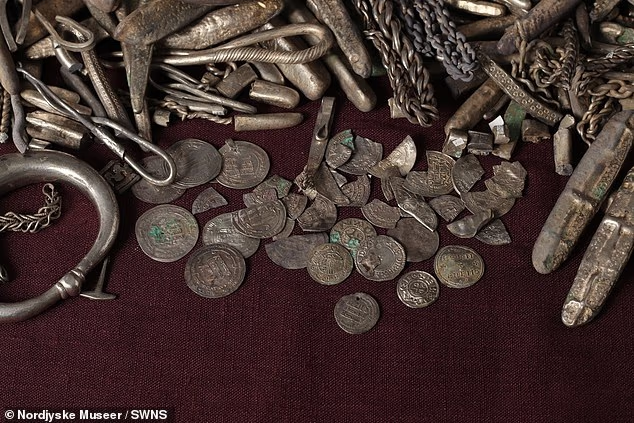
The haul includes numerous silver ingots, arm rings, 47 complete coins and coin fragments, pieces of chopped-up silver – known as hacksilver – and even a tiny Thor’s hammer
‘After half an hour of digging, my garden fork hit something that made a strange sound.
‘At first I thought it was old iron or fencing wire and some pottery shards, but when I started digging with my hands, I could suddenly pull one metal object after another out of the ground.
‘After a short while carefully working, I realised they were jewellery, coins and silver bars.’
The treasure had been buried in a clay pot sometime during the 900s.
Around 320 objects weighing 6.4kg were still inside the vessel, while the remainder had become scattered through the surrounding soil.
The haul includes numerous silver ingots, arm rings, 47 complete coins and coin fragments, pieces of chopped–up silver – known as hacksilver – and even a tiny Thor’s hammer.
One silver bar also carries a mysterious runic inscription which archaeologists believe may read ‘hutu’.
Experts are unsure what it means, but believe it could be a person’s name or an ownership mark.

Around 320 objects weighing 6.4kg were still inside the vessel, while the remainder had become scattered through the surrounding soil
Torben Sarauw, archaeologist and head of cultural heritage at Nordjyske Museer, described the discovery as being like uncovering a Viking ‘safe’.
He said: ‘This is a find of great importance for our understanding of the Viking Age in Denmark.
‘Not just because of its size, but also because the treasure so clearly shows how silver functioned as wealth and a means of payment in the Viking Age.
‘It is like finding a safe from the Viking Age.’
Rather than relying solely on coins, Vikings could use silver according to its weight.
Ingots, jewellery and other silver objects could be chopped into smaller pieces or melted down depending on how much was needed for a transaction.
Intriguingly, researchers have found many of the pieces in the new hoard cluster into particular weight groups.
They believe this suggests the silver was deliberately organised as a store of wealth rather than being a random collection of valuables.

One silver bar also carries a mysterious runic inscription which archaeologists believe may read ‘hutu’
And some of the coins reveal just how far Viking trade networks stretched.
The treasure contains Arabic dirhams as well as Anglo–Saxon coins, pointing to links extending from England in the west to the Islamic world in the east.
Among them are two silver pennies struck during the reign of the Anglo–Saxon king Edward the Elder, who ruled from AD 899 to 924.
The coins provide archaeologists with an important clue to the age of the hoard because it cannot have been buried before they entered circulation.
It is also the latest spectacular Viking treasure to emerge from the area.
Another hoard discovered around Rebild in 1971 contained approximately four kilograms of silver ingots, chopped jewellery and fragments.
And just months before the latest discovery, six intact Viking gold arm rings weighing a combined 762.5g were unearthed nearby in the Rold treasure.
The gold rings, discovered in April 2026, make up Denmark’s third–largest Viking gold find.
Archaeologists say the finds underline northern Jutland’s connections with an enormous Viking–era trading world.
Why someone buried 18.5kg of precious silver in Rebild more than 1,000 years ago – and never returned for it – remains a mystery.


