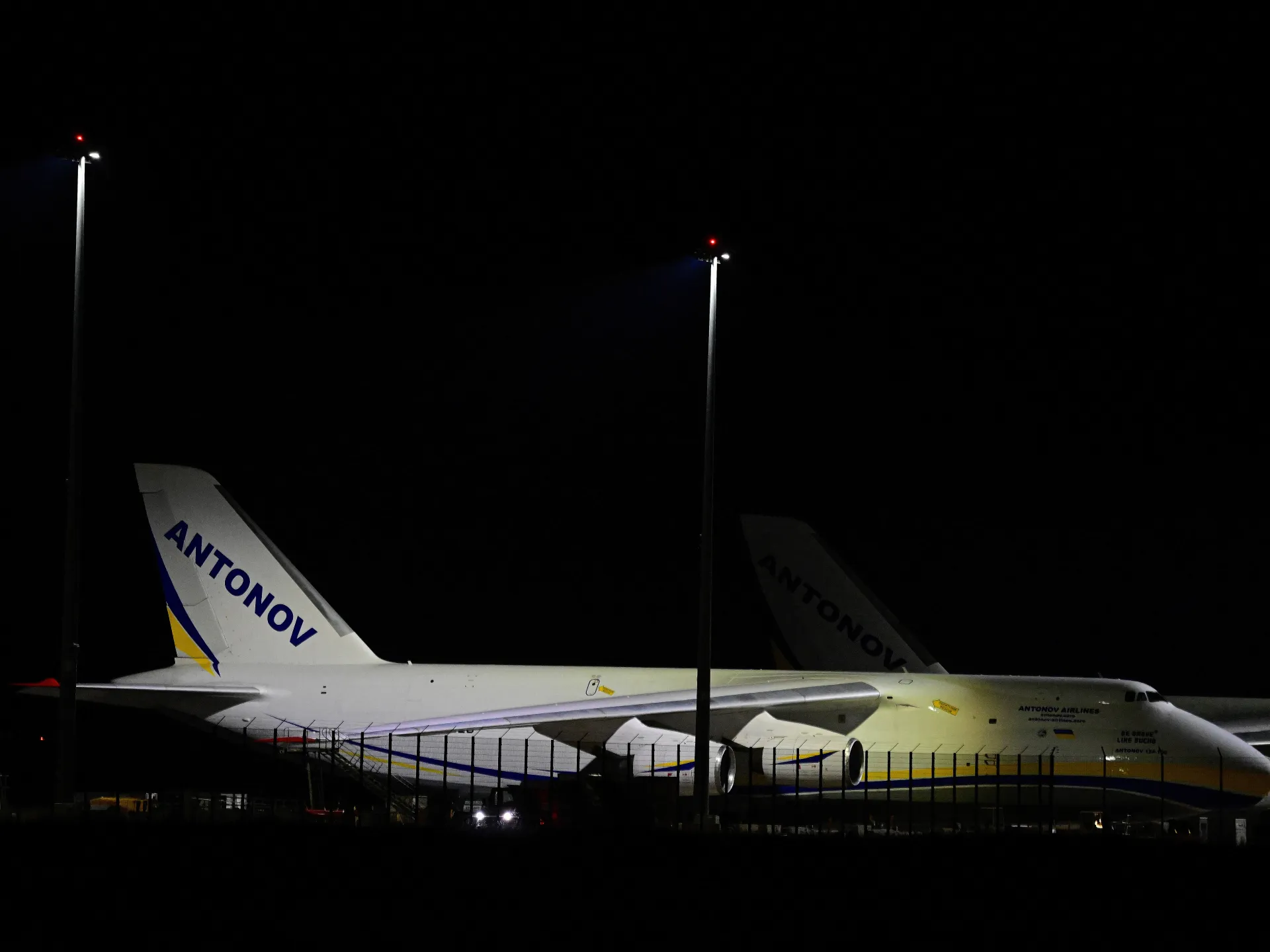
Germany has formally accused Russia of attempting an attack last month at the Leipzig-Halle airport, a state-owned facility in the eastern part of the country.
On Tuesday, German Interior Minister Alexander Dobrindt said his country’s intelligence community had determined that a drone discovered at the airport was consistent with Russian technology. The drone had been bearing explosives, according to official reports.
Recommended Stories
list of 3 itemsend of list
The announcement triggered several retaliatory measures, including the announcement that Germany would shut down a Russian consulate.
The incident is seen as part of a growing trend in Europe, where officials fear Russia is mounting a campaign of intimidation against members of the NATO military alliance.
What was found at the Leipzig airport? How have officials responded? And what does it say about tensions between Europe and Russia as Moscow’s war in Ukraine drags on? Read on for a quick explainer on the basics.
What happened at Leipzig airport?
An explosive-laden drone was found near a cargo plane belonging to the Ukrainian firm Antonov Airlines on the evening of August 4.
An employee flagged the drone, which was located in a cargo area near a runway, resulting in a temporary shutdown at the Leipzig-Halle airport, a major cargo hub in the eastern German state of Saxony.
Specialists were called in to defuse the explosives with a robot. A second drone was reportedly destroyed after it collided with an aeroplane near the airport.
Why does Germany blame Russia?
Dobrindt, Germany’s interior minister, said investigators identified a configuration and components resembling those seen in Russia’s war against Ukraine.
“Taken together, the police investigations, the pattern and intelligence findings prove a Russian responsibility for the attempted attack at Leipzig airport,” Dobrindt said.
Germany’s government has not publicly shared specifics connecting the incident to Moscow or released all the evidence.
But Dobrindt said the device reflected “a high degree of technical expertise”. He added, however, that the task of carrying out the attack appears to have fallen to “low-level agents”, whom he described as people acting “on behalf of Russian state entities”. He did not specify which ones.

How has Germany responded?
Germany has taken a series of retaliatory actions since announcing the intelligence community’s findings.
Starting on September 18, a Russian consulate in Bonn, a major German city on the Rhine River, will be shuttered. The Russian House, a cultural gathering place in Berlin, will also be closed, though the date has yet to be determined.
German leaders said they would also recommend more Russians be added to the European Union’s sanctions list and consider heightening entry controls for Russian citizens.
The German Foreign Ministry has also summoned Russia’s ambassador to the country to discuss the incident.
How has Russia reacted to Germany’s claims?
Moscow has denied it had anything to do with the drone. The Russian Embassy in Berlin called the claims absurd and warned that the accusations would have consequences.
Separately, Russian President Vladimir Putin accused the government of German Chancellor Friedrich Merz of pointing the finger at Moscow to distract from domestic problems and falling approval ratings.
He also suggested that Germany had planted evidence to frame Russia for the drone incident.

How have NATO and European allies responded?
NATO allies like Poland, Italy, the United Kingdom, Sweden and the Czech Republic have all backed Berlin’s claims against Moscow.
“Whenever Russian hybrid activities target one of our allies, we are all exposed,” the Czech Foreign Ministry posted on social media.
European Commission President Ursula von der Leyen said she would discuss the incident with NATO Secretary-General Mark Rutte, and EU foreign ministers are expected to prepare a joint response.
How has Ukraine responded?
Since February 2022, Ukraine has been battling a war that began with Russia’s full-scale invasion of its neighbour.
There has been speculation that Moscow’s increasing military threats in Europe are designed to weaken NATO support for Kyiv.
Ukraine has welcomed Germany’s measures against Russia, with Ukrainian Ambassador Oleksii Makeiev praising Berlin’s response on Tuesday.
Germany has been a key strategic partner for Ukraine, and in April, the two countries unveiled a security cooperation agreement that would strengthen joint air defences.
As part of the deal, Berlin agreed to fund missile contracts for Kyiv, and the two would collaborate on drone co-production.
Ukrainian President Volodymyr Zelenskyy has said that his country’s airspace is becoming increasingly unsafe for civilian aviation, with both sides in the war increasingly relying on drone warfare.
What other actions has Russia been accused of in Europe?
Critics have long warned that Russia is taking an increasingly aggressive stance towards Europe, which has opposed its invasion of Ukraine.
The Associated Press news agency has logged some 200 incidents of sabotage and malign activity in Europe since the 2022 invasion.
Those acts include cyberattacks, espionage, disinformation campaigns, arson and interference with infrastructure.
One case, in March 2024, involved a warehouse in east London being set on fire. The facility stored aid for Ukraine, and prosecutors blamed the attack on members of the Russian-backed Wagner Group, a paramilitary organisation.
Such low-level operations are often called “hybrid” attacks, as they remain below the threshold of open conflict but still succeed in sowing unease through violence.

Why are these tensions erupting now?
Germany says covert operations like the attempted drone attack at the Leipzig airport are meant to undermine the country’s political backing for Ukraine in its defence against Russia.
The war has stretched for more than four years, and Ukrainian officials have warned that the coming winter may prove the most challenging yet.
The attempted drone attack also comes at a pivotal time for German politics.
On September 6, the eastern province of Saxony-Anhalt is holding elections, and the far-right Alternative for Germany (AfD) party is hoping to make gains, building in part on public weariness with the war.
The AfD has called for strengthening ties with Russia and has been critical of support for Ukraine. It is currently leading in public opinion polls ahead of the vote.