
Amna Nawaz:
In June, the Supreme Court cleared the way to end Temporary Protected Status, or TPS, for hundreds of thousands of Haitians and Syrians living in the U.S.
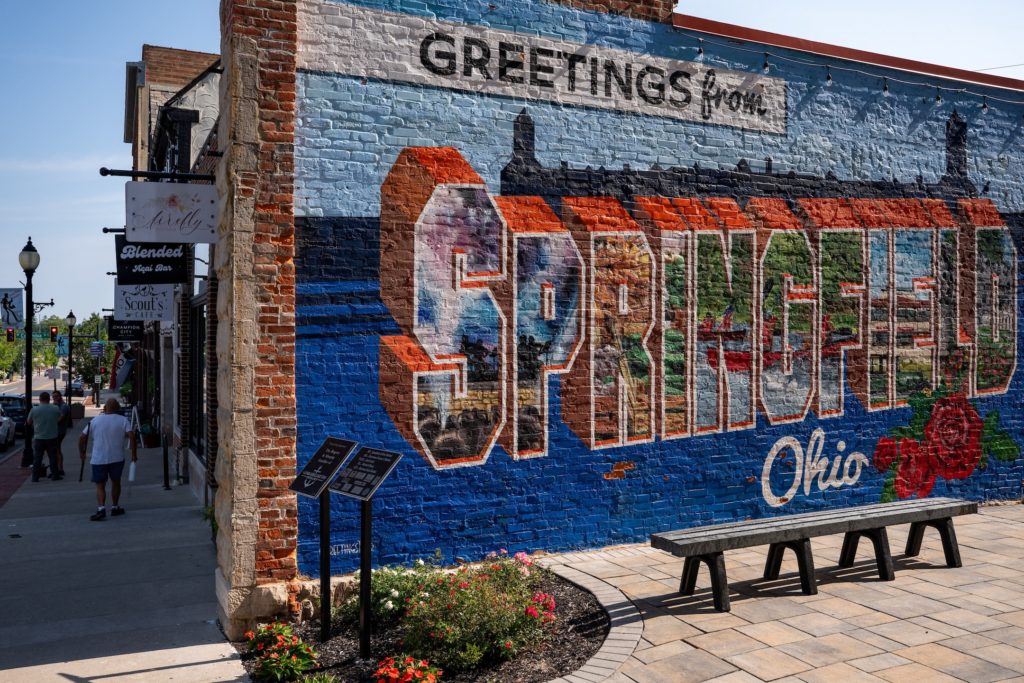
Late last month, the Trump administration let that status expire. And, overnight, about 350,000 Haitians became at risk of deportation. The impact is now hitting the small city of Springfield, Ohio, long a political flash point in the debate around immigration.
Stephanie Sy has that story.
Stephanie Sy:
In Springfield, Ohio, the streets have become quieter, with some businesses that cater to the city’s Haitian community shutting their doors.
At Rose Goute Creole Restaurant, once a busy gathering place for Haitian food, Estenson Clervil, passing through from Columbus, found the door locked.
Estenson Clervil, Haitian-American:
That’s why he’s slowing her business down. It’s not like these people came here illegally. No, they came here legally. So, why is there all this oppression going on in Ohio right now?
Stephanie Sy:
Within the past six years, Springfield grew as thousands of Haitians settled there, working, starting businesses, and transforming the community, while also fueling tensions with some locals who said the new arrivals were straining social services and changing the city’s culture.
Laura Rosenberger, a resident and then-executive chairman of the Clark County Republican Party, told us this earlier this year:
Laura Rosenberger, Springfield, Ohio, Resident:
There’s definitely a resentment in Clark County. I think a lot of the people, the native people, feel like they were not asked. It was not put to a vote. The people had no voice.
President Donald Trump:
We’re going to fix our borders. We’re going to fix everything.
Stephanie Sy:
But when Trump was reelected in 2024 on an anti-immigration platform, those voices were heard.
Chad Wolf, Former Acting U.S. Secretary of Homeland Security: It’s not that I necessarily blame Haitians or anyone else on TPS. The U.S. government has been selling them a lie for years.
Stephanie Sy:
Chad Wolf was the former DHS acting secretary under the first Trump administration. He says the basis for granting Haitian TPS, the 2010 earthquake, no longer applies.
Chad Wolf:
The Trump administration in the first term and now in the second term said, look, we’re going to follow the law. We’re going to end TPS after the period of time that it was originally granted. And obviously that’s been upheld recently by the Supreme Court.
Woman:
I do believe this is ICE agents up here in the car wash.
Stephanie Sy:
Now scenes like this, ICE detaining a man in a shopping center south of downtown, have Springfield’s Haitian community rattled. Dozens of residents have reportedly been detained by ICE, including a pastor, Gilbert Joubert Adrien.
James Fleurijean, Haitian Support Center:
People are really sad and devastated about this situation. You can see the fear, you can see the anxiety, you can see the stress on their official expression.
Stephanie Sy:
James Fleurijean works at the Haitian Support Center, which is now warehousing much-needed donations, food, diapers, feminine hygiene products. This community not only faces the threat of deportation. They also lost their work permits and their driver’s licenses, preventing many from being able to support themselves and their families.
James Fleurijean:
We have to keep feeding all these people. We don’t know for how long we can go. Our responsibility not only doubled, but tripled.
Stephanie Sy:
And over the last few weeks, says Fleurijean, hundreds of members of this community have been contacted by immigration authorities.
James Fleurijean:
All these people, they have already gone through the process.
I started to receive hundreds of them. People come in with this letter where they ask them to go to ICE check-in.
Stephanie Sy:
The letters instruct recipients to report to one of two ICE processing centers in Ohio. Once inside, ICE officers ask them to self-deport. Some of them have had their passports confiscated, and hundreds of them have left wearing ankle monitors.
Chad Wolf:
They’re called alternatives to detention. If you don’t put them on a monitor and you don’t put them in detention, then they are free to move across the country.
So, in essence, this is ICE’s ability to try to monitor maintain and track that individual. My guess is that most folks would prefer the monitors over being detained and in a detention facility waiting removal from the country.
Stephanie Sy:
After leaving the ICE facility with an ankle monitor last month, Haitian immigrant Monsanto Mailer (ph) became emotional, collapsing in tears.
Viles Dorsainvil, Director, Haitian Community Help and Support Center: Since the time he got here, he was in a panic mode. He couldn’t understand why he’s here. Haitians are so much afraid of this.
Stephanie Sy:
Viles Dorsainvil, who runs the Haitian Support Center, helped arrange transportation for mailer. He says the ankle monitors are a new source of shame for his community.
Viles Dorsainvil:
It makes them feel embarrassed and they don’t want to show this to the kids. I have a cousin of mine who has it. And when he came home, he was even embarrassed just to look at me in the eyes.
Stephanie Sy:
Later that day, Phillip and Vicky (ph) Vil left wearing monitors, Philip with one on his ankle. Vicky, who was pregnant, had one on her wrist.
Phillip Vil, Haitian Immigrant:
When you see that, you will say, you are a criminal. But, at work, I don’t know what’s going to happen in my work. Like, someone will look at me, this guy is criminal.
Deborah Thompson, Volunteer Driver:
It breaks my heart.
Stephanie Sy:
Deborah Thompson, a retired pastor from Mason, Ohio, volunteered to drive the couple to this appointment.
Deborah Thompson:
It reminds me of what slaves were like when they were shackled, balls and chains around their ankles, so that they could be kept controlled of and monitored.
Stephanie Sy:
Yesterday, near Springfield, a 20-year-old college student, Pierre Damas Bel, who had been fitted with an ankle monitor, walked into oncoming traffic in an apparent suicide.
In July, he wrote on social media: “I came to this country to pursue my education. I didn’t come here to commit a crime or hurt anyone. Yet now I’m walking through the streets of the United States with a GPS monitor on my leg, carrying a feeling of shame and humiliation that I never imagined I would experience.”
But, Wolf, who we spoke to before Bel’s death, says ankle monitors are just part of enforcing the law.
Chad Wolf:
They’re not trying to humiliate anyone. They’re trying to execute the law. They have been using ankle monitors for decades, and they will continue to use them going forward.
Stephanie Sy:
U.S. Immigration and Customs Enforcement declined our request for an interview, but in a written statement, they said: “DHS does not discuss ongoing or future operations.” It added that — quote — “Temporary Protected Status is exactly that, temporary. For too long, TPS has been allowed to function as a de facto amnesty program, despite Congress never intending it to be permanent.”
Earlier this year, they began offering a $2,600 cash incentive, plus a free flight home, to immigrants who agreed to self-deport, including Haitians who lost their TPS. The first such flight to Haiti landed in Cap-Haitien last month, carrying more than 160 passengers.
But for many of the 350,000 Haitians in the U.S. facing deportation, returning is fraught with peril.
Viles Dorsainvil:
If they go back to Haiti, their lives will be in danger.
Stephanie Sy:
Gangs control large swathes of territory in the capital city, Port-au-Prince. And just last week, at least 47 people were killed by armed men near the city.
The Trump administration has dismissed criticisms that it is sending Haitians back to one of the world’s worst humanitarian crises, including senior White House adviser Stephen Miller.
Stephen Miller, White House Deputy Chief of Staff: The fact that there might be pockets of Haiti where there’s higher crime rates, guess what? There’s pockets of Chicago with crime rates just as high.
Allie Pasieka, International Rescue Committee:
Haiti is not a safe place to return to. There is a very severe security crisis happening, not only with the gang violence, but throughout the country. And there is a very severe food insecurity crisis.
Stephanie Sy:
Allie Pasieka is an aid worker with the International Rescue Committee based in Port-au-Prince. She says the violence isn’t just in pockets.
Allie Pasieka:
For the capital city, there’s only about 10 percent of the city that is not run by gangs and therefore relatively safe. However, just because it is safe today does not mean that it will be safe tomorrow. And we are surrounded by locations that are under gang control or in locations where the gangs are actively fighting either the Haitian police or each other.
Stephanie Sy:
And would Haitians returning to Haiti from the U.S. potentially with more money in their pockets, would they arguably be at more risk?
Allie Pasieka:
Anyone is potentially a victim of the kidnappings that we’re seeing by the gangs. What will most likely make you target is a perception of wealth. With that, people that have been coming back from the U.S. could be perceived as more wealthy and therefore could be more at risk of being kidnapped.
Stephanie Sy:
Faced with the possibility of horror in their home country and humiliation in this one, many Haitians have no choice but to wait and hope.
For the “PBS News Hour,” I’m Stephanie Sy.


