This summer has been full of competition: from Spain winning the World Cup, to the NBA finals where the Knicks saw a historic comeback, to now, where an event in which drivers across the country are putting pedal to the metal and competing in the National Truck Driving Championships, colloquially known as the “Super Bowl of trucking.”
This year’s competition saw 429 drivers from 49 states who have logged a combined total of nearly 775 million safe driving miles throughout their careers, which is over 31,000 circles around the earth. Drivers from 55 companies, ranging from small mom-and-pop companies to Fortune 500 giants like Walmart, FedEx, XPO, and UPS, all vied in tests showcasing their driving, turning and parking skills as they [safely] raced for glory in Pittsburgh earlier this month.
“The entire motivation of this program is to make them better on the road and to continue to drive safe,” said Jacob Pierce, executive director of the American Trucking Associations’ Safety Management Council. “It creates a company culture where everybody buys into ‘every day is a safe day.’”
American Trucking Associations.
Why safety, not speed, wins
In 2024, large trucks accounted for nearly one in ten (9%) of all vehicles involved in a fatal crash, according to a National Safety Council study. And with 11 billion tons of freight moved by truck in 2024, the stakes of getting safety right extend far beyond the competition floor. Maneuvering a vehicle that weighs thousands of pounds needs extra caution when it comes to maintaining safe roads. For example, a loaded tractor trailer requires 20% to 40% more distance than cars to stop, according to data analyzed by The Insurance Institute for Highway Safety. Large trucks were involved in 5,218 fatal crashes in 2024, up 30% over the past decade, according to National Safety Council data.
Eric Ramsdell—a Walmart tank trunk driver who took first place in his division—said the championship reflects a responsibility that follows drivers on the road. “Every day we have to understand we have people’s lives at stake, equipment, our safe mileage record,” he told Fortune. The skills course, he added, puts competitors under pressure much like real-world driving does but requires them to “focus and maneuver safely around and do the pre-trip in a safe manner.”
But for companies eager to participate in the “Super Bowl of trucking,” as the competition is known as in the industry, they have to prove their drivers have what it takes to take on the open road—and aren’t afraid to hit the brakes when needed.
To qualify, drivers must win a top placement at their state competition, sport a clean, preventable accident-free safety record for the previous year, and meet full-time driving requirements with their company. And being “accident-free” isn’t as easy as avoiding a major crash: even incidents like hitting a curb and slicing a tire can cut drivers from the competition.
Pierce told Fortune he’s seen drivers go to state “20-plus times and have yet to make it to nationals, but they keep coming back because they want their chance.”
When inches matter more than speed
American Trucking Associations.
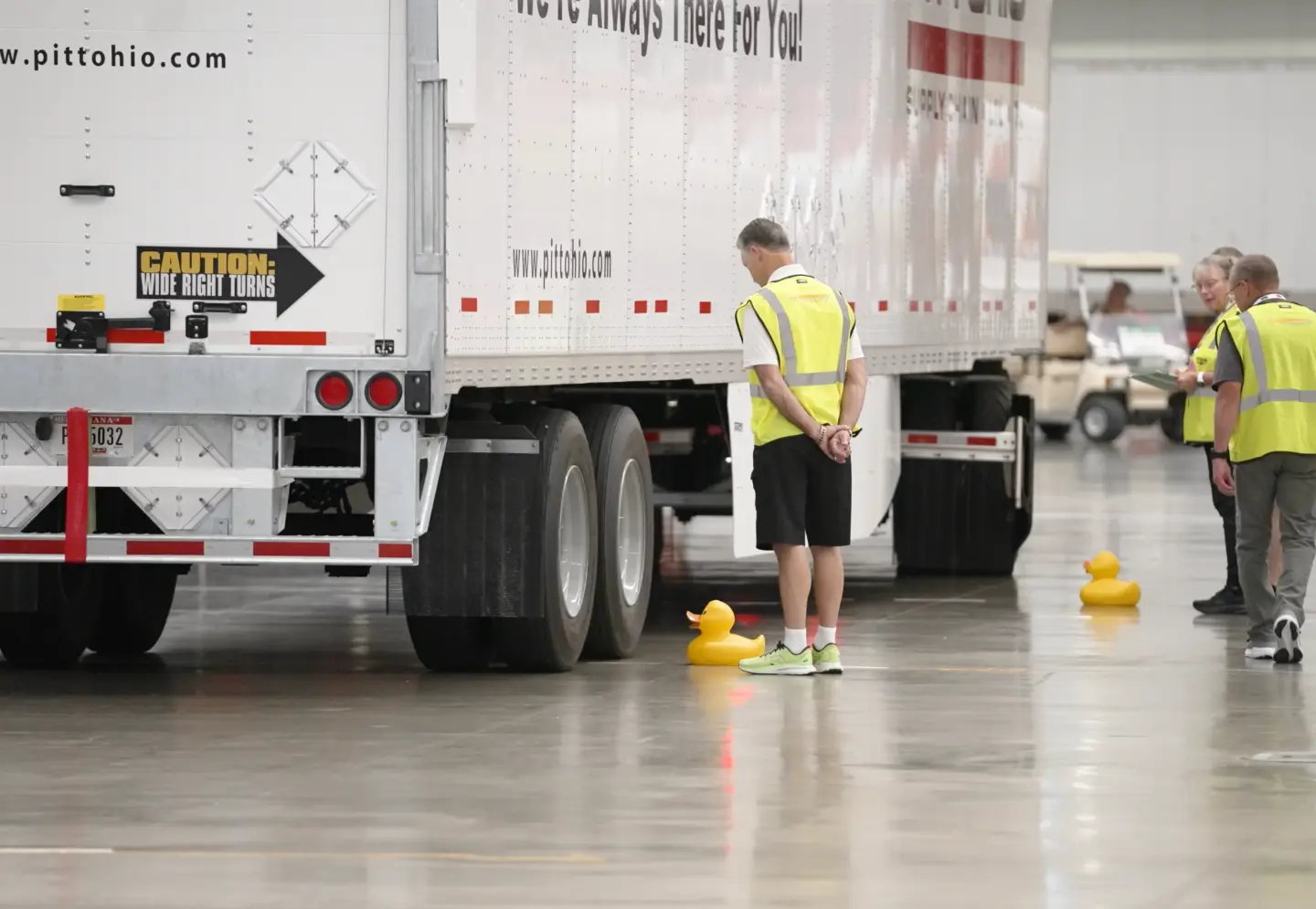
Competitions usually involve a mixture of timing and speed, but at NTDC, it’s all about precision—and not hitting a giant yellow duck.
The three-day competition began with a written exam that tested drivers’ road knowledge and safety. Next, there was a pre-trip inspection in which drivers are to identify planted safety-risks that they could face in real life. Decoys ranged from something big like an unsecured load, to easy-to-overlook details like a crack in the passenger side frame, a wiper blade missing, or a loose lug nut.
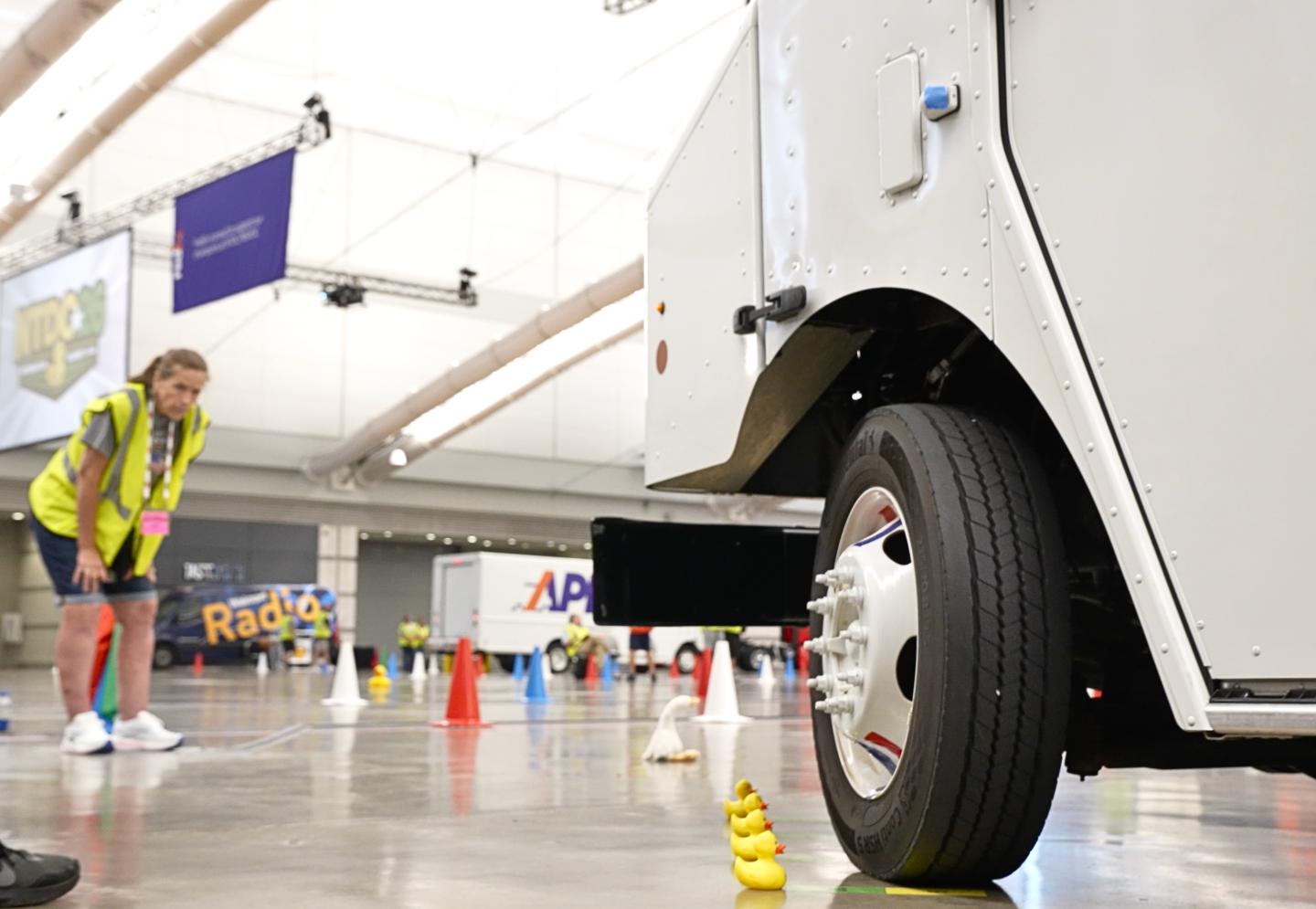
Competitors also faced an obstacle course in which drivers made their way down paths lined with cones and bright yellow, plastic ducks. To show off their precision skills, drivers made turns as close to the 3.5-inch-tall ducks as possible.
Factor in the lack of safety-assistance-technology like backup cameras, and drivers are forced to rely on instincts and skill. “We have to cover all that up because that would make it too easy for them,” Pierce said. “We are purists when it comes to driving a truck.”
Walmart.
The last truckers standing
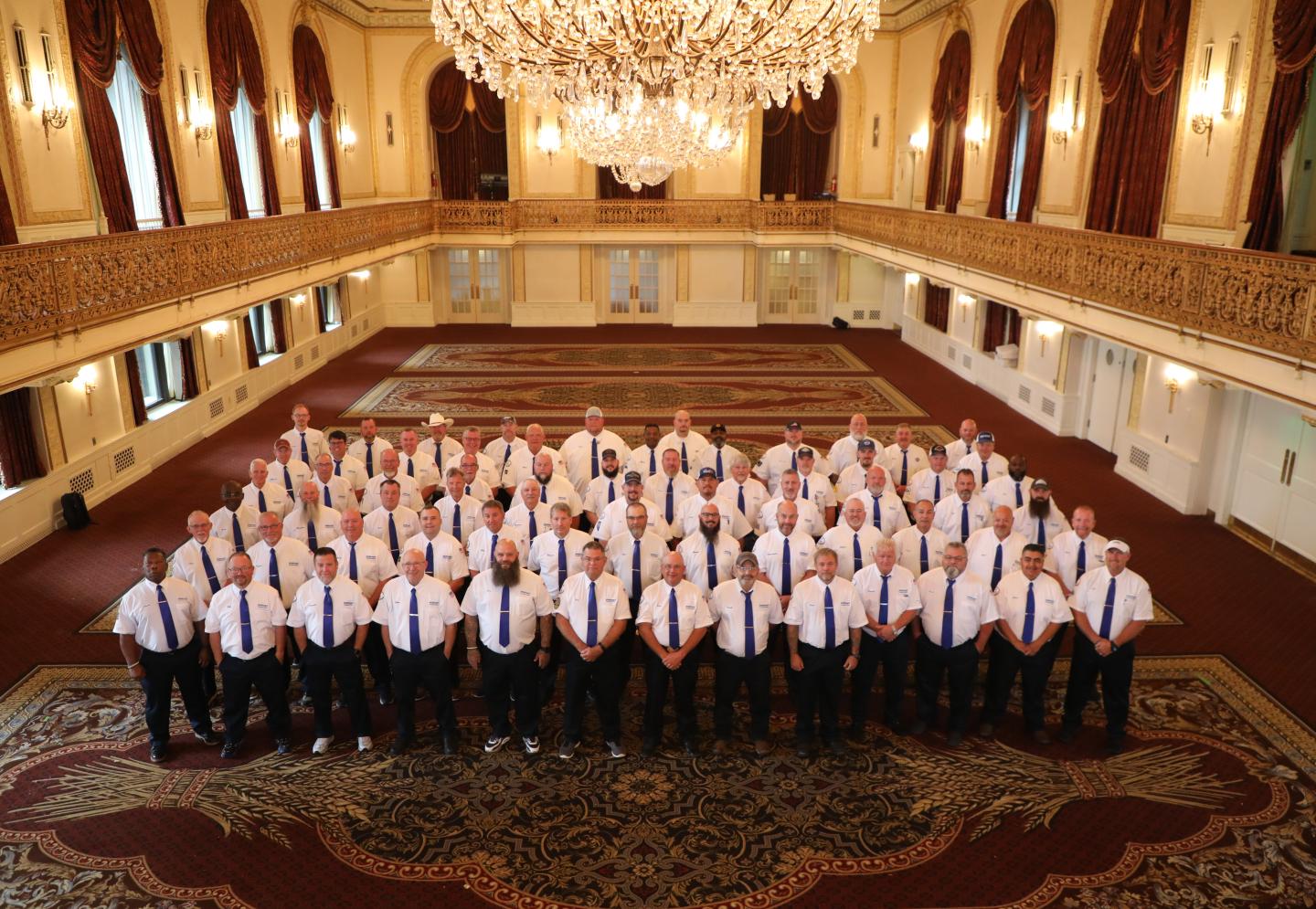
When day three rolled in, companies like FedEx, Walmart, and UPS dominated the leaderboards. FedEx has 18 finalists across two company divisions; Walmart had nine finalists and UPS had five, while smaller freight and shipping company XPO sported three. After a grueling obstacle course where drivers navigated tight turns, tight parking reverses, and quick, controlled stops, winners were finally selected for each of the nine classes, divided by the size of the truck: from flatbeds to three, four, and five-axle vehicles.
Another Walmart driver, Richard Prescott, took first place for the flatbed division. For Prescott, a first-time national winner who has spent the last 45 years in the trucking industry, simply reaching Pittsburgh was the result of years of close calls and incremental progress. “That process is extremely hard to get through,” Prescott told Fortune. “You have to do baby steps.” When Walmart was announced as the flatbed winner, he initially thought the trophy belonged to a teammate. “My boss… grabs me from behind, and I told him Mark won, and he says, ‘No, you did,’” Prescott said. “It’s still sinking in.”
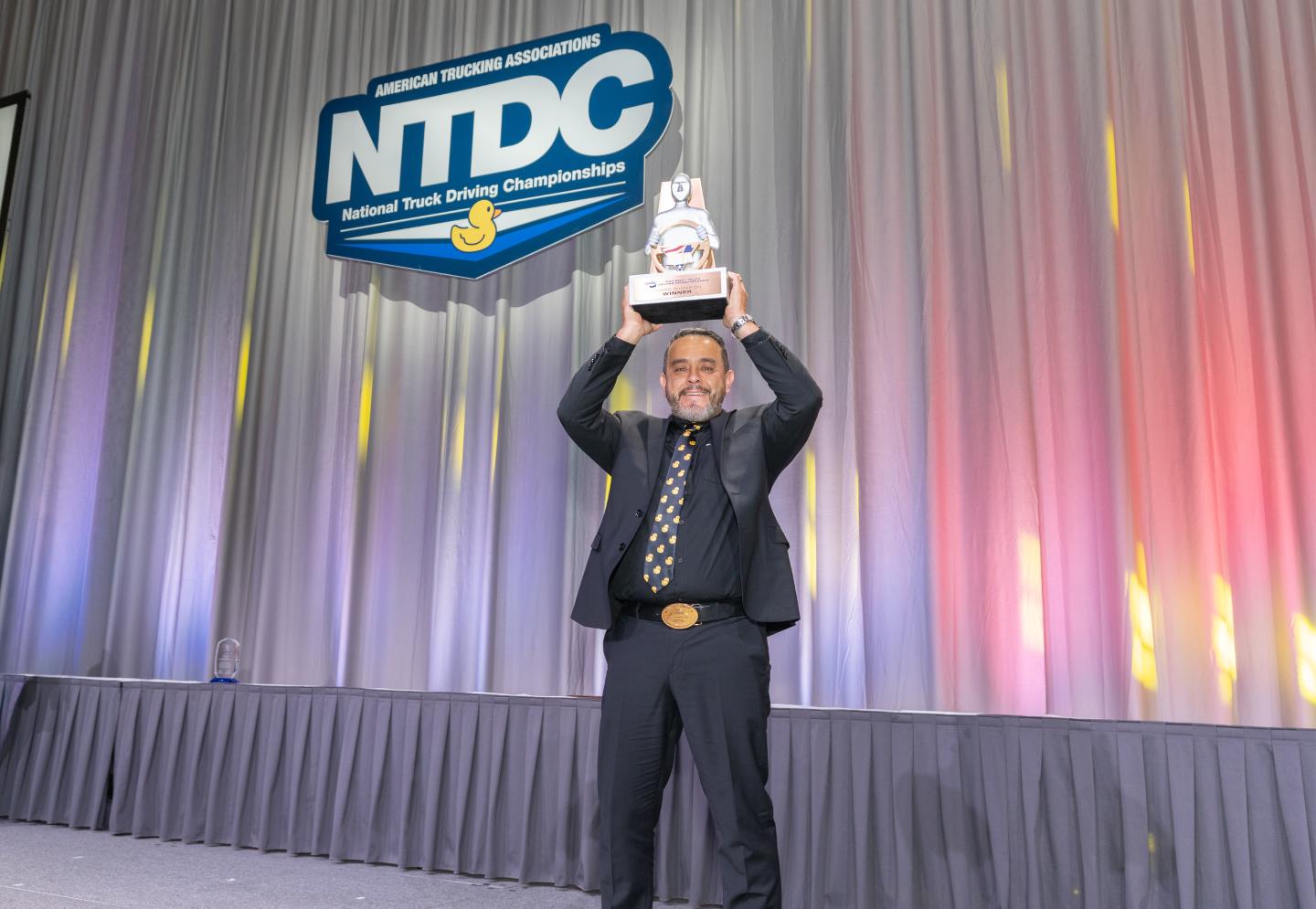
Miguel Corral competed for UPS under the four-axle division, and took home the grand champion title. Corral told Fortune he’s a nine-time NTDC competitor, and though there are always “nerves” when he competes, the event “feels like a family reunion.” The competition may be high-pressure, but its core skills are familiar. He said he approaches the pre-trip inspection much as he does before a normal shift: “I inspect my equipment every day, making sure to be thorough and complete each time.”
On the obstacle course, drivers are tested on accuracy, not speed, and Corral said that reflects the reality of the job. “Speed doesn’t prevent accidents, accuracy does,” he said. “You want to take your time and be safe.”
American Trucking Associations