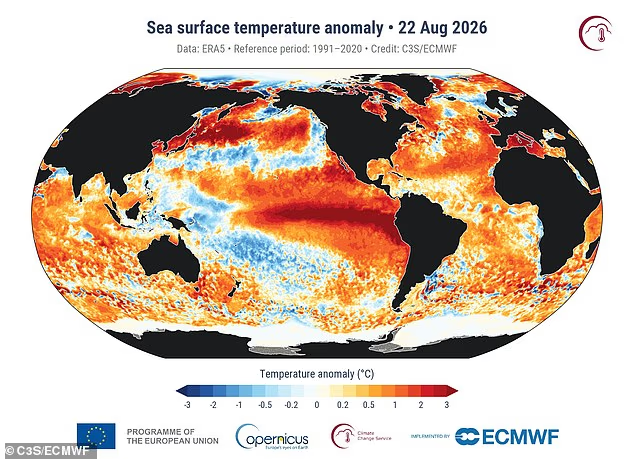
Global ocean temperatures have hit their highest daily average ever recorded, in a worrying sign that Super El Niño is ramping up.
The Copernicus Climate Change Service (C3S) confirmed that sea surface temperatures (SSTs) outside of the polar regions reached a sweltering 21.1°C (69.98°F) on August 22.
That surpassed the previous record set in March 2024, when daily average temperatures reached their peak at 21.09°C (69.96°F).
It also makes August 22 the hottest August day for the world’s oceans since records began, beating the previous record set in 2023.
This comes as a growing Super El Niño develops in the tropical Pacific, driving a huge buildup of hot water stretching out towards Oceania.
Experts say that El Niño is adding further heat to an ocean that has already been warming over many decades due to human–caused climate change.
Temperatures in this key area are already around 2.6°C (4.7°F) above the long–term seasonal average, and experts say that the worst is yet to come.
According to the Met Office’s latest predictions, warming in the Pacific could reach 3°C (5.4°F), while some reports project an increase as high as 4°C (7.2°F).
Global ocean temperatures have hit their highest daily average ever recorded, reaching 21.1°C (69.98°F) on August 22
Samantha Burgess, Strategic Lead for Climate at the European Centre for Medium–Range Weather Forecasts, says: ‘This record is another clear signal of an ocean under growing stress.
‘El Niño is adding heat to the system, but it is doing so on top of decades of human–driven warming.’
This record–breaking day comes at an especially worrying time for the global weather outlook.
Sea surface temperatures (SST) usually peak in March or April, when the ocean has had time to warm after the Southern Hemisphere summer.
The fact that we are now seeing a record–breaking day in late August is a testament to just how severely El Niño is already affecting global weather.
The El Niño Southern Oscillation is a naturally occurring climate cycle that shifts from hot El Niño years and cool La Niña years once every two to seven years.
As we enter an El Niño phase, the powerful trade winds that normally blow hot water across the Pacific towards Australia weaken, or even reverse.
That prevents cool waters welling up from the deep ocean below and causes hot water to collect near the surface off the west coast of South America.

Scientists say that El Niño has added to ocean heating caused by climate change, pushing temperatures to their highest point on record
Eventually, that hot water starts to spread out, raising the average global temperature and causing major disruptions to weather patterns around the globe.
Right now, that warming is reaching ‘unprecedented’ levels, with experts warning that an El Niño is building on a scale unlike anything seen since the 19th century.
Currently, the most obvious effect of this growing Super El Niño is that global average SSTs are now at their hottest point on record.
Most of the heating is localised within the core El Niño region around the Equatorial Pacific Ocean, but the effects are already starting to be felt globally.
Last month was the hottest July on record for the oceans outside the polar regions, with temperatures sitting at 20.96°C (69.7°F).
Meanwhile, Europe’s coastal regions have been battered by a succession of marine heatwaves that have sent temperatures soaring.
The impacts of El Niño are expected to be particularly impactful because they come on top of decades of ocean warming brought about by human–caused climate change.
While El Niño itself is not caused by climate change, this combination means average temperatures are likely to be much higher than they naturally would be.

This comes as experts warn of an ‘unprecedented’ El Niño event developing in the equatorial Pacific, which could send temperatures more than 3°C (5.4°F) above the long–term seasonal average

Experts warn that the Super El Niño will cause wetter and stormier weather in the UK during autumn and winter
Warming oceans threaten coastal communities and low–lying areas because water expands as it gets hotter, leading to sea level rises.
Hotter ocean temperatures also increase the likelihood of extreme weather, such as tropical storms and hurricanes.
Ms Burgess adds: ‘As ocean temperatures continue to rise, the risks to marine ecosystems and coastal communities also increase.
‘The consequences are already visible: the number of marine heatwave days globally has more than tripled since the early 1990s, putting increasing pressure on marine ecosystems and the communities that depend on them.’