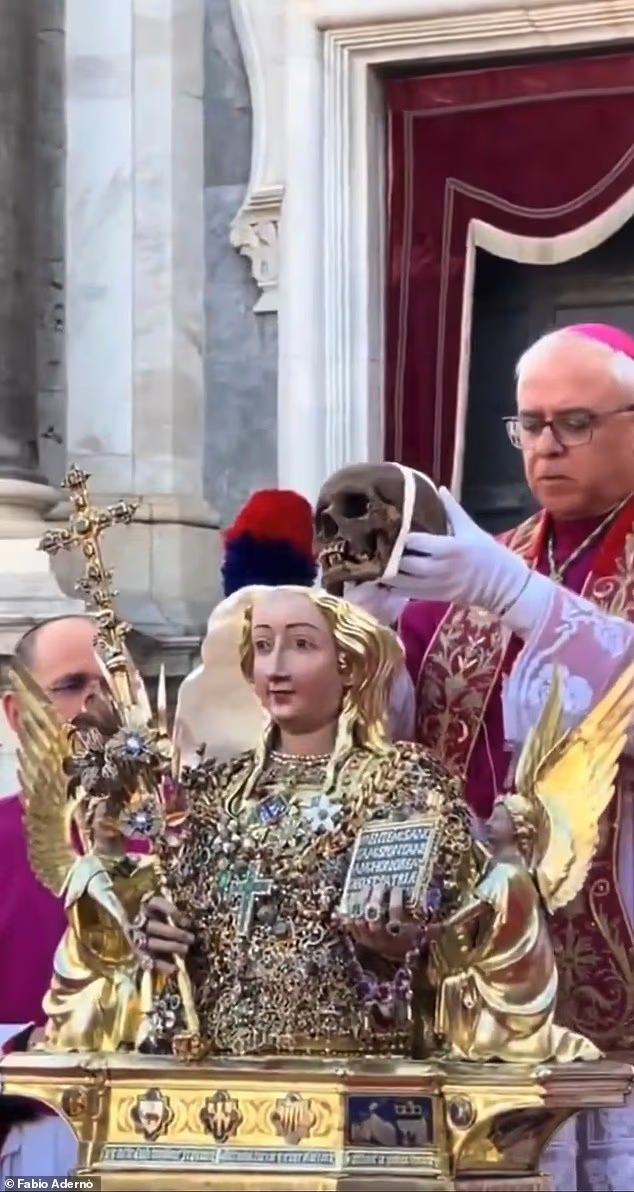
A 1,700-year-old skull was returned to a gold bust in an ancient Catholic ritual that saw one of the Vatican’s most powerful cardinals bow and kiss the relic.
The remains belonged to Saint Agatha, a third-century Christian martyr and the patron saint of Catania, Sicily.
Her skull had been temporarily removed from the famous reliquary while the ornate structure underwent restoration.
It was placed back inside during an elaborate ceremony at Catania Cathedral on August 17.
Cardinal Pietro Parolin, the Vatican’s Secretary of State, then leaned forward and kissed the relic as part of the traditional Catholic rite of veneration.
The ceremony commemorated the 900th anniversary of Saint Agatha’s relics being returned to Catania from Constantinople in 1126.
Footage of the striking ritual quickly spread across social media, exposing millions to a religious practice that has endured for centuries.
Catholics regard the act as honoring a saint rather than worshipping her remains, but the extraordinary scene has reignited debate among Christians over the veneration of relics.
The ritual involving Saint Agatha’s skull is a Catholic tradition of relic veneration in Catania, Sicily

During major celebrations, such as the recent 900th-anniversary commemoration of the return of her relics, the physical skull is taken out of its ornate gold and silver bust reliquary for public display
Many non-Catholics deemed the ritual ‘idolatry,’ meaning the worship of a physical object or image as a god.
However, one Catholic wrote on X: ‘This is permitted by Catholic tradition through the solemn crowning of sacred images, an ancient devotional practice expressing honor toward Christ, the Blessed Virgin Mary, or the saints.
‘It is sacramental/devotional symbolism, not worship of the statue itself.’
Saint Agatha, born around 231 AD in Catania, dedicated her life to God, becoming a consecrated virgin, a state in life where young women choose to remain celibate and give themselves wholly to Jesus and the Church in a life of prayer and service.
However, one man hoped to marry her and even threatened her with torture and death if she did not submit.
Agatha was then imprisoned and brutally tortured after refusing to renounce her faith, including having her breasts cut off.
According to Christian tradition, she died in prison around 251 during Emperor Decius’s persecution of Christians.
Agatha was later honored as a martyr and became Catania’s patron saint. Her relics were taken to Constantinople centuries later before being returned to her hometown in 1126.

Church leaders handle, present, and kiss the skull as a sign of deep spiritual respect for the martyr, rather than worshiping the bone itself

The ceremony commemorated the 900th anniversary of Saint Agatha’s relics being returned to Catania from Constantinople in 1126

The skull is placed inside the statue designed to look like Agatha
This month’s ritual saw Church leaders carry the skull in a historic procession, show it to the crowd for public prayer and place it back into its decorated 14th-century gold bust.
Within Catholic tradition, kissing a relic is an act of veneration, showing deep respect for a saint, rather than worship, which is reserved for God.
Catholics view relics as tangible links to figures from the early Church and reminders of the courage they displayed. Believers may also pray beside them, asking the saint to intercede with God on their behalf.
For Catania, the ceremony carried added significance because it marked 900 years since Agatha’s remains were returned from Constantinople.
Crowning the reliquary symbolized her triumph over death and honored the sacrifice she made for her faith.
Cardinal Parolin then crowned the reliquary bust of Saint Agatha as part of the ceremonies commemorating the anniversary.
Parolin attended the celebration as Pope Leo XIV’s official representative, linking the local ceremony to the wider Catholic Church.
The anniversary events began with a prayer vigil on August 16, followed by a pilgrimage before dawn.

Kissing the skull of Saint Agatha is a Catholic expression of veneration, devotion, and deep community respect for a revered martyr, rather than an act of worship
Church bells rang across the archdiocese as worshippers accompanied Agatha’s relics toward the cathedral, retracing the homecoming that took place nine centuries earlier.
Inside, the Archbishop of Catania presented the skull to the congregation before it was secured inside the Busto Reliquiario, the ornate silver-gilt bust in which it is traditionally housed.
Agatha’s other remains were placed inside a separate silver reliquary casket known as a scrigno.
Parolin later placed a crown on top of the bust during one of the ceremony’s central moments.
The gesture did not confer sainthood, rather, Agatha had been venerated for centuries, but it honored her status as a martyr and Catania’s spiritual protector.
The celebration is known locally as Sant’Agata d’Agosto, or Saint Agatha in August.
Unlike the larger February feast commemorating her martyrdom, the summer observance remembers the return of her relics.
According to local tradition, the remains were taken to Constantinople in 1040 and recovered by two soldiers 86 years later.
Their arrival back in Catania on August 17, 1126, established a commemoration that continues today.