WASHINGTON (AP) — The Trump White House said in a new report on Thursday that countries are routing their exports through third countries to avoid U.S. tariffs, estimating that there are tax revenue losses of $19 billion to $26 billion annually.
The report specifically highlights that China responded to new tariffs in 2018 by sending their goods to other nations ranging from Mexico to Malaysia for packaging and limited assembly — a practice known as transshipping. That pattern made it look like U.S. imports from China had dropped, but enabled Beijing to continue growing its manufacturing sector in ways that could challenge U.S. factories and employment.
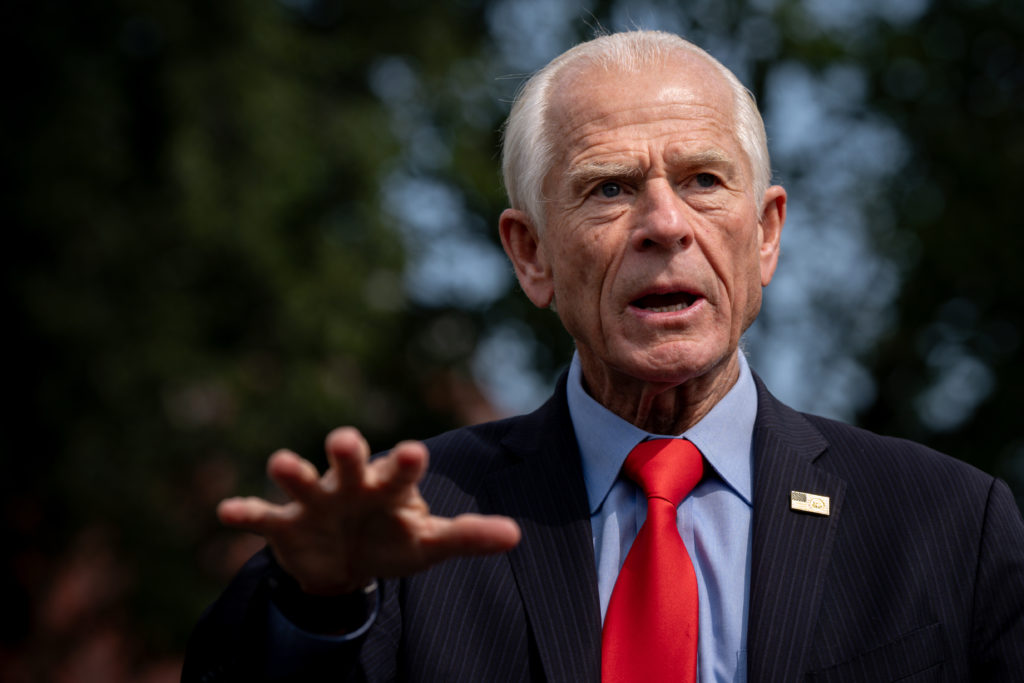
Peter Navarro, the White House trade adviser, told reporters on a conference call that China is laundering its exports through more than 40 countries, though he claimed that the issues raised in the report were really more about other nations enabling the avoidance of tariffs.
“For years, the great transshipment scam has let communist China launder its exports,” Navarro said.
Watch the video in the player above.
The report comes ahead of a planned September visit by Chinese Leader Xi Jinping, who President Donald Trump described in flattering terms during his own visit to Beijing in May.
The Chinese government has described its relationship with the U.S. as one of “strategic stability,” yet its government policies that support exports of manufactured goods have destabilized the auto, metals and electronics sectors in America, Europe, Japan and elsewhere.
Navarro said that other nations such as India could also transship to avoid new tariffs and said that new trade frameworks pursued by the Trump administration are going to contain provisions that ensure trade partners that engage in the practice will be penalized.
The Trump administration has levied high tariffs on much of the world in hopes of protecting U.S. manufacturers, hitting allies and rivals alike with import taxes. At the same time, those tariffs have created new inflationary pressures at home.
The report includes a range of estimates for the scale of transshipments to avoid tariffs, citing government and private sector numbers to estimate roughly $34.2 billion to $303 billion of goods transshipped each year. It used a central figure of $75 billion worth of goods being transshipped to estimate how much in tax revenues have been lost.
To address the challenge, Navarro said that U.S. Customs and Border Protection has started to use artificial intelligence in a prototype program to stop transshipments. Navarro said that when an importer has been found to have falsified the origins of a good, its imports can be retroactively tariffed going back roughly a year.
The president’s tariffs during his second term have faced an array of legal challenges, with the Supreme Court overturning some of them in February. America continues to import more than it exports to the rest of the world, but the trade imbalance so far this year at $371 billion is running about $189 billion lower that it did during the same period last year.