Last week, Tyson Foods CEO Donnie King offered investors a sobering report on beef prices: “Beef hasn’t performed the way we expected,” King said during an earnings presentation, “and we’re not pretending otherwise.”
These soaring prices have not just left meatpacking giants like Tyson looking for answers—they’ve impacted the entire cattle industry. And while some sectors like feedlot farmers are beginning to reel from dwindling inventories, others like ranchers are being minted as the major winners.
The Bureau of Labor Statistics latest consumer price index data indicates beef prices have soared 11.8% in the last year, including 1.2% on a monthly basis in June. Ground beef prices are up 12.4% year-over-year, and beef roast prices have increased even higher, up 13.8% from a year ago. While a natural cattle cycle shifts inventories roughly every decade, leading to ebbs and flows in beef prices, the current herd sizes are the smallest they’ve been since 1951 as a result of severe droughts drying up pastures, as well as the spread of flesh-eating screwworms limiting cattle imports from Mexico.
Cash cows
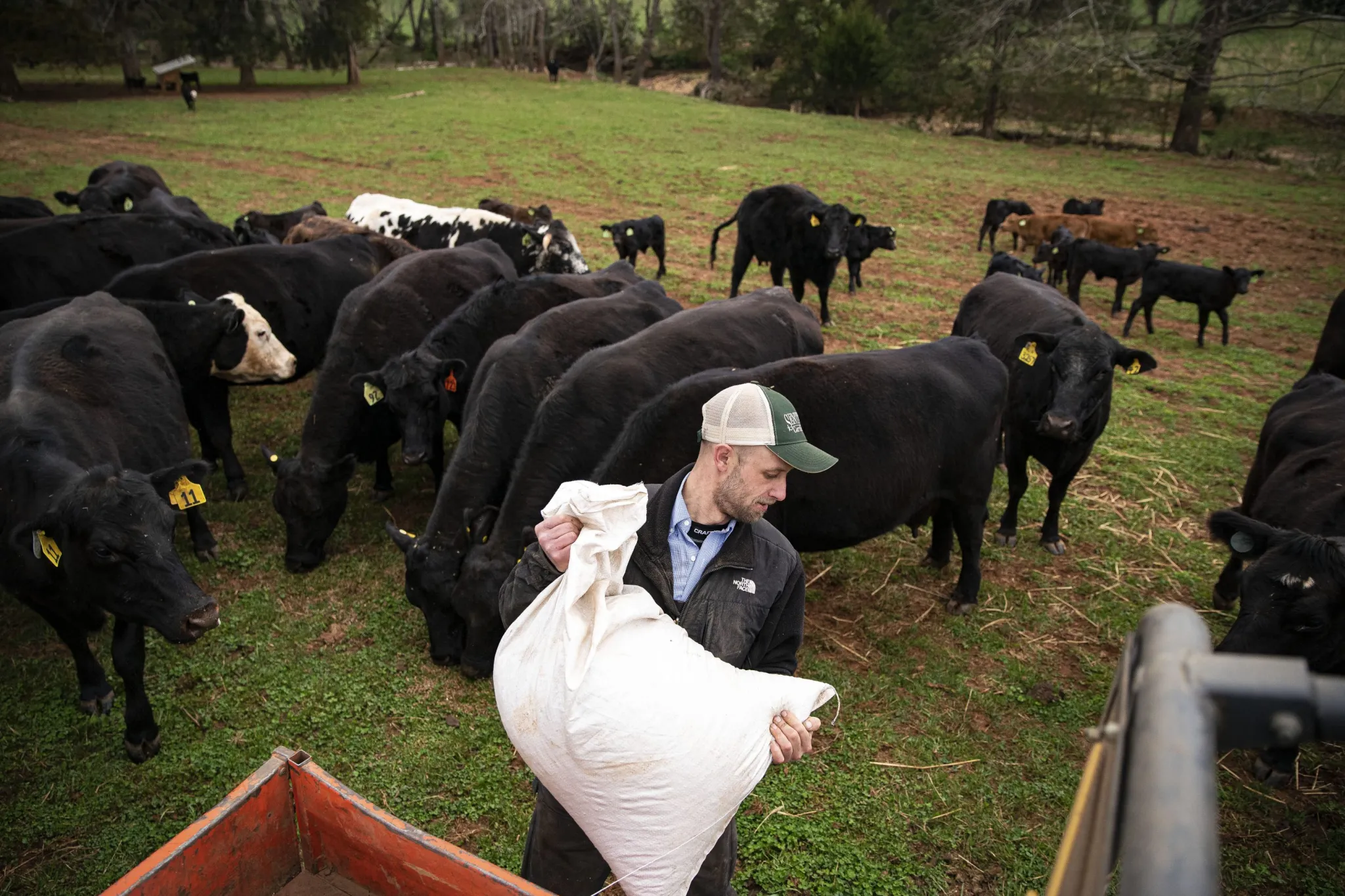
The tight supply means those at the foundation of the cattle industry are seeing profits grow. Cow-calf ranchers, who raise permanent herds of mother calves to sell for beef, produce the supply of cows for the entire industry and have been able to hike prices.
Prices for feeder calves are expected to increase from $437.44 per hundredweight today to up to $467 per hundredweight in 2027’s second quarter, according to David Anderson, a Texas A&M professor of agricultural economics.
“At that primary level, cow-calf production, they are making more money,” Derrell Peel, a professor of agribusiness specializing in livestock at Oklahoma State University, told Fortune. “They’re making record returns, by and large.”
Where’s the beef?
Most other parts of the industry, however, are under greater pressure, having to buy more expensive cattle while facing slimming margins, including rising input costs for fertilizers, chemicals, and equipment as a result of tariffs, Peel explained. Most economists expect those costs to remain elevated or continue to increase.
“Pretty much everybody above [cow-calf producers] is a margin operation, and most of those margins are under some sort of adverse pressure,” Peel said. “The farther we go with this, the squeeze on cattle numbers is getting tighter.”
Among those sectors are feedlot farmers, who ration grain to cattle in the last few months of their lives to have the animals quickly gain weight before they are processed. For a while, the feedlot sector could maintain profitability because there’s about a six-month time lag between when farmers buy the calves and when they are again sold to be processed, Peel noted. Feedlots have been able to stay full by keeping turnover down, even as their own incoming supply of cattle also slows.
But that’s likely to change as the shortage continues. According to the U.S. Department of Agriculture’s Cattle on Feed report for June, while the number of cattle and calves on feed increased year-over-year for the month, there’s been a year-over-year decrease in both cattle being placed on feed and fed cattle being marketed.
“Feedlots are having trouble,” Peel said. “They’re going to have more and more trouble in the coming months of maintaining that volume and keeping their feedlots full.”
Other parts of the industry are also struggling, including meatpackers like Tyson Foods. Last week, the Arkansas-based food producer saw a $138 million operating loss on its beef segment, and sales volumes in the segment dropped 15.9%, while prices rose 12.1%.
Better pastures
The bifurcated fortunes of the cow-calf ranchers and the feedlot farmers is reflective of the challenges the cattle industry faces today, Peel said, but it’s not necessarily unique to this shortage. The boom-bust cycle of herd inventory is a natural part of the industry. When herd inventories are high, cow-calf ranchers struggle with a glut of cattle to sell; meanwhile, feedlots, meatpackers, and other parts of the industry enjoy greater profits.
“It’s oftentimes the case that when one sector is doing well, another part of the industry is struggling,” Peel said. “Over time, they all tend to average out.”
What makes this cattle cycle different is that it’s been exaggerated by external factors, primarily the droughts, Peel said. Rebuilding herd inventories takes some time to begin with, and is even more challenging when there’s a deeper shortage, as there’s an even smaller population of females.
The beef industry may be familiar with the up-and-down dynamics of the cattle cycle, but the prolonged shortage means the sectors struggling will have to flounder a little longer than what is typical.
“It’s been a slower than usual process,” Peel said. “It could have started two years ago…but it hasn’t for various reasons, and so we’re still kind of waiting for that to happen. It’s going to prolong this period of tight supplies and the margin structure that we have today.”