Global Aviation Round-Up from Aircraft Value Intelligence (AVN)
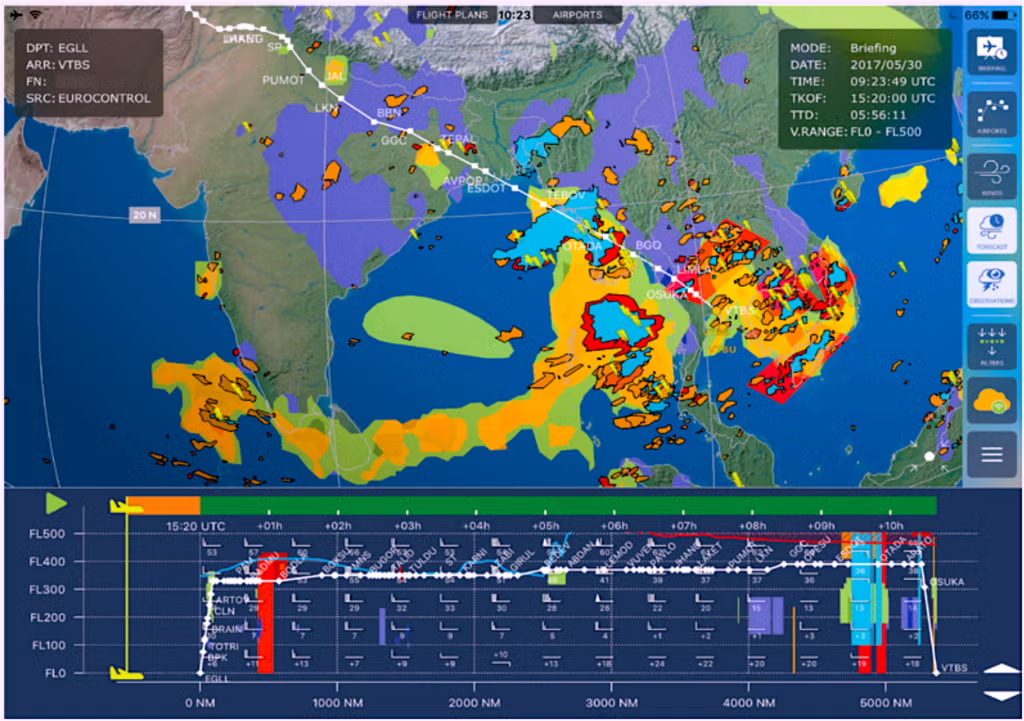
A weather forecasting image generated by eWAS. Photo: SITAONAIR
For all the advances aviation has made over the past century, one challenge has never gone away: weather.
Storms, turbulence, icing, wind shear, and rapidly changing conditions continue to shape every flight. They influence departure times, routing decisions, fuel planning, and whether an aircraft can safely reach its destination. Pilots have always had to respect the weather. The difference today is that they have far better tools for understanding it.
A new generation of weather technology is changing the way pilots see and respond to the atmosphere. More powerful sensors, improved satellite data, and advanced analytics are giving flight crews a clearer picture of conditions before and during a flight.
The result is not a replacement for pilot judgment. It is a more informed cockpit. For decades, pilots depended on weather briefings, onboard radar, and reports from other aircraft.
Those tools remain essential, but aviation is moving toward a more connected approach in which weather information is updated continuously and delivered directly to the people who need it.
Modern aircraft can already receive detailed weather information while in flight, including storm activity, winds aloft, turbulence reports, and changing conditions along a route. The next step is making that information more useful by helping pilots interpret what it means for a specific flight.
That shift is especially important as weather patterns become more difficult to predict. Rapidly developing storms and changing atmospheric conditions can create challenges even for experienced crews. Better data can give pilots more time to adjust course, avoid hazards, and make decisions before a situation becomes urgent.
The Role of AI
Artificial intelligence is beginning to play a role in that process. By analyzing enormous volumes of weather data, AI-powered systems can identify trends and patterns that may be difficult for humans to detect. Potential applications include improved turbulence forecasting, more accurate arrival planning, and better predictions of hazardous conditions.
Airlines are also looking at weather technology as a way to improve efficiency. A better understanding of winds, storms, and routing options can reduce unnecessary deviations, save fuel, and minimize disruptions. Even small improvements can have a major financial impact across large fleets.
The benefits extend beyond commercial aviation. Business aircraft operators and general aviation pilots often have fewer resources available than major airlines, making accurate weather information even more valuable. Advanced cockpit systems can provide smaller operators with capabilities that were once limited to the largest fleets.
The cockpit itself is changing as well. Traditional weather displays primarily showed pilots where hazards were located. New systems are increasingly focused on helping crews make decisions.
Instead of simply displaying a line of thunderstorms ahead, future systems could provide more context: how quickly a storm is developing, whether a route change is advisable, or how conditions may affect fuel requirements and arrival timing.
Still, aviation remains cautious when introducing new technology, and for good reason. Weather is complex, and no computer system can eliminate uncertainty. The most advanced tools are designed to support pilots, not replace their experience and decision-making.
John Persinos is the editor-in-chief of Aircraft Value Intelligence. For his recurring video reports covering the nexus of aerospace, technology and finance, click here.