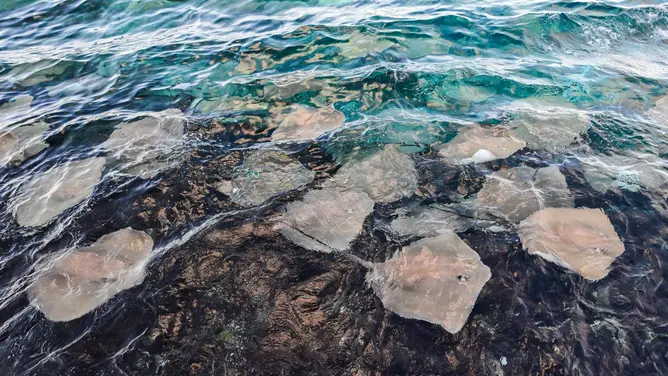
A group of stingrays was spotted swimming through Newtown Creek in New York City. The sighting comes as ongoing cleanup and habitat restoration efforts continue in one of the nation’s most heavily polluted waterways.
NEW YORK CITY, NY – A group of rays were spotted swimming in New York City’s Newtown Creek last week, offering a possible sign that the heavily polluted water may be showing signs of improvement.
SCIENTISTS MAKE BREAKTHROUGH DISCOVERY OF INSECT SPECIES THAT IS SURE TO GIVE YOU NIGHTMARES
In a social media post shared by the Newtown Creek Alliance, a group of rays can be seen swimming together through the creek.
A group of rays were spotted swimming in New York City’s Newtown Creek.
(ISHARA S. KODIKARA/AFP via Getty Images / Getty Images)
The school of rays, known as a fever, were captured splashing through the waterway, which has long been considered one of the most polluted waterways in the U.S.
According to the alliance, the animals appear to be cownose rays, a species native to the region that primarily feeds on crustaceans and shellfish and are found throughout the western Atlantic Ocean, including along the East Coast.
MEET THE RARE TWO-HEADED GECKO THAT IS GOING VIRAL FOR DEFYING THE ODDS
Experts are not sure why the rays were in Newtown Creek, which is a branch of the East River, but the Newtown Creek Alliance believes their presence may be connected to their restoration efforts, including a mussel restoration project.
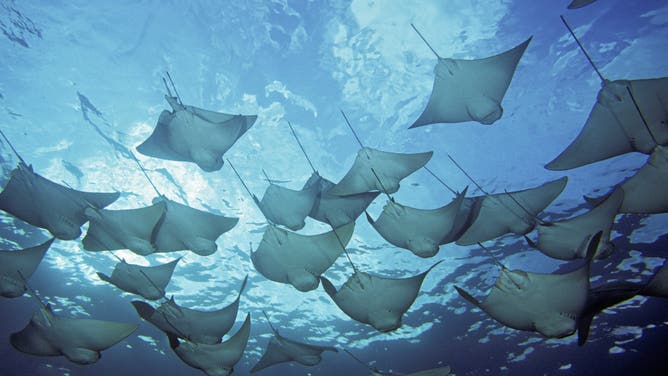
This is but a small portion of a huge school of cownose rays.
(David Fleetham/VW PICS/Universal Images Group via Getty Images / Getty Images)
Newtown Creek, which runs between Brooklyn and Queens, has a long history of pollution.
In 1978, researchers identified the Greenpoint oil spill in and around the creek, one of the largest oil spills ever recorded in the U.S. Between 17 and 30 million gallons of oil and petroleum from nearby facilities leaked into the waterway over several decades.
GREAT WHITE SHARK QUINT ARRIVES AT KEY SEASONAL HABITAT NEAR CAPE COD
Years of industrial activity, including oil spills, chemical dumping and wastewater contamination, left the creek severely polluted.
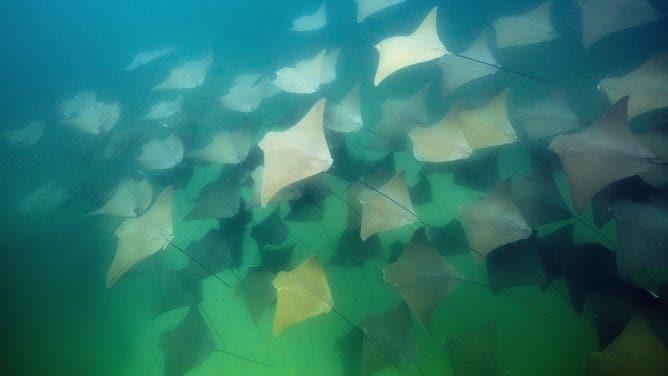
School of Pacific Cownose Ray in the water.
(Reinhard Dirscherl/ullstein bild via Getty Images / Getty Images)
The waterway is now part of a major cleanup effort led by the Environmental Protection Agency (EPA), which is working to remove contaminants and restore the ecosystem.
CORAL ECOSYSTEM REEMERGES AFTER 60 YEARS WITHIN THE OCEAN’S ‘TWILIGHT ZONE’
The Newtown Creek Alliance has also developed restoration projects aimed at improving water quality, including a mini marsh tank featuring salt marsh cordgrass and Atlantic ribbed mussels. The system filters hundreds of gallons of water every day.
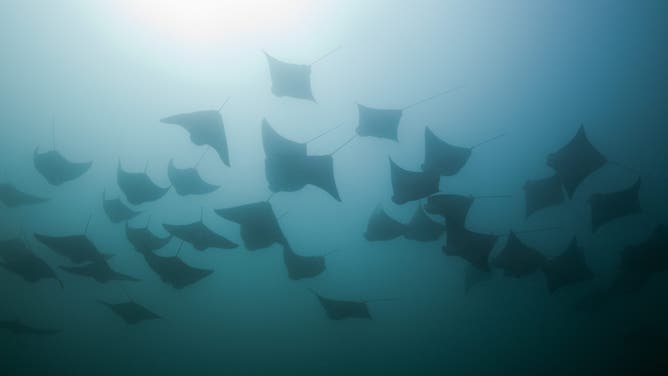
The school of rays known as a fever, were captured splashing through Newton Creek waterway.
(Reinhard Dirscherl/ullstein bild via Getty Images / Getty Images)
During high tide, water from the creek is pumped into the tank, where plants, mussels and naturally occurring organisms help filter the water before it is released back into the creek.
ATLANTIC SHARK INSTITUTE TAGS ITS FIRST-EVER HAMMERHEAD SHARK OFF COAST OF RHODE ISLAND
While the marsh alone will not restore Newtown Creek, officials said it shows how habitat restoration can support larger cleanup efforts.
For now, the recent sighting of rays in the creek offers a hopeful sign, suggesting that restoration efforts may be helping bring wildlife back to a waterway.