A 6-inch megalodon shark tooth was found by a Wyoming teen during a dive trip off Manasota Key, Florida earlier this week.
A monster discovery was just made at the bottom of the South Pacific, after officials found several megalodon teeth on the ocean floor.
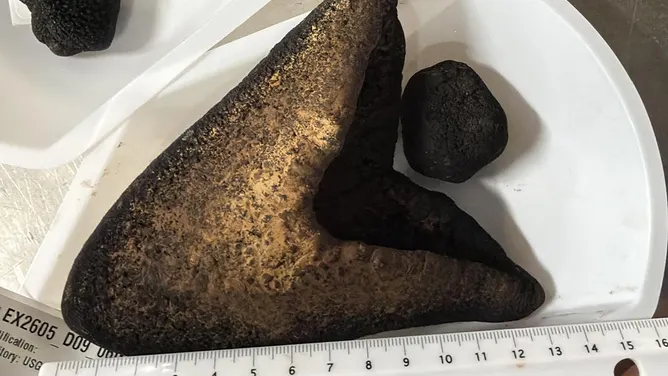
While using remotely-operated vehicles along the southwestern part of the Cook Islands, experts stumbled upon large fossil fish teeth, according to the NOAA.
Through further examination, researchers were able to analyze the teeth, measuring three inches in length, indicating it most likely belonged to a megalodon shark.
SEE IT: RARE AND ANCIENT MEGALODON SHARK TOOTH FOUND BY TEEN IN OCEAN OFF FLORIDA KEYS
This shark was once the most fearsome predator, roughly 3.6 million years ago, roaming every corner of the ocean, and was roughly three times the length of a modern-day great white shark.
This shark tooth collected during the 2026 Cook Islands ROV Exploration cruise measured 13 centimeters (5 inches) in length!
(NOAA Ocean Exploration)
The megalodon is the largest shark to have ever lived, with a powerful bite and a jaw full of massive teeth as large as an adult human hand.
Researchers were able to hold the large teeth, showcasing the size and power that this creature once possessed, as it had the ability to tear chunks of flesh from even the largest whales of its time.
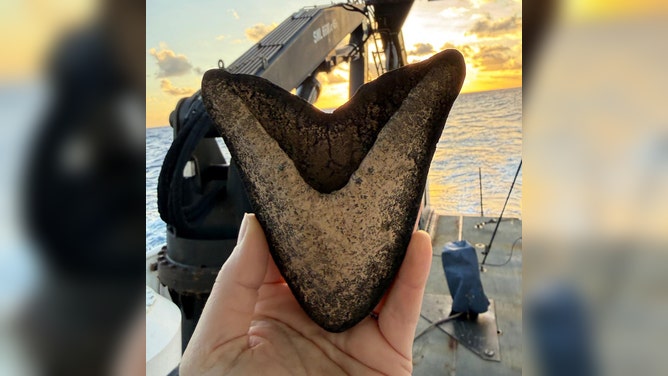
A shark tooth collected during the 2026 Cook Islands ROV Exploration cruise.
(NOAA Ocean Exploration)
“While they have been extinct for over 3 million years (save for in the movies), their teeth continue to provide us with valuable clues about the ocean environment,” NOAA said.
FOSSIL REVEALS ANCIENT GIANT SALAMANDER THAT LIVED 3.5 MILLION YEARS AGO
Due to the fact that fossilized fish teeth do so well in absorbing rare Earth elements from the water, analyzing the concentration of such elements trapped in the teeth can serve as a unique tool to track past ocean circulation patterns.
“Fish teeth are also often the nucleus around which polymetallic nodules form, with minerals such as manganese and iron slowly accumulating around the tooth, layer by layer, over millions of years,” NOAA said.
The megalodon was roughly 60 feet in length and probably weighed around 50 tons, the size and weight of a railroad car, according to the National Museum of Natural History.
Through further research and analysis, the predators’ large teeth can provide clues about the prehistoric ecosystem from millions of years ago.