Tuesday, August 4, 2026
No Result
View All Result
LJ News Opinions
  • Home
  • U.S.
  • Politics
  • World News
  • Business
  • Entertainment
  • Sports
  • Technology
  • Health
  • Opinions
  • Home
  • U.S.
  • Politics
  • World News
  • Business
  • Entertainment
  • Sports
  • Technology
  • Health
  • Opinions
No Result
View All Result
LJ News Opinions
No Result
View All Result
Home Opinions

What will happen when a SpaceX rocket collides with the Moon?

by LJ News Opinions
August 4, 2026
in Opinions
0
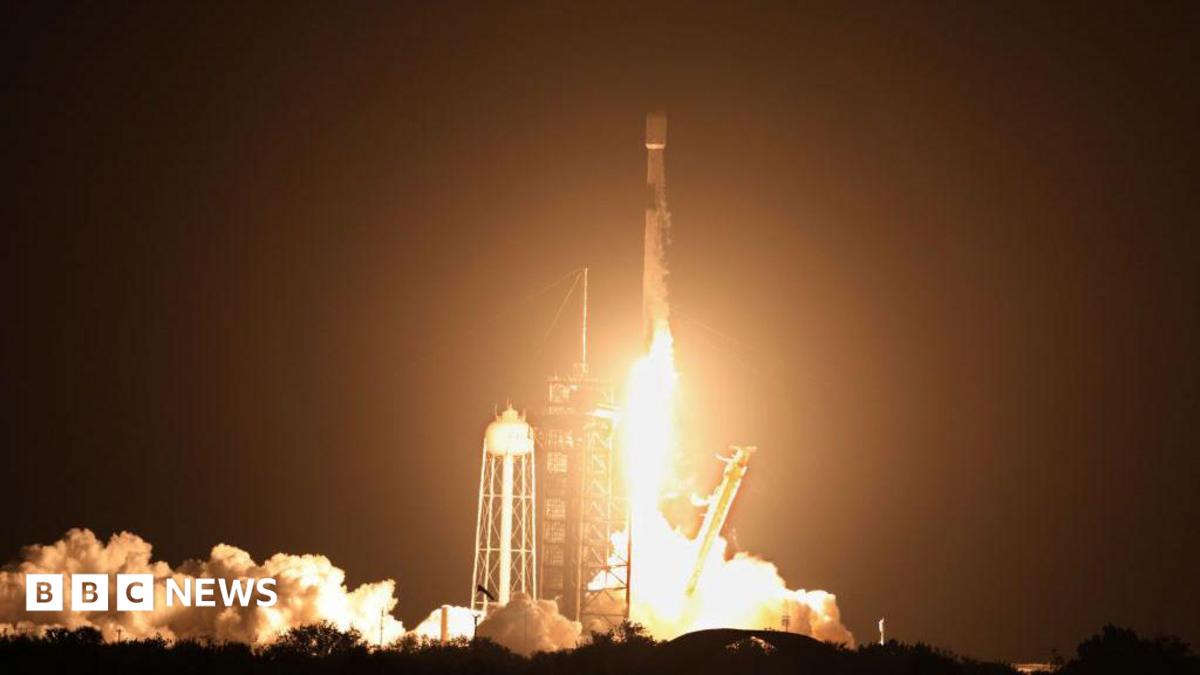
File image of a a Space X Falcon 9 rocket launching from Cape Canaveral, Florida, on 15 January 2025. Flame from the rocket are visible at the base as it hurtles into the air
Share on FacebookShare on Twitter


The impending collision – predicted to happen at about 02:35 EDT (06:35 GMT) on Wednesday – is expected to captivate astronomers, both amateur and professional.

“It’s something really huge smashing into the Moon. It’s not remotely dangerous, we can just watch the show,” says Dr Matt Bothwell, public astronomer at the University of Cambridge.

“It’s going to impact and its going to send up a huge plume of dust, maybe 50km into the air or more, and that’s going to spread sideways over time,” Bothwell said.

Given the Moon’s lack of atmosphere and far weaker gravitational pull, the moment of impact will be “more impressive than any [similar] explosion on Earth”, Bothwell said.

Nothing will slow the object down, like the atmosphere would do here on Earth – and nothing will prevent the estimated million kilograms in debris from rocketing up into space.

While the impact will not be visible from Earth with the naked eye, people with access to a sophisticated telescope may be able to see a flash radiating off the Moon’s surface, Bothwell said.

More significant would be the educative potential of the impact, Bothwell noted. He said this moment would present a unique opportunity to study what happens when an object hits the Moon.

Scientists are therefore gearing up to watch the event closely.

Big telescopes in the Americas, plus Nasa’s Lunar Reconnaissance Orbiter and South Korea’s Danuri probe, will track the flash, plume and new crater, and a citizen‑science project is signing up keen amateurs to film the impact too.

By catching the dust plume in action, astronomers hope to turn this accidental crash into a useful experiment.

Watching how much material gets thrown up, how high it goes and how it falls back should sharpen their models of lunar impacts – and even give clues about what lies just beneath the surface at the impact site, where fresh subsurface material will be exposed for the first time.



Source link

LJ News Opinions

LJ News Opinions

Next Post
An unidentifiable Russian soldier stands with his back to the camera

Soldier kills four in gun rampage in Russian-occupied Crimea

Recommended

Lightning sparks Texas grass fire that has scorched more than 14,000 acres

3 months ago

Apple Valley couple illegally grew thousands of pot plants: SBSD

1 year ago

Popular News

    Connect with us

    LJ News Opinions

    Welcome to LJ News Opinions, where breaking news stories have captivated us for over 20 years.
    Join us in this journey of sharing points of view about the news – read, react, engage, and unleash your opinion!

    Category

    • Business
    • Entertainment
    • Health
    • Opinions
    • Politics
    • Sports
    • Technology
    • U.S.
    • World News

    Site links

    • Home
    • About us
    • Contact

    Legal Pages

    • Privacy Policy
    • Cookie Privacy Policy
    • Terms of Use
    • Disclaimer
    • California Consumer Privacy Act (CCPA)
    • DMCA
    • About us
    • Advertise
    • Contact

    © 2024, All rights reserved.

    No Result
    View All Result
    • Home
    • U.S.
    • Politics
    • World News
    • Business
    • Entertainment
    • Sports
    • Technology
    • Health
    • Opinions

    © 2024, All rights reserved.