Brandon Mulder is a journalism fellow at the University of Texas Energy Institute.
Imports of Venezuelan crude oil into the Gulf Coast have sharply risen in the months since the U.S. took control of Venezuela’s oil industry, giving Texas oil refiners a boost during the historic energy supply shock triggered by the Iran war.
Average imports have increased from roughly 110,000 barrels per day in January, when U.S. military forces seized Venezuelan President Nicolás Maduro and took him to a New York jail, to 575,000 barrels per day in June, according to federal data.
It’s the largest average daily import volume from Venezuela since 2018, the year of Maduro’s disputed reelection that eventually led to Trump administration sanctions that effectively banned Venezuelan oil imports to the U.S. beginning in 2019.
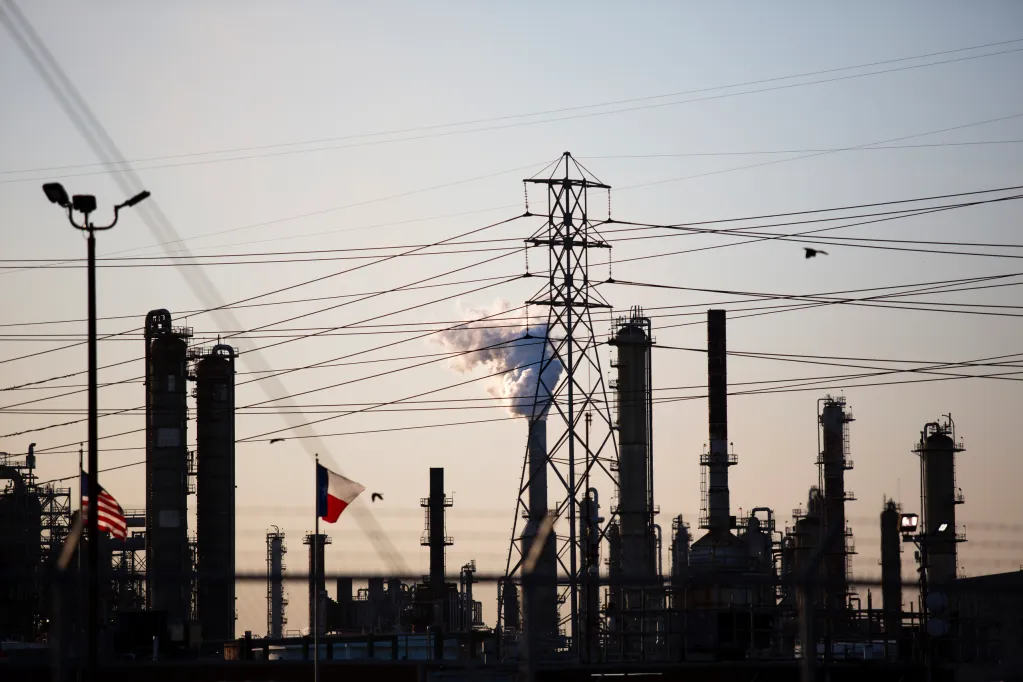
The Texas coast has received the largest share of imports so far this year — 43% of Venezuelan oil has flowed to the more than 10 Texas refineries equipped to handle Venezuela’s heavy crude grade, according to S&P Global Energy. Another 39% has gone to Louisiana refiners, while the remainder has moved to Mississippi and Delaware.
It’s an opportune time for Venezuelan oil to return to the Texas coast, analysts say. The on-again, off-again closure of the Strait of Hormuz since the U.S. and Israel launched the war has choked off crude oil shipments to the Gulf Coast from several Middle Eastern countries, leaving refiners in need of alternate supply sources.
“It’s not shocking that the U.S. is importing a lot of Venezuelan barrels, because they’re needed — especially as the strait is shut down,” said Debnil Chowdhury, a refining analyst at S&P Global Energy. “You need whatever barrel of heavy crude you can get.”
The Gulf Coast’s largest suppliers of Middle Eastern oil are Saudi Arabia and Iraq. In 2025, they represented over 12% of total crude oil imports into Texas and the broader Gulf Coast. But those volumes have nearly disappeared in the weeks since both sides abandoned the framework for a peace deal that President Trump signed with Iran last month.
Meanwhile, Venezuelan imports have nearly quadrupled since the Strait of Hormuz first closed in late February, according to the most recent federal data.
But these rapid increases are expected to level off in the coming year, analysts say. The nation’s average production levels have reached around 1 million barrels per day in recent months, about half of which is being sent to the Gulf Coast.
In 2027, production levels are expected to plateau at about 1.15 million barrels per day after several international oil companies, including Chevron, signed deals with the Venezuelan government that allow them to expand their operations.
At its zenith, Venezuelan oil production reached more than 3 million barrels per day in the late 1990s and early 2000s under former President Hugo Chavez before entering a long period of decline under Maduro. But it will take several more years, and several more billions of dollars of investment before production can begin returning to those levels, experts say.
“To get a substantial next wave of production there’s got to be some significant capital investment, which we don’t think will really bring significant volume out of the ground until the early 2030s,” said Kyle Bertamini, principal analyst at the energy consultancy Enverus.
Attention is also turning to the impacts of the devastating earthquakes that struck the country last month and left over 5,000 people dead.
Early reports indicate that the quakes, which were concentrated in the central coastal region of the country, did not significantly impact the nation’s oil and gas producing regions in the east and west. Chevron and other foreign companies issued statements shortly thereafter confirming that operations were unaffected.
However, analysts are monitoring any indirect effects on the oil industry’s revitalization.
“If the government of Venezuela has to redirect funds for earthquake relief, then that could affect some (oil) production,” Chowdhury said.
Crude production is the backbone of Venezuela’s economy, and exports to Gulf Coast refiners could provide the government with much-needed revenue to fund earthquake relief and reconstruction, experts said.
Export revenues continue to be held in U.S.-controlled accounts, although the Trump administration has not disclosed how much revenue has been generated or how those funds have been used. According to the Council on Foreign Relations, the export of around 1.1 million barrels per day in April generated around $3.7 billion.
“It is important to realize that now more than ever, Venezuela’s recovery will depend on its ability to leverage the country’s abundant natural resources and, most importantly, the resilience, talent, and determination of its people,” said University of Texas Bureau of Economic Geology Director Lorena Moscardelli, who began her career working for Venezuela’s state-run oil company.
Source link