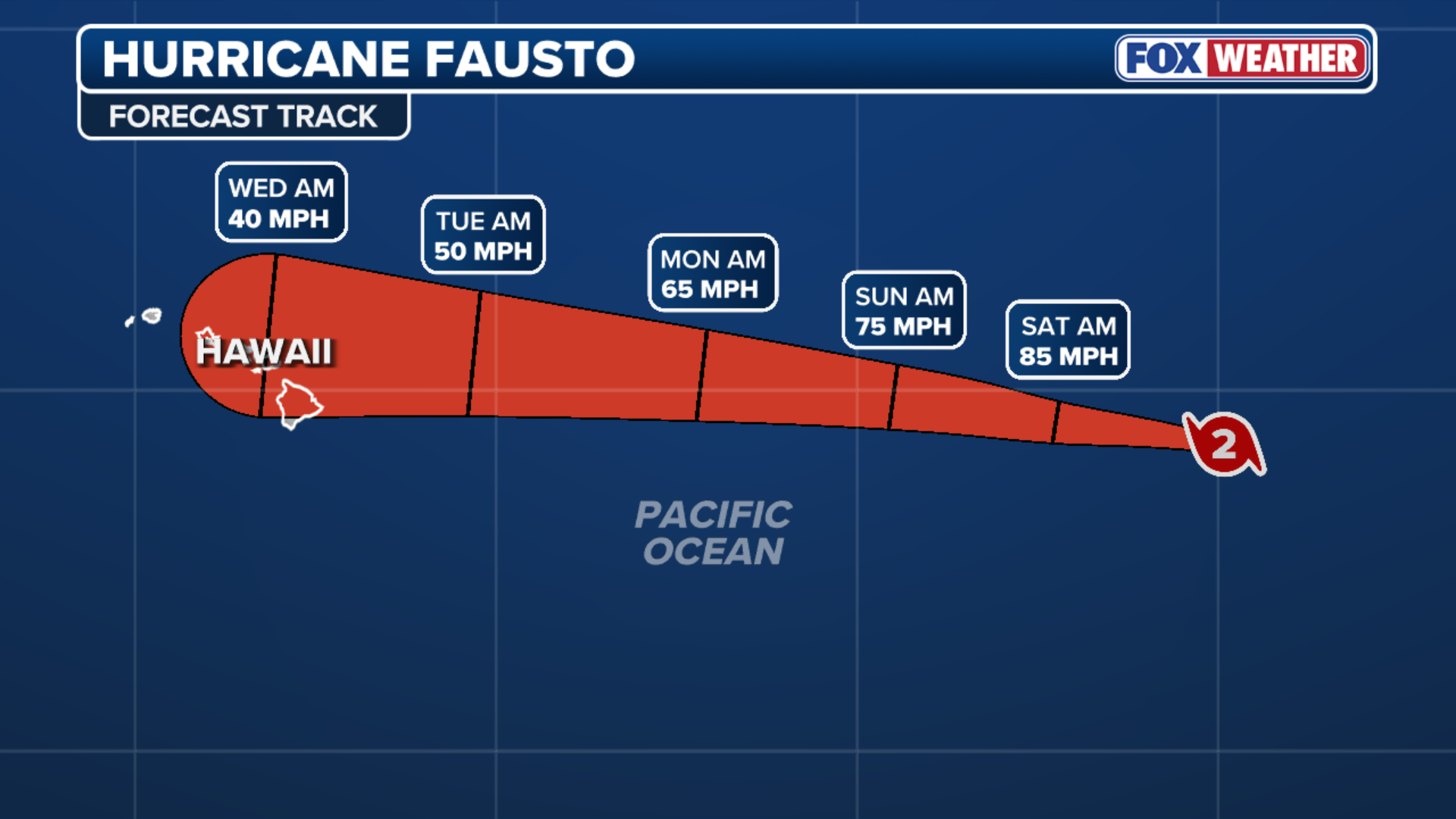
Hurricane Fausto has peaked in its intensity as it heads toward Hawaii as a Category 2 storm. It’s expected to weaken significantly by the time it reaches the islands as either a tropical storm or remnant low. Behind it is Tropical Depression Seven-E and another disturbance making the East Pacific packed with activity.
Hurricane Fausto peaked in intensity as a category 2 storm on Friday, as it hurtles through the East Pacific and brings attention to the Hawaiian Islands.
As it heads toward Hawaii, Fausto will be met with a hostile environment that makes tropical development much less likely.
The FOX Forecast Center said cooler waters and intensely dry air will slowly weaken the storm as it inches closer to Hawaii.
BRYAN NORCROSS: THE ATLANTIC GOES QUIET AFTER BERTHA FADES AWAY
(FOX Weather)
By the time Fausto hits the islands, it’s expected to be a very weak tropical storm, but forecast models show the system ranging from a tropical storm to a weak remnant low.
If the storm does hold together, impacts to Hawaii will range from heavy rain to high surf on the east and northeast-facing beaches on the islands.
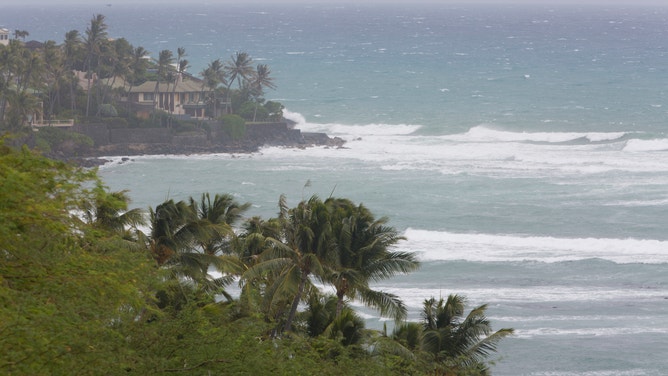
HONOLULU, HI – AUGUST 24: A large home on the coast is hit by waves from Hurricane Lane on August 24, 2018 in Honolulu, Hawaii.
(Kat Wade / Getty Images)
The FOX Forecast Center said Hawaii will begin to see impacts Tuesday night into Wednesday.
Forecasts could change as the storm gets closer.
Tropical Depression Seven-E
On Friday, Tropical Depression Seven-E formed behind Fausto.
Current forecasts show Seven-E strengthening into a tropical storm and possibly even a hurricane by late weekend.
‘EVOLVING CRISIS’: COULD EL NIÑO BRING NEEDED RAIN TO THE 2 LARGEST RESERVOIRS IN THE US?

(FOX Weather)
If it does intensify, it will gain the name Genevieve.
Other activity
The National Hurricane Center is monitoring another system far to the southwest of Hawaii.
The system has a high chance of development over the next week.

(FOX Weather)
A tropical depression is likely to form as the system moves west-northwest into the Western Pacific, the NHC said.
We’re currently behind schedule in tropical activity in the East Pacific, with the average second hurricane forming by July 15, and the third forming by July 31.