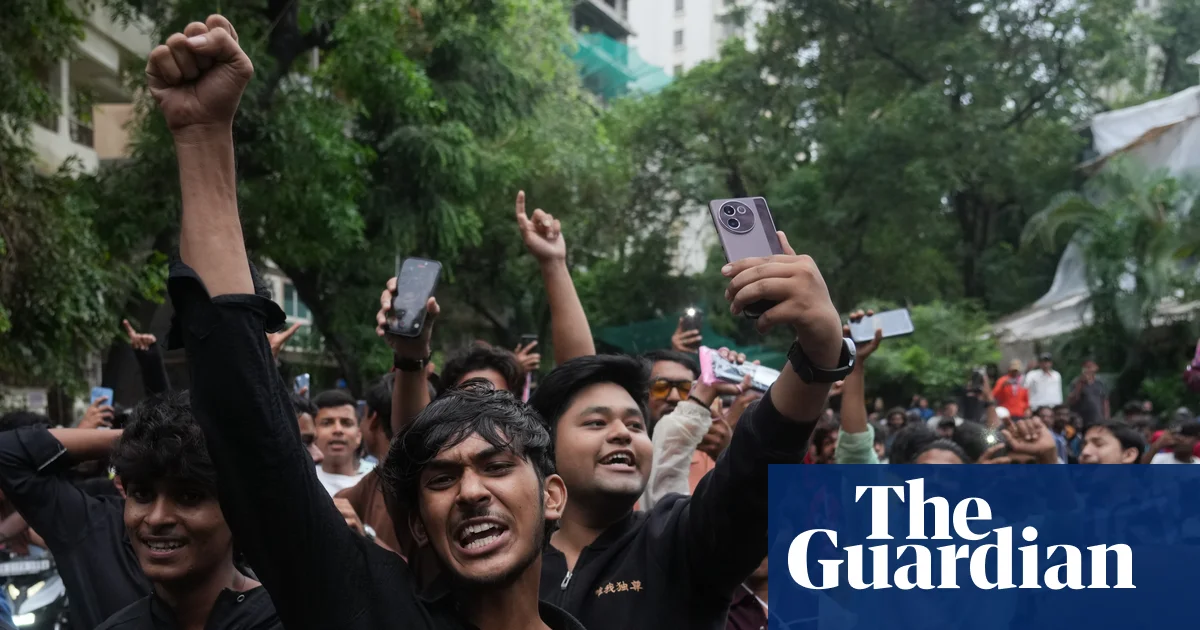
The Indian “cockroach” activist Sonam Wangchuk has ended a 26-day hunger strike over an exam paper scandal that has spiralled into a wide ranging, youth-led wave of demonstrations against Narendra Modi’s government.
Supporters meanwhile have called a nationwide day of protest on Friday.
Wangchuk posted that he ended the hunger strike in Delhi in the presence of two of Modi’s top ministers after receiving assurances that his conditions would be met by the government.
In a video from his hospital bed, Wangchuk said he had been promised that the issue of accountability in the failing examination system would be discussed on the floor of the Indian parliament.
The government also assured him that families of those who killed themselves after the leaks of a crucial examination paper would be given adequate compensation and that there would be no cases registered against students and young people who took part in mass protests in Delhi on Monday.
After 26 days without food, Wanghuck appeared weak but in lively spirits. The hunger strike has long been a powerful tool of protest in India – repeatedly used by Mahatma Gandhi in the fight for Indian independence. Gandhi’s longest hunger strike was 21 days.
After Wangchuk ended his hunger strike, Modi urged the activist to follow doctors’ advice and regain the weight he has lost.
Protests under the Cockroach Janta party (CJP) movement have called for nationwide protests in solidarity with students who alleged police brutality during a march on parliament on Monday by tens of thousands of people, even as Modi’s government urged them to join talks.
CJP organisers said they expected a huge turnout across the country on Friday. This week, youth protests have already emerged in Bengalaru, Ranchi, Pune, Thiruvananthapuram and Kolkata. In Mumbai, hundreds of students were detained by police.
The CJP founder Abhijeet Dipke thanked Wangchuk for his “courage and sacrifice” and said the protests would continue until education minister Dharmendra Pradhan resigned, a core demand of the movement. “We won’t let Sonam sir’s sacrifice go in vain,” Dipke added.
The CJP movement wants Pradhan to step down over exam paper leaks, which affected two million students in May and have been linked to several suicides.
Late on Tuesday, Pradhan, in his first comments since demands for his resignation were made, said the government was committed to addressing concerns and reforming exams.
The protests have drawn tens of thousands on to the streets, and represent the biggest youth challenge to Modi since he came to power in 2014. Opposition parties have echoed the youth movement’s demands and have disrupted the monsoon session of parliament that began this week.
Thousands of people remained at the Jantar Mantar protest site on Thursday afternoon carrying anti-government posters and chanting slogans amid a heavy security deployment.
Authorities in Delhi shut down 16 metro rail stations on Thursday in and around the central parts of Delhi where the protesters have remained camped, inconveniencing thousands of commuters.
The government also ordered telecom firms to block mobile internet services in the area, sources told Reuters, a move that not only affected protesters but also stopped shops and restaurants receiving digital payments by phone.
The measures are widely seen by human rights groups as an attempt by authorities to curb protests and prevent any fresh outbreak of violence.
On Thursday, Modi said special courts would be set up to prosecute those behind exam paper leaks, his first public response to the crisis. “Nothing is more important than the welfare and future of our youth!” Modi posted.
But the CJP rejected the proposal, saying what courts do after paper leaks is just one aspect of the problem. “But Modi-ji, tell us why are paper leaks happening in this country in the first place?” said CJP spokesperson Ashutosh Ranka.
“Fast-track courts are set up in this country for every other issue, but whether those fast track courts have actually solved those issues – you know the answer to that question, and so do we.”
Later in the day, Modi said on social media that the government would announce more strict actions against paper leaks at a cabinet meeting on Friday.
After top Bollywood stars were hit with criticism for staying silent about the youth protests, some of India’s biggest actors, including Salman Khan, Alia Bhatt and Kareena Kapoor, released a social media post saying it was heartening to see students come together to fight for a cause.