Two kayakers were shocked after rowing into a jellyfish bloom off the coast of County Waterford on July 5.
VENICE, Italy – An aquatic invasion is underway in Venice, Italy, where numerous cannibalistic jellyfish, known as comb jellies, are plaguing the city’s lagoons.
Due to disruptions to the seawater environment and warming temperatures, these invasive species have thrived, threatening fisheries, ecosystems and disrupting swimmers.
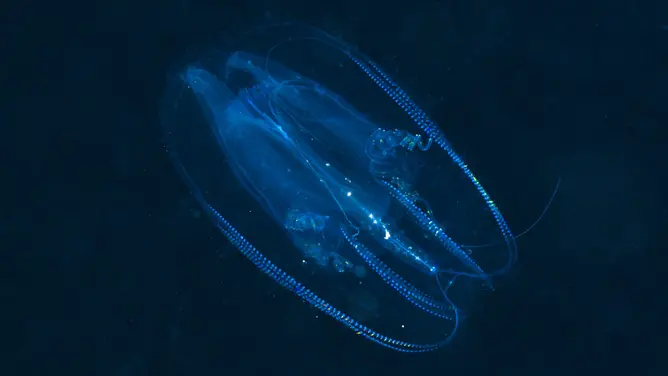
Comb jellies have jelly-like bodies with bright-colored bands, which are made up of tiny hairs called combs, according to the Chesapeake Bay Program.
(GERMANY OUT) Comb Jellyfish, Tentaculata, Marsa Alam, Red Sea, Egypt.
(Reinhard Dirscherl/ullstein bild / Getty Images)
Unlike jellyfish, these animals do not have stinging tentacles, which can help swimmers feel much calmer as they enter the beautiful lagoons in Venice.
Surprisingly, the natural predator of this creature is itself, as comb jellies are cannibalistic, with the pink comb jelly as the usual culprit.
As summer temperatures rise in such lagoons across Italy, this gives the jellies a boost, allowing them to develop more quickly and increase populations further, creating a nuisance for swimmers.
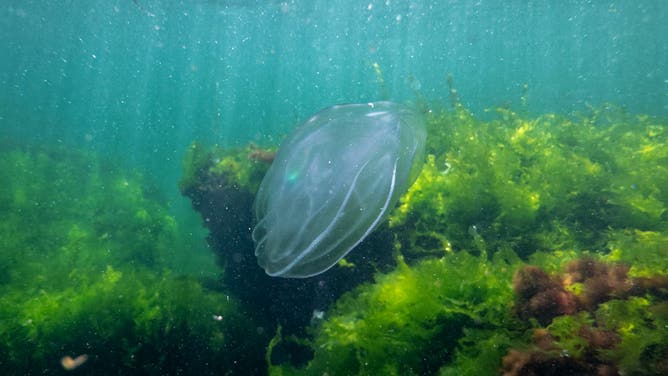
A warty comb jelly is seen underwater in the Black Sea, near Odesa, on May 23, 2026.
(Oleksandr GIMANOV / AFP / Getty Images)
These creatures can cause significant disruption to local fish populations by eating anchovies, sardines and sprats, leaving little behind and harming local fisheries.
The comb jelly can thrive in a wide range of water temperatures and reproduce quickly, creating an ongoing problem for fisheries and swimmers looking to enjoy time in the water this summer.
LARGEST KNOWN BOTTLENOSE DOLPHIN STRANDING OFF NEW ENGLAND COAST PROMPTS MASSIVE RESCUE EFFORT
Warming temperatures and a lack of persistent natural predators have allowed this animal to thrive with no exact plan to stop its destructive ways.
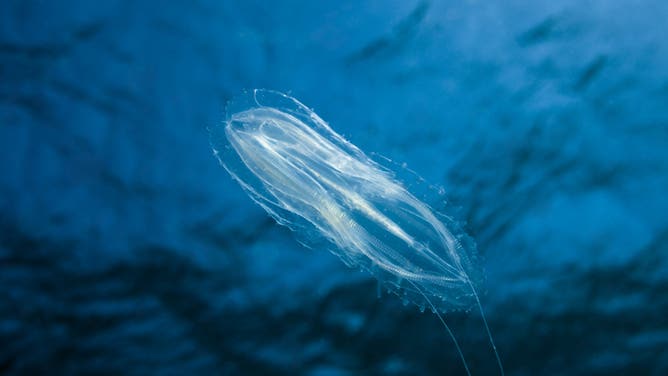
(GERMANY OUT) Comb Jellyfish, Tentaculata, Safaga, Red Sea, Egypt.
(Reinhard Dirscherl/ullstein bild / Getty Images)
“Eradication of this invader is almost impossible, given its widespread establishment,” the U.S. Department of State said. “Focus has now moved to controlling the growth and success of the comb jelly in attempts to reverse the fisheries decline in the Black and Azov Seas.”
SEE IT: RARE FOOTAGE CAPTURES ELUSIVE BLUE-RINGED OCTOPUS CARRYING HER EGGS OFF AUSTRALIAN COAST
Over time, control methods can help contain invasive species and, hopefully, discover ways to protect better underwater ecosystems that comb jellies affect so drastically.