As if the ongoing heatwave wasn’t bad enough, Brits have now been urged to brace for a pollen bomb.
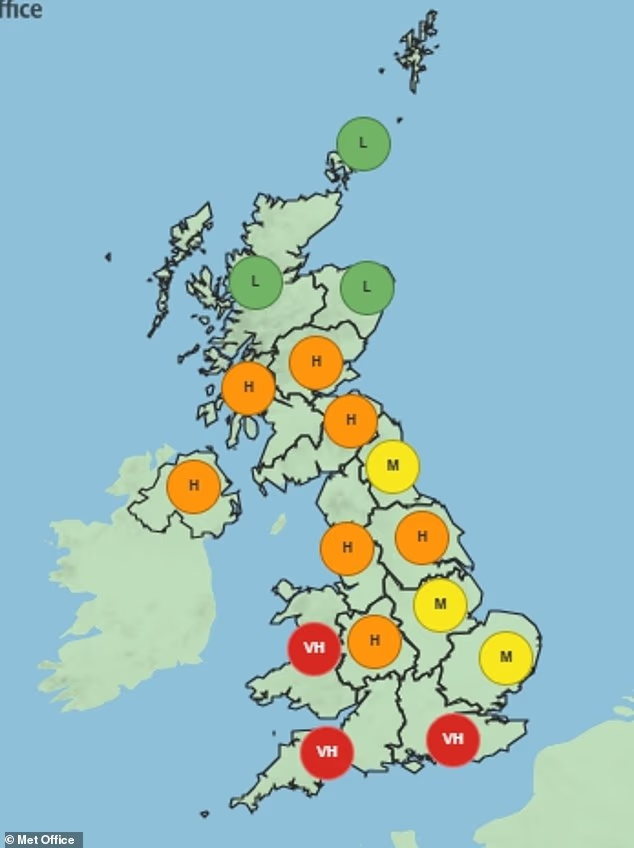
The Met Office has warned that pollen levels have spiked across large parts of the UK – and are expected to remain high for the next four days.
If you live in the west or south of the UK, unfortunately you’re in the firing line, with these areas expected to be worst hit.
In contrast, parts of northern Scotland are likely to experience lower pollen counts.
According to the Met Office, the heatwave may have exacerbated the pollen.
And with the record–breaking heat expected to last for another 10 days, hay fever sufferers could be in for a prolonged spell of misery.
‘Recent warm, dry conditions with light winds are ideal for pollen to be released and carried through the air, while a lack of rainfall means it isn’t being washed away, which can make symptoms feel particularly severe,’ it explained.
‘Spells of rainfall with sunshine in the last few weeks have provided the ideal growing conditions for grass and weeds.’
The Met Office has warned that pollen levels have spiked across large parts of the UK – and are expected to remain high for the next four days

With the record–breaking heat expected to last for another 10 days, hay fever sufferers could be in for a prolonged spell of misery (stock image)
At this time of year, the main cause of hay fever is grass pollen, which typically peaks in June.
However, weed pollen is also present at this time of year, albeit at slightly lower levels.
‘For most hay fever sufferers, the worst conditions are warm, dry and breezy days,’ the Met Office explained.
‘These allow pollen to be released easily and spread efficiently through the atmosphere.
‘Calm, dry days can also lead to high levels locally, as pollen accumulates near the source.
‘By contrast, cooler conditions, higher humidity and rainfall tend to reduce airborne pollen, at least temporarily.’
Wales and southwest England are expected to see the worst conditions, with ‘very high’ pollen levels forecast today, before remaining ‘high’ through the next few days.
‘This is now mainly due to weed pollen, although Moderate to High levels of grass pollen are still around, particularly over Wales and higher ground in southwest England,’ the Met Office said.

At this time of year, the main caues of hay fever is grass pollen, which typically peaks in June. However, weed pollen is also present at this time of year, albeit at slightly lower levels
Join the discussion
How are you coping with the double whammy of relentless heat and soaring pollen—should more be done to protect those who suffer most?
Pollen levels in Northern Ireland are expected to ease slightly through the weekend, although they will still be at ‘moderate’ levels over the next four days.
Many parts of Scotland, northern England and the Midlands, meanwhile, will experience consistently high pollen levels.
Areas including central Scotland, Tayside, Fife, Dumfries and Galloway are forecast to remain at high levels throughout the next four days.
Yorkshire and Humber and northwest England are also expected to have high pollen counts, due to both weed and grass pollen.
Meanwhile, the west Midlands, London and southeast England are experiencing lower levels of grass pollen, but still have ‘high’ pollen levels from weeds.
If you live in northern Scotland, you can breathe a sigh of relief though.
Orkney and Shetland will maintain low pollen levels, while the Highlands, Eilean Siar and Grampian will see low to moderate levels.