A prehistoric discovery in the Oregon mountains could rewrite the story of the first people to live in North America.
Archaeologists said a remote rock shelter, known as Rimrock Draw, may have been occupied by humans about 18,250 years ago, thousands of years earlier than scientists once believed the first Americans arrived.
If confirmed, the site would rank among the oldest known places of human occupation in North America and date back to roughly four times the age of Egypt‘s Great Pyramid.
The findings challenge the long-held theory that the continent’s first inhabitants crossed an ice-free corridor from Asia around 13,000 years ago.
Instead, they add to growing evidence that people may have reached North America much earlier, likely traveling along the Pacific coastline before the inland route became accessible.
Researchers from the University of Oregon uncovered two finely crafted orange agate, a type of quartz, stone tools beneath a layer of volcanic ash from an eruption of Mount St Helens more than 15,000 years ago.
Radiocarbon dating of extinct camel and bison tooth enamel found alongside the tools produced an age of about 18,250 years, suggesting the site was occupied far earlier than previously thought.
Although the findings have yet to undergo peer review, they could dramatically reshape the timeline of when the first people arrived in the Americas.
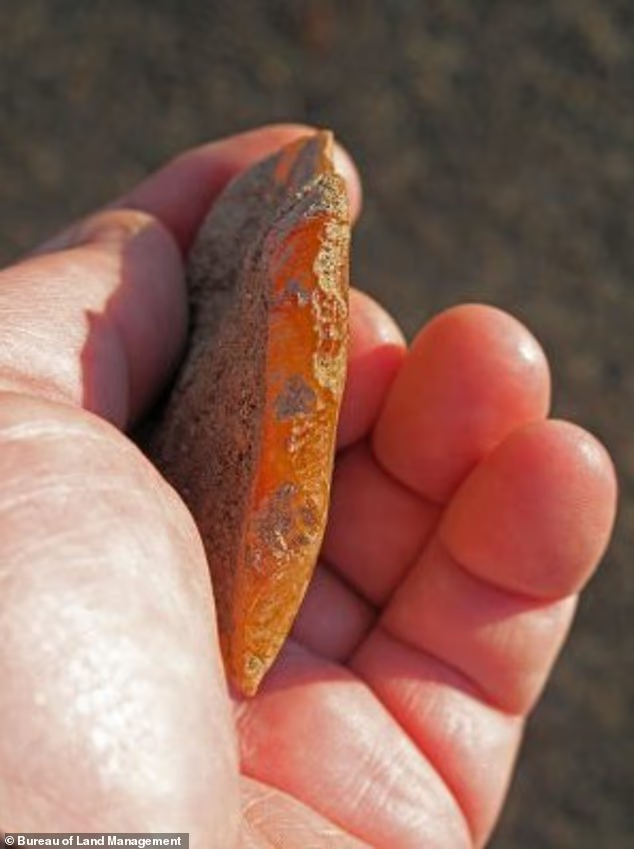
One of the tools still carried traces of bison blood, suggesting it had been used to butcher or process an animal before it was discarded (pictured)
David Lewis, a professor of anthropology at Oregon State University, part of the research team, said in a statement: ‘This early date aligns well with the oral histories of the tribal nations in the region, many of whom have stories about witnessing geological events like the Missoula floods, a series of events that changed everything for the tribes between 18,000 and 15,000 years ago.
‘As well, tribes have oral histories of encountering giant animals, monsters on the land, and Rimrock Draw rock shelter’s evidence suggests that we did interact with the megafauna, and they may have become characters in our histories of the time before memory.’
The dating results were first released in 2023. However, they were thrust back into the spotlight in a YouTube video published on Wednesday by the channel Blood Memory, which examines archaeological discoveries related to the origins of the world’s earliest peoples.
Researchers uncovered two finely crafted orange agate stone scrapers buried beneath a layer of volcanic ash. One of the tools still carried traces of bison blood, suggesting it had been used to butcher or process an animal before it was discarded.
Above the tools, archaeologists found tooth fragments from extinct camels and bison.
Because the tools were buried beneath the dated remains, researchers concluded they must be even older, suggesting people occupied the site more than 18,000 years ago.
UO archaeologist Patrick O’Grady, who runs an archaeological field school at the site, said: ‘The identification of 15,000-year-old volcanic ash was a shock.
‘Then [data from Tom Stafford of Stafford Research] 18,000-year-old dates on the enamel, with stone tools and flakes below, were even more startling.’

The team found two stone tools at the rock shelter
Another prehistoric discovery was found in Oregon earlier this year, which also rewrites human history.
Researchers uncovered pieces of animal hide stitched together from the end of the last Ice Age, approximately 12,000 years ago.
That would mean that humans in North America had advanced skills, specifically for working with plants, animals, and wood, thousands of years before the Great Pyramid of Egypt was constructed.
The discoveries include a collection of ancient items made from materials that usually rot away over time, such as animal hides.

Archaeologists said a remote rock shelter, known as Rimrock Draw, may have been occupied by humans about 18,250 years ago, thousands of years earlier than scientists once believed the first Americans arrived
However, they were hidden in several dry caves in Oregon’s northern Great Basin region, which helped preserve them.
Until now, researchers believed early humans in the present-day US were simple hunter-gatherers, with the new artifacts being the best-preserved evidence of sophisticated technology like sewn clothing, twined baskets, and wooden hunting traps.
Overall, archaeologist Richard Rosencrance from the University of Nevada and his team unearthed 55 crafted items from 15 different plant and animal types, including some relics the lead study author is convinced were either clothing or footwear.
Rosencrance added that it fills in gaps in history by proving Ice Age people in North America were innovative and adaptable, using everyday materials in smart ways, during a time period before the Holocene Epoch, when early civilizations rose.