While Britain’s sweltering summer might be unbearable, rushing to grab an air conditioner bargain leaves you seriously at risk of getting fleeced.
Cybersecurity experts warn that criminals are targeting desperate Britons with fake deals that leave them out of pocket.
These devious attacks impersonate well-known brands and websites, offering ‘too-good-to-be-true’ sales on fans and air conditioners.
On the fake store, criminals display authentic product photos and even genuine-seeming customer reviews.
To make their attacks even more enticing, the criminals employ countdowns and time-limited deals, encouraging victims to act without thinking.
However, once the customer hands over their cash, they are left with nothing and the criminal takes off with their card details to use in future fraud.
Olga Altukhova, cybersecurity expert at Kaspersky, says: ‘Pressuring buyers to act fast is one of the techniques scammers use.
‘When demand spikes, warnings that only a few items are left or that a discount is about to expire can easily compel users to enter financial details or personal data.’
Cybersecurity experts have issued a warning over fake air conditioner deals targeting desperate British shoppers (pictured)
This warning comes as provisional data shows that the UK has already sweated its way through the hottest June on record.
According to the Met Office, the average temperature was 17.1C last month, surpassing the previous record of 16.9C set in 2025.
Intense heatwaves also saw the record for the hottest June day broken as a temperature of 37.3C was recorded in Santon Downham, in Suffolk.
As the mercury climbed, Britons rushed to get their hands on fans and air conditioning units, often leading to massive queues outside stores.
Meanwhile, cybersecurity experts warn that scammers have been quick to take advantage of the rush.
To trick users into handing over their money or credentials, scammers create fake websites that mimic popular shops and brands.
In one example, scammers created a near-perfect replica of the AiraBreeze brand’s website, offering an amazing 75 per cent discount on this popular fan.
Of course, anyone who hands over their cash never receives the product, while the scammers harvest their card details and credentials.

These devious attacks impersonate well-known brands and websites to offer ‘too-good-to-be-true’ offers on fans and air conditioners

Some of the fraudulent websites even include fake reviews to entice shoppers into giving away their money and credentials
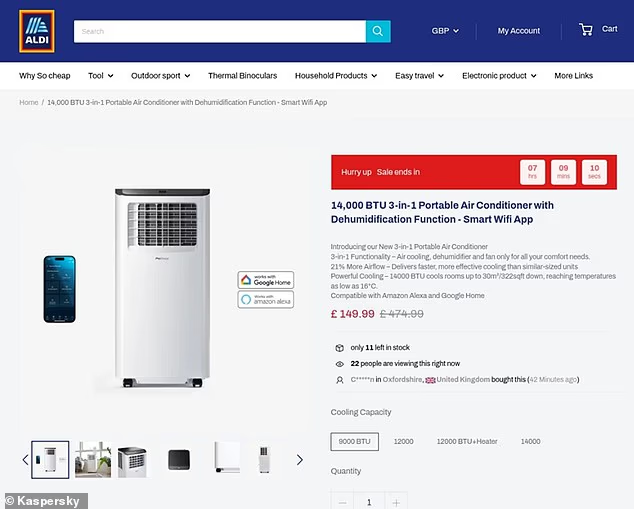
In another fraudulent site visited by the Daily Mail, criminals replicated the Aldi website with a time-limited discount and even showed the number of visitors viewing the product at that moment.
The site offered a BLACK+DECKER Air Conditioner for just £45.99, despite the real product costing over £300.
At a casual glance, the site is quite a convincing dupe of the real Aldi website, complete with a notice warning customers to ‘be wary of these scams asking you for personal information’.
Once an air conditioner is added to the basket, the user is bombarded with yet more pressure, being told that their cart will only be reserved for five minutes.
All of this is designed to create a sense of urgency that convinces customers to hand over their details without noticing the unusual spelling errors, bizarre site layout, and obviously fake URL.
What makes these scams even more insidious is how easy they are to find online alongside legitimate stores.
The Daily Mail was able to find several sites impersonating the Aldi website listed among Google’s sponsored products tab.
These fraudulent links were not hidden behind pages of results, but prominently displayed in searches for ‘air conditioner’ or ‘Black & Decker air conditioner’.

One scam impersonated the Aldi website, offering a limited-time offer to pressure users into giving away their details without thinking

These fake websites are prominently displayed on Google’s sponsored products tab. The first three results in this search lead to websites fraudulently impersonating Aldi
A Google spokesperson told the Daily Mail: “Keeping our users and partners safe is our top priority. We have a team of thousands working around the clock to create and enforce our policies at scale.
‘We are currently reviewing the ads shared with us and will take appropriate action.’
However, Kaspersky cautions that these traps aren’t just lurking on fake websites.
Cybersecurity researchers have found examples of fake adverts for air conditioner deals being sent directly to customers’ email accounts, ostensibly on behalf of well-known brands.
Ms Altukhova says: ‘To avoid falling victim to such scams, stay calm and double-check everything, especially the website’s URL and design.
‘If you’re unsure about a site’s authenticity, look it up in a search engine to verify it’s legitimate, or use a security software to perform the check.’