
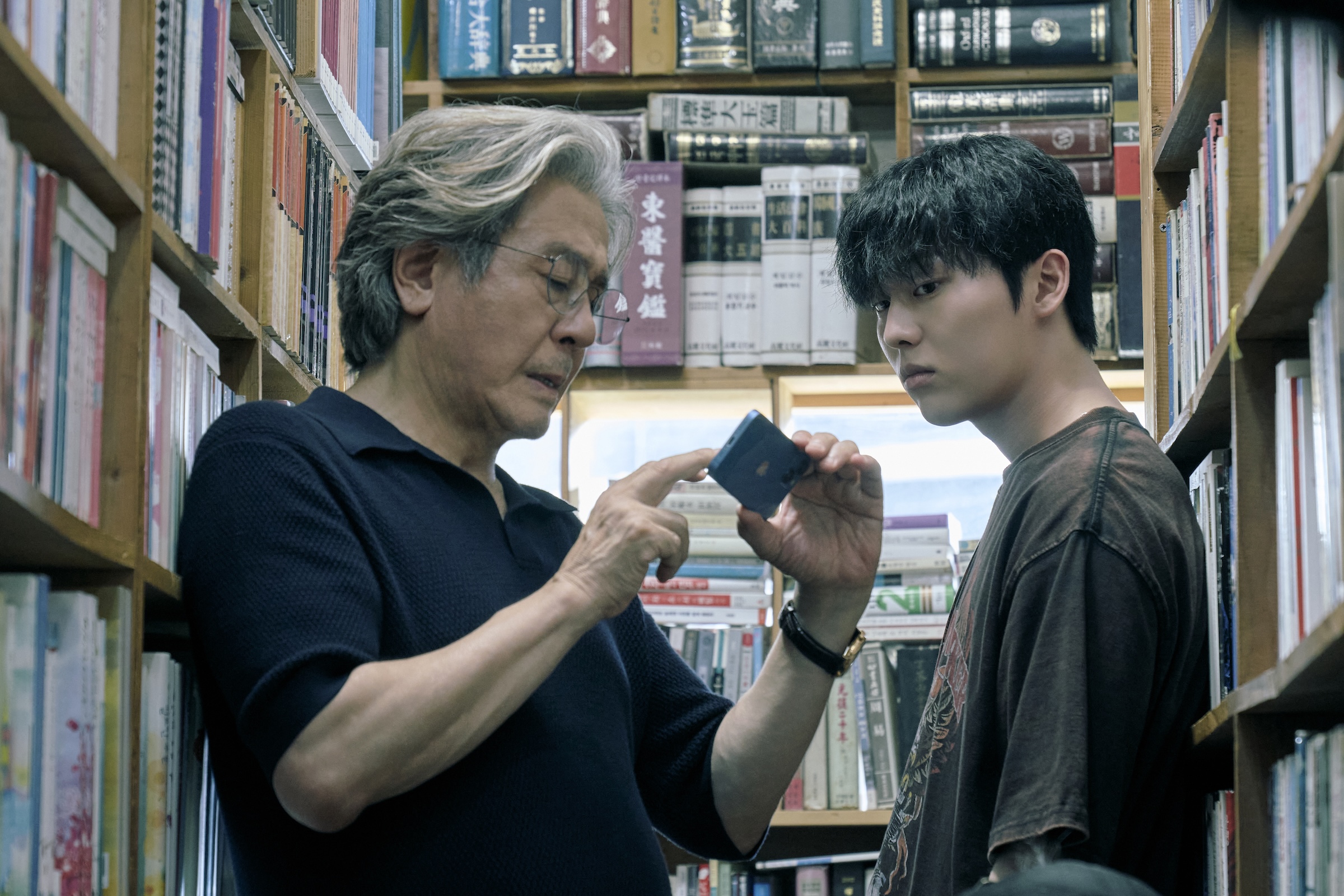
When we first meet Heo Mun-oh (Oldboy’s Choi Min-sik), the protagonist of the Netflix K-drama Notes From the Last Row, he is really not in a good place. From the outside, it seems like Mun-oh should be happy enough: He is a professor of Korean literature at a prestigious university. He has a loving wife in therapist Cho Hyeon-suk (Jin Kyung). And he is respected by his colleagues and at least some of his Gen Z students.
But Mun-oh is miserable. He only sees his perceived failures, contrasted by the success of his university chum Kim Su-hun (Mercy For None’s Huh Joon-ho). While Mun-oh has only been able to write one novel, Su-hun has been churning out successful books since their school days. He is married to the beautiful and elegant Ahn Eun-joo (Kim Yun-jin), their university hubae whom Mun-oh has harbored a not-so-secret, unrequited crush on for decades. While Mun-oh and Hyeon-suk faced fertility challenges that left them childless, Su-hun and Eun-joo have two children.
In the series, an adaptation of Spanish play El chico de la última fila by Juan Mayorga, Mun-oh has resigned himself to a life of quiet resentments, until Lee Kang (Weak Hero Class‘ Choi Hyun-wook) comes along. A quiet boy who sits in the last row of one of Mun-oh’s classes, Kang has an easy talent for writing. When he writes about the rich family of friend and classmate Se-yun (Lee Jin-woo) for his class assignment, Mun-oh is enthralled by the tale of open envy. He offers additional writing classes to Kang, dreaming about a future when Kang is a celebrated debut novelist who publicly recognizes Mun-oh as his inspiring mentor.
Then, Mun-oh realizes that Se-yun is the son of Su-hun and Eun-joo, and that he has access to information about the domestic life of his frenemy and unrequited love. As a result, Mun-oh’s fascination with Kang’s story turns into an obsession.
Lee Kang’s story
In Kang’s story, relayed to Mun-oh over the course of proceeding writing assignments, Min-hui (Han Ji-eun) is the housekeeper for Su-hun and Eun-joo. She is also sleeping with Su-hun. When Min-hui ends up dead in the hospital following a hit-and-run, Mun-oh begins to suspect that his frenemy was involved.
As the story continues, Eun-joo eventually reveals to Kang that she knew of Mun-oh’s infidelity, and that she discovered the true reason for Min-hui’s death: Su-hun passed off the manuscript of Min-hui’s late sister as his latest novel. Min-hui threatened to expose Su-hun so, when she was lying in a hospital bed following a hit-and-run, Su-hun took his chance. He snuck into the ward and strangled his lover to death.
The situation comes to a head when Kang tells Mun-oh that he received a frantic voicemail from Se-yun. In it, Se-yun says Su-hun has gone mad; he is planning on killing both Se-yun and Eun-joo, and then burning their house down with all of them in it. A desperate Mun-oh calls the fire department and rushes over to the house to try to save his beloved Eun-joo’s life, and to expose Su-hun as a villain. But, when he arrives, with the police and fire department in tow, nothing is amiss. Su-hun, Eun-joo, and Se-yun are returning from a pleasant family outing. Kang has made up most of the story, designed to reel Mun-oh in by appealing to his deepest insecurities and desires.
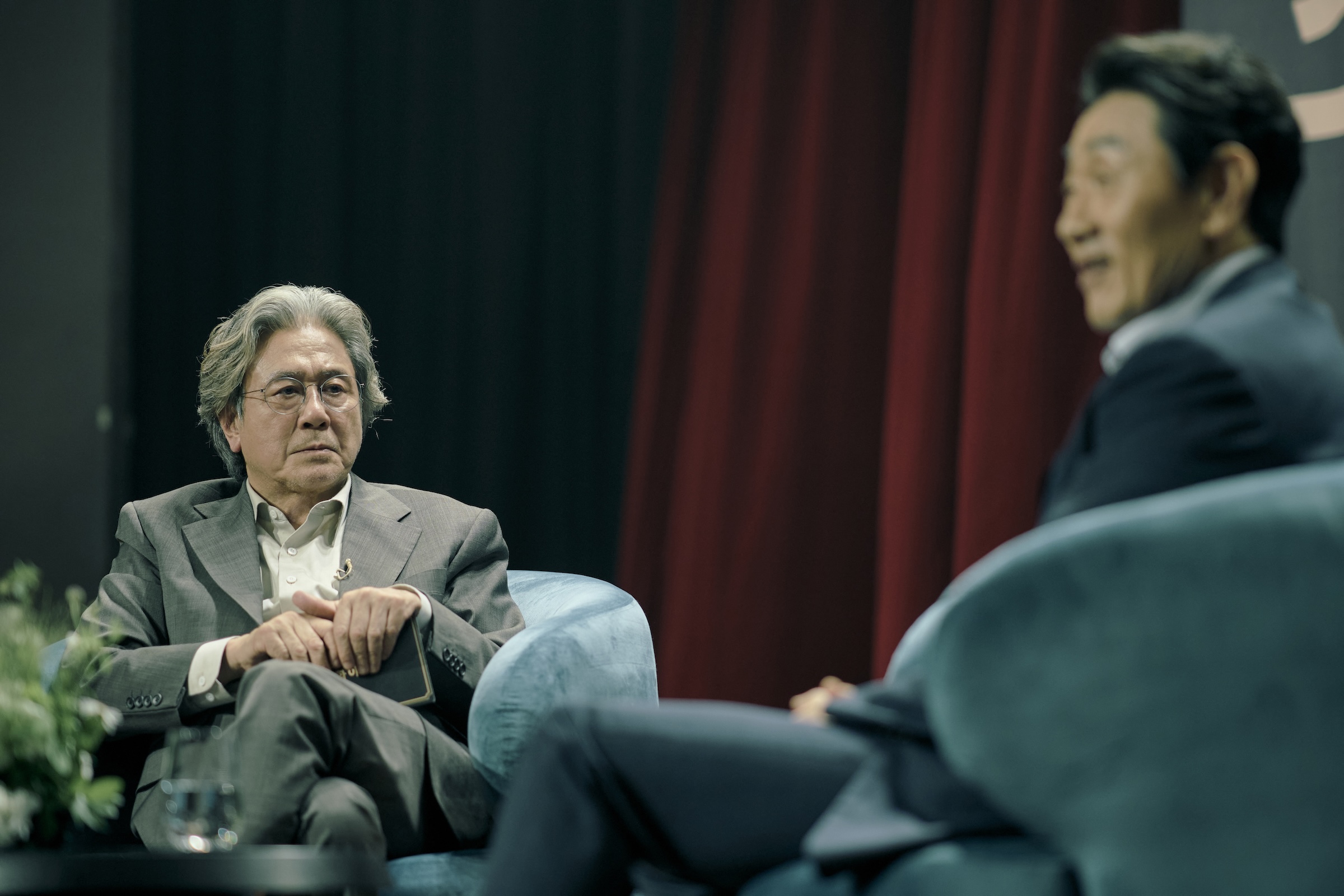
What was true in Lee Kang’s story?
In order to trick Mun-oh into believing his story, Kang needed some facts on his side. While it is not clear how close Kang is with Se-yun, the two do know one another. Kang visited his house with a group to work on a school project, and the two competed in a coding challenge together. However, Kang most likely never moved into the family home in the way he describes in his story.
When Mun-oh later confronts Kang, the student reveals that Min-hui was never the family’s housekeeper. When Mun-oh and Kang see a young woman hit by a car while Su-hun is nearby, Kang takes the opportunity to craft a new layer to his story: Su-hun was cheating on Eun-joo with Min-hui.
Presumably, Kang lured Mun-oh to the scene of the hit-and-run to reveal to his professor that Su-hun was the father in the story he had been telling, and improvised when a woman was struck by a car in front of them. As we later learn, Min-hui was a young professional at the nearby publishing house where Su-hun was having a meeting that night. He did not know Min-hui, and he did not steal the manuscript for his book.
Why did Lee Kang trick Mun-oh?
Why did Kang go to such trouble to trick Mun-oh? He has held a grudge against the professor since he was a child. When Kang was eight, he was a resident at an orphanage that Mun-oh’s wife, Hyeon-suk, visited as part of her work as a therapist. In the final episode of Notes From the Last Row, we see a flashback to 12 years prior. Hyeon-suk has brought Mun-oh along for the ride to the country orphanage, hoping that the sunlight and fresh air would shake him out of his writer’s block.
During a group activity led by Hyeon-suk, Kang chooses to leave the room rather than participate, and a bored Mun-oh follows. Mun-oh gets the traumatized boy to tell him about his parents by crafting a narrative. He tells Kang not to talk about his parents directly, but to tell a story about a family of nearby ducks as if it were his own family. It works, and Kang cries over missing his dead parents.
Later, Kang asks Hyeon-suk for Mun-oh’s address so he can write to the professor. When Mun-oh and Hyeon-suk are leaving the orphanage, Kang overhears Mun-oh angrily telling his wife that he should not have given the boy his address. Mun-oh is not interested in continuing a relationship with Kang. He was only talking to the boy because he thought it might be good fodder for his next novel. Mun-oh calls the details of Kang’s trauma mundane, and not interesting enough to support a good story. Years later, Kang gets revenge by crafting a story that Mun-oh cannot turn away from, and that slowly unravels the professor’s life.
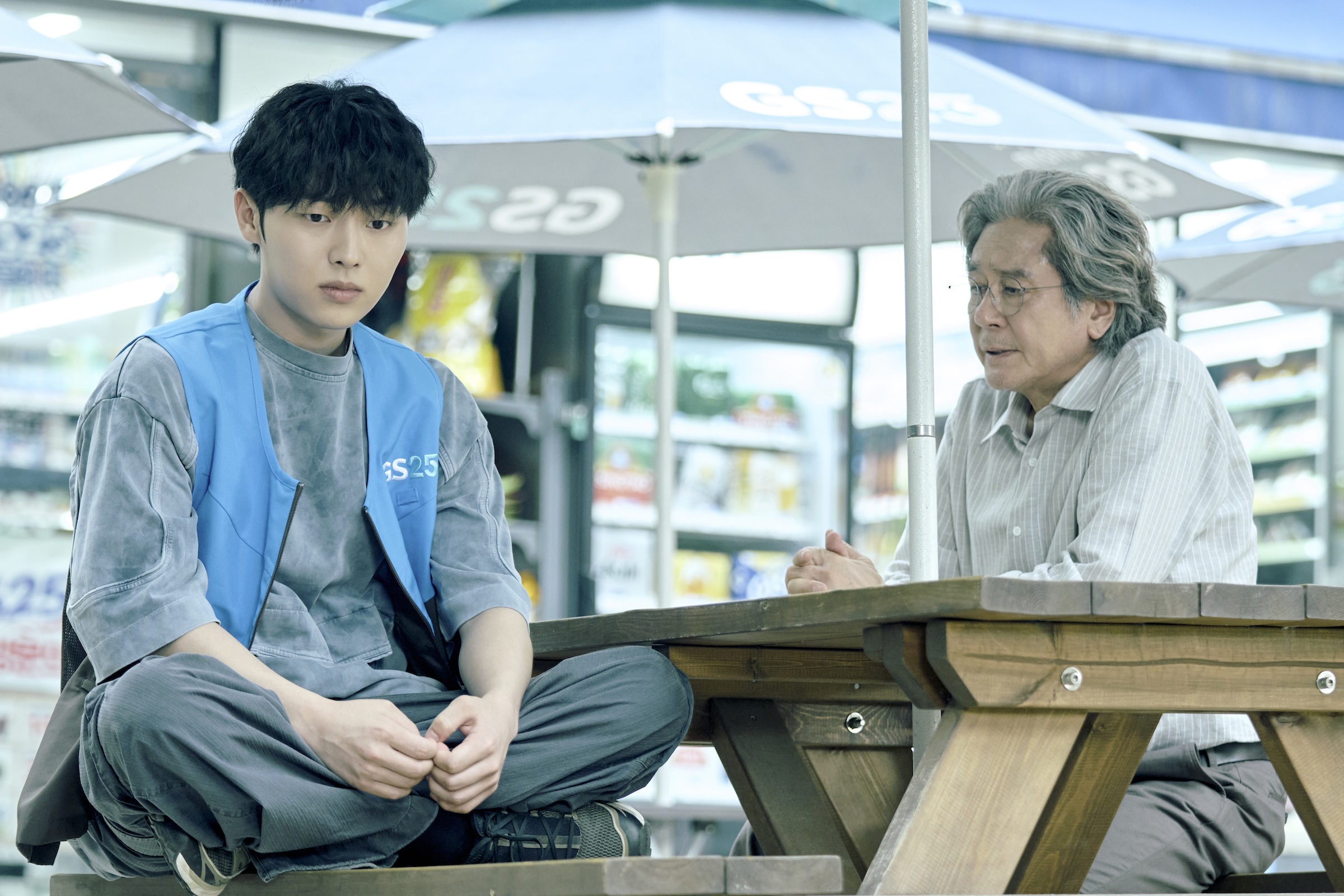
Notes From the Last Row’s ending explained
Kang succeeds in destroying Mun-oh’s status quo. By the end of the series, Hyeon-suk leaves Mun-oh. After years of emotional neglect, her husband’s obsession with Su-hun and Eun-joo is the final straw. When she leaves their shared apartment forever, Mun-oh accuses Hyeon-suk of having an affair with Kang, imagining the two of them sleeping together behind his back. An exhausted Hyeon-suk refuses to confirm or deny Mun-oh’s suspicions, but the story implies they are part of his desperate delusions.
Mun-oh also loses his job and his reputation when Kang reveals that Mun-oh stole the questions for a university coding competition for him. Kang had convinced Mun-oh to steal the questions, saying that acing the competition for himself and Se-yun was instrumental to allowing his intimate observations of Se-yun’s family to continue. Mun-oh, who was already desperate to read the rest of Kang’s story, and to find dirt on Su-hun, agreed. The thrilling sequence that sees him stealing the questions from a university colleague and friend is one of the first times we see Mun-oh exhibiting anything other than exhausted bitterness; he is alive with exhilaration following the academic spycraft.
In the final scene of the series, Mun-oh is working in a bookshop, having lost his university job. In between ringing up customers, he writes on his laptop. Kang comes into the store to buy a copy of Goethe’s Faust, the German tragic play that shares some thematic similarities with Mun-oh’s life story. At first, Mun-oh is furious. Then, Kang lures him back in. “I now have a story I really want to write,” he tells Mun-oh. “I’d like to resume our literature lessons.” Mun-oh takes the bait. “What story?” Mun-oh asks, his eyes coming alive.
While Kang and Mun-oh obviously have a toxic relationship, Mun-oh arguably ends the series happier, though far less comfortable, than when he started. Though he has lost his job and his wife, he is writing again, implying he is not stuck in the cycle of mundane resentment that defined his life before taking on Kang as a student. Kang’s “To be continued…” voiceover ends the series, implying that these two will keep telling stories together, for better or worse.


