Amna Nawaz:
All right, let’s turn now to the substance of that landmark bipartisan housing bill.
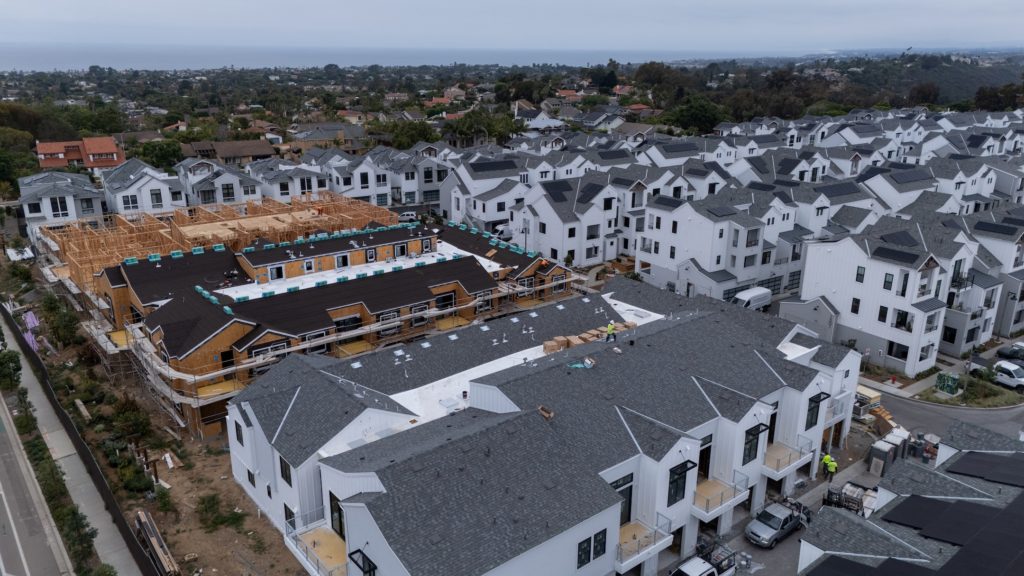
The new legislation, the biggest overhaul of federal housing policy in decades, contains no new spending, but it does seek to boost supply by making it cheaper and easier to build across the country.
That includes, among other things, new provisions that would streamline environmental reviews, remove restrictions for the construction of manufactured homes, increase access to small-dollar mortgages, and, moving forward, bar large institutional investors like private equity firms from owning more than 350 single-family homes.
To break down the potential impact, we’re joined now by Shaun Donovan. He served as secretary of housing and urban development under President Barack Obama. He’s currently the president and CEO of Enterprise Community Partners. That’s a housing nonprofit.
Secretary Donovan, welcome to the show. Thanks for being with us.
Shaun Donovan:
My pleasure. Thanks for having me on.
Amna Nawaz:
So it’s clear reform is needed when it comes to housing when you look at the numbers. Home prices are up 54 percent since 2020. The median cost of a mortgage has nearly doubled. By some estimates, we have a housing shortage of nearly seven million units.
You called this bill the most important, most comprehensive housing bill of this century. Why? What would it change?
Shaun Donovan:
Well, we’d need the entire “News Hour” to get through all of the provisions There are literally dozens of them in this bill.
But you got it exactly right. The core of this bill is to say, for decades now, we have not been building enough housing in this country. That is at the center of what is the greatest housing affordability crisis we have ever recorded in the U.S. And that is really what this does.
It unleashes local communities and the private sector to do more to build housing. And it gets regulations and other steps out of the way to help do that.
Amna Nawaz:
One of the provisions that got a lot of attention was this ban on institutional investors buying single-family homes. How significant is that? Would that really move the needle?
Shaun Donovan:
Well, I think what’s really important here about the provision is that, as it was originally drafted, it actually would have had an unintended consequences. It might have stood in the way in some ways of building more affordable housing.
And so, through good bipartisan negotiations, those unintended consequences were fixed. But I think, stepping back, there is no single silver bullet in this bill. It is really the sum total of the pieces that make it the most comprehensive legislation that we have seen.
And I do think those are provisions that are a wide range, but will really take local implementation to have an impact on families’ lives in this country.
Amna Nawaz:
So let’s talk about that implementation, because the reforms, as you mentioned, range from environmental reviews to zoning restrictions, single-stair buildings. They seem very specific and niche, taken one by one.
But the timing has to be an issue, right? It’s going to take years, if not decades, for some of these new rules have a real impact on the housing market. So can the bill have enough of a change fast enough for it to make a difference in Americans’ lives?
Shaun Donovan:
Look, I think you have put your finger on a really important point here. We didn’t get into this crisis overnight, and to solve the housing supply challenge, we’re not going to get out of it overnight.
And my organization, Enterprise Community Partners, was central to helping to shape some of the provisions, but we’re now gearing up. In some ways, we have been saying here, Congress did its job. Now it’s time for all the rest of us to do our jobs, and it really is going to take mayors and governors and local councils, state legislatures to get on to this.
The good news is that they know this is the number one economic issue for most American families. Affordability is at the center of our politics, as you have just said, and housing is the single most expensive thing in people’s — American families’ lives.
And so I’m seeing real urgency on the ground, and that’s what it’s going to take to move this as quickly as possible.
Amna Nawaz:
I’m sure you have seen some of the criticism that says this is sort of a collection of reforms around the edges that won’t really, truly combat sky-high housing prices.
And we also heard from the president today, who sort of dismissed the bill of minor importance, as he put it. He focused on interest rates. He said it’s all about interest rates if you want to cut into this problem. What’s your response to those concerns?
Shaun Donovan:
Look, it it’s very clear that interest rates have a big impact on housing, but that impact waxes and wanes, right? It goes up and down with interest rates.
We have a long-term building crisis in this country around supply. And the sooner we take it on, the sooner we’re going to solve that crisis. And what I would also say is that there are key provisions in here that could be transformational. It will depend on how they’re implemented.
Just to take one we build housing in this country in a very similar way that we did 50 years ago, before the computer was invented. And there are other countries in this world that are leading on manufactured and modular housing that is dramatically reducing the cost. The problem is, we have thousands of different building codes in this country.
And so just one piece of this bill, the changes to manufactured housing, if implemented correctly, could be transformational. And so I disagree with the idea that none of these provisions could have a real impact. But, again, Congress did its job. It is time for the rest of us to get on this at the local level, in the private sector, in the nonprofit sector, and make the promise real.
Amna Nawaz:
That is former HUD Secretary Shaun Donovan us tonight.
Secretary Donovan, thank you for your time. It’s good to speak with you.
Shaun Donovan:
My pleasure, and thanks for covering this.