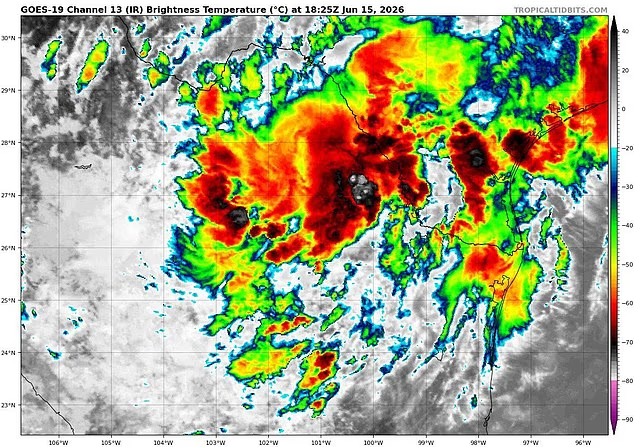
A tropical threat brewing in the Gulf of America drew increased attention Monday after hurricane forecasters raised the odds of development to 50 percent.
The National Hurricane Center increased the system’s chances of tropical cyclone formation from 30 percent earlier in the day, citing environmental conditions that could become more favorable later this week.
Forecasters said a disturbance designated Invest 90L near northeastern Mexico is expected to drift north before moving along the Texas coast and potentially emerging over the northwestern Gulf by late Tuesday or Wednesday.
Computer forecast models suggest the system could organize into a tropical depression, and possibly even the season’s first named storm, Arthur, before moving inland.
A tropical depression is a weaker, less organized system with maximum sustained winds of 38 mph or less, and a tropical storm is defined as a more organized and intense system with sustained winds between 39 and 73 mph.
That path would bring a heightened risk of flash flooding across parts of Texas, Louisiana and the Lower Mississippi Valley.
The NHC may issue tropical storm watches and warnings as soon as Tuesday.
However, meteorologists stressed that it remains too early to determine the system’s exact track or intensity.
A tropical threat brewing in the Gulf of America drew increased attention Monday after hurricane forecasters raised the odds of development to 50 percent
Meteorologist James Spann said on X: ‘Regardless of tropical cyclone formation, interests across southern and eastern Texas and portions of Louisiana and Mississippi should prepare for periods of intense rainfall over the next several days, which could produce widespread, life-threatening flash, urban, and river flooding.
‘This feature will likely produce heavy rain across Alabama on Thursday and Friday with flooding potential.
‘Gusty winds and coastal flooding are also possible along portions of the northwestern Gulf Coast, and Tropical Storm Watches or Warnings could be required tomorrow.’
This is the first invest of the 2026 Atlantic hurricane season, which is a term used to identify an area of disturbed weather that is being closely monitored for potential development into a tropical depression or tropical storm.
According to the NHC, the disturbance has a 40 percent chance of developing into a tropical system within the next two days and a 50 percent chance within the next week.
A hurricane hunter aircraft is set to take off from Mississippi at 2am ET Wednesday to investigate the disturbance and determine whether it is becoming better organized.
The mission could provide the first clear indication of whether the disturbance is organizing into a tropical depression or tropical storm.
While satellites can monitor the system from space, the Hurricane Hunters will fly directly into the disturbance to search for signs that a center of circulation is forming.

Computer forecast models suggest the system could organize into a tropical depression, and possibly even the season’s first named storm, Arthur, before moving inland

The system was at a 30 percent chance of developing Monday morning, but those odds were nearly doubled just hours later
The crew will release specialized instruments known as dropsondes, which measure wind speeds, air pressure and temperature as they fall through the storm.
That real-time data will be sent back to the National Hurricane Center and fed into forecast models, helping meteorologists determine the system’s strength, track and chances of further development.
The developing system is also expected to strengthen southerly winds across much of the western Gulf through Thursday, creating rougher marine conditions and building seas.
The National Weather Service (NWS) warned that repeated rounds of showers and thunderstorms are expected to drench the region over the coming days, increasing the risk of rapidly rising floodwaters.
The greatest flooding threat is centered on southeast Texas and parts of Louisiana, where forecasters said flash flooding is likely and could become considerable in some locations.
Forecasters warned that excessive rainfall could overwhelm drainage systems, flood roads and neighborhoods, and cause rivers, creeks and streams to spill out of their banks. Low-lying and flood-prone areas face the greatest risk.
In Louisiana and Mississippi, a tropical surge of moisture is expected to fuel multiple rounds of thunderstorms through at least Thursday, with widespread rainfall totals of three to six inches and locally higher amounts possible.
The NWS urged residents to closely monitor forecasts and be prepared to take action if flash flood warnings are issued.