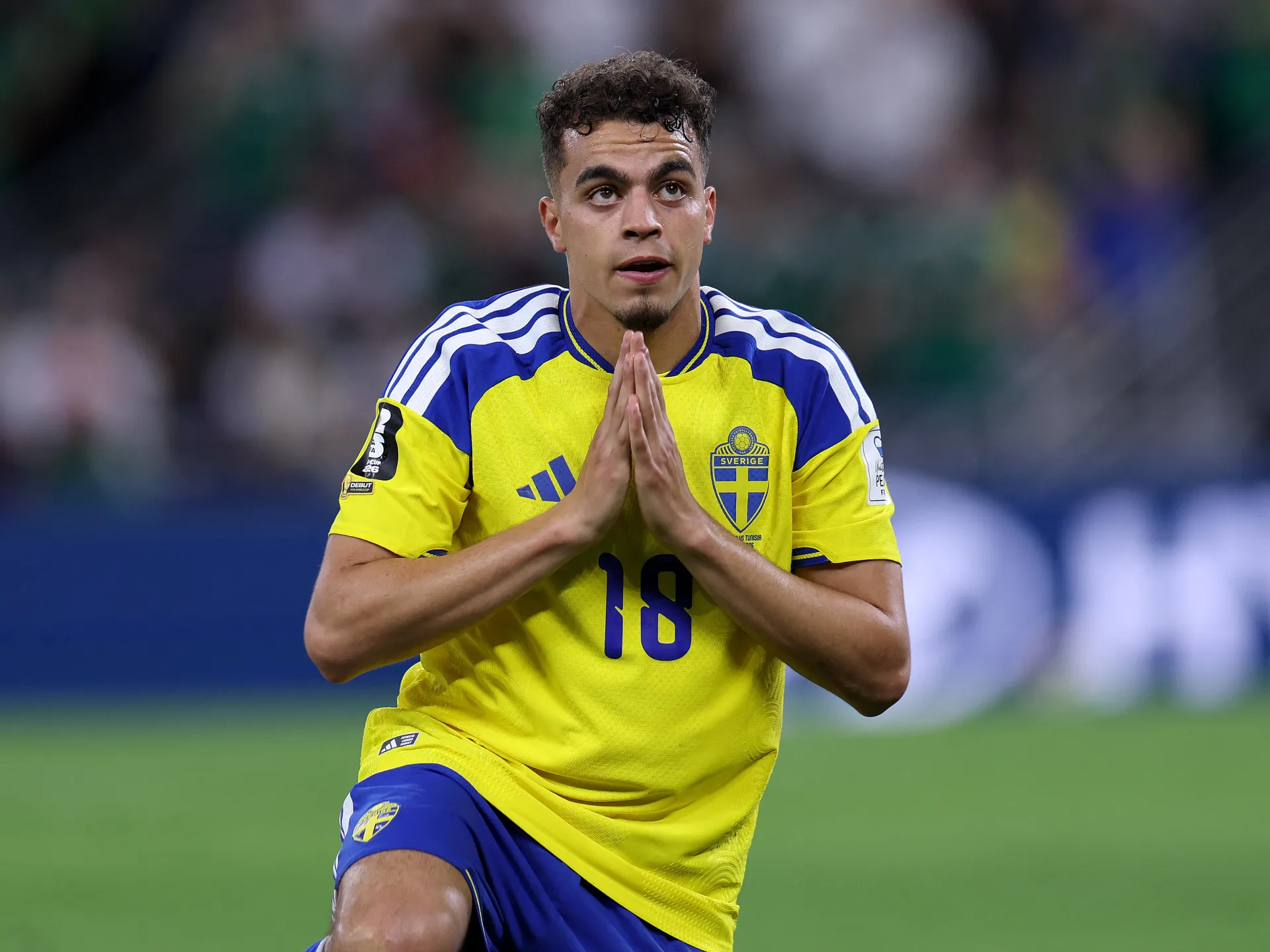
The 22-year-old scored two goals against Tunisia but had muted celebrations against the country of his father’s birth.

Published On 15 Jun 2026
For a 22-year-old making his World Cup debut for Sweden, Yasin Ayari could only have dreamed of a better start to his introduction to the biggest showcase of football.
With a full-throttled volley into the top corner of Tunisia’s net just seven minutes into the first half of their Group H match in Monterrey, Ayari had opened the scoring for the Scandinavian side against their North African opponents.
The fresh-faced midfielder, though, did not revel in the moment as a young World Cup debutant might and instead chose to hold both his hands up before falling onto the ground in sujoud (Muslim act of prostration).
The reason? The deep Tunisian connection that runs in his blood, and one that could have seen him play for the opposition as late as four years ago.

Ayari is of North African heritage, with a Tunisian father and a Moroccan mother, but was born in Sweden. At 18 years of age, the promising footballer decided to represent the country of his own birth, rather than his parents’, and his father backed the decision.
“I wanted him to play for Sweden,” Azzouz Ayari told Swedish newspaper Aftonbladet, adding: “He should feel like he is giving back to the country that took care of him.”
Azzouz, who migrated to the Scandinavian country, revealed that his son was offered a place on the Tunisian side, but neither father nor son considered it an option.

Ayari began playing football at age seven on the youth side of his hometown club Rasunda, in Solna, before moving to Scandinavian football giants AIK, where he made his senior team debut in 2020.
The attacking midfielder was signed by English Premier League club Brighton & Hove Albion in 2023, making his Sweden national team debut in the same year.
Explaining his decision to wear the yellow and blue of Sweden instead of the red and white of Tunisia, Ayari said it was “only natural” to continue representing the country he had played for as a child.
When the World Cup 2026 draws were announced in December, the irony of playing against the country of his father’s heritage was not lost on Ayari.
“It was crazy that we ended up with them in our group,” he said.
The young talent was the standout player in Sweden’s thumping win over Tunisia, and he bookended their dominant performance with another scorching individual goal in the 95th minute.
Ayari found the ball at the edge of the Tunisian goal and sent it flying into the far corner to bag his second World Cup goal in his debut game.
This time, though, he did celebrate and soak in the applause of the jubilant Swedish crowd.