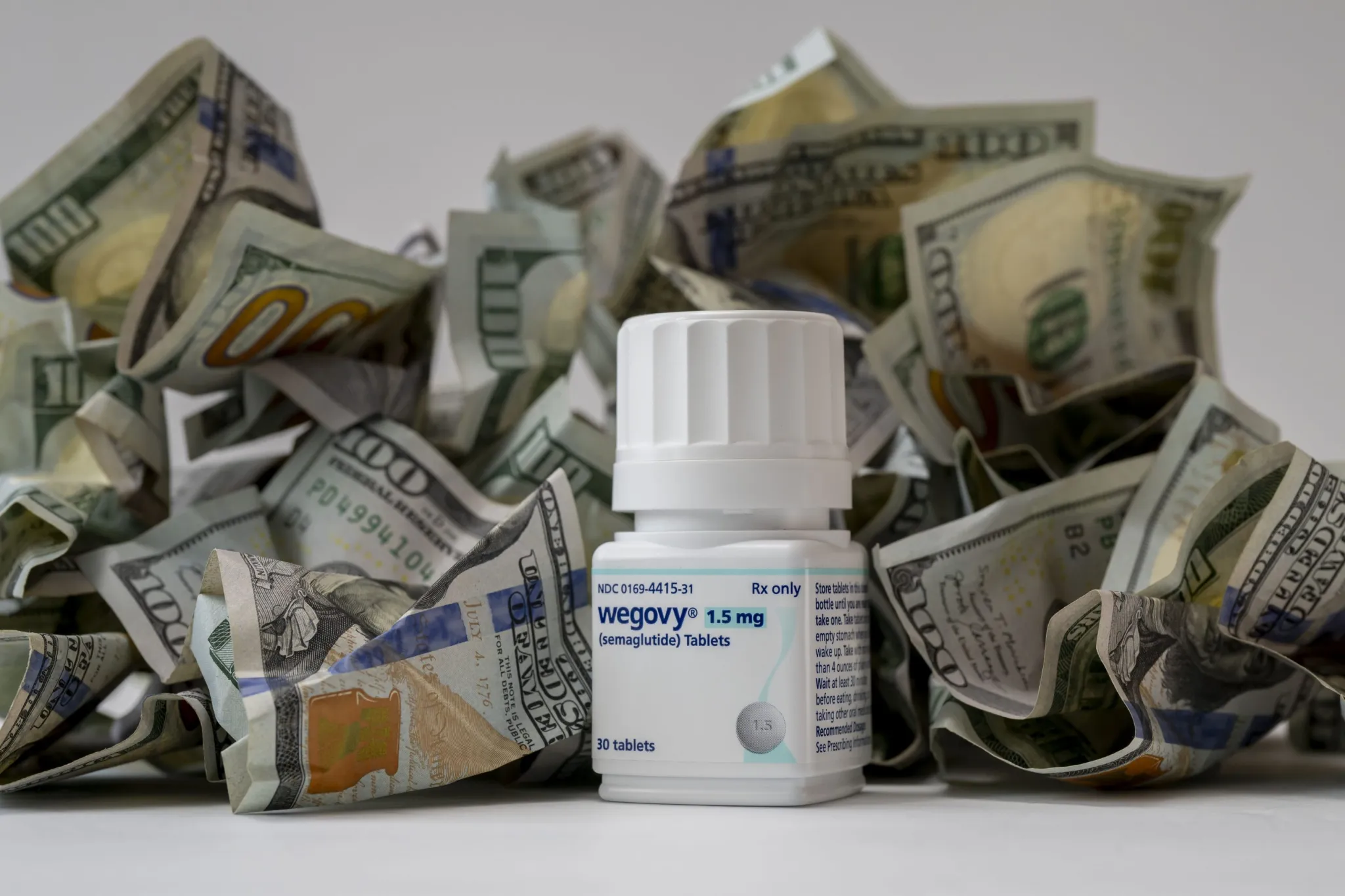
Over 40 million Americans have reported using GLP-1 drugs for weight loss, a behavior reshaping everything from the healthcare industry to pop culture and consumer behavior—and the drugs’ use could balloon into as much as a $240 billion market.
While these weight-loss drugs pumped billions into pharma giants Eli Lilly and Novo Nordisk as social media and celebrity endorsements drove more people to buy them, the companies may not be the only ones to financially benefit. According to a new study released by the National Bureau of Economic Research (NBER), taking GLP-1s for obesity might also save middle-aged Americans hundreds of thousands of dollars in lifetime medical bills.
“Obesity is a big comorbidity for a lot of different chronic conditions, so if you start GLP-1s, like that’s gonna kind of trickle down, and it’s gonna save money,” the study’s lead author, Felipe Montano-Campos, told Fortune.
NBER’s report estimated that people between the ages of 40 and 50 saved on average $192,735 in lifetime medical bills. Surprisingly, those savings climbed to $220,000 for adults within the same age range without college degrees. Largely, this is due to GLP-1s treating obesity without the usual tried-and-true means to lose weight, namely, a strict regimen of diet and exercise, explained Montano-Campos.
“Everyone gets a positive treatment effect, but the ones that are benefiting the most are these lower-educated individuals,” he said, explaining that because GLP-1s directly target appetite and metabolism, they make it easier for people with more time constraints, like those working multiple jobs or of a lower socioeconomic status, who may not have the time to stick to go to a gym or purchase healthier foods.
Researchers simulated the U.S. adult population 25 and up to estimate the lifetime health and economic effects of using GLP-1s for weight loss. They tested life-long pathways for two scenarios: one in which adults did not use GLP-1s, and the other with sustained GLP-1 consumption for adults who met the criteria for obesity—defined as having a BMI above 30.
Using a standard health economics method to classify health improvements and cost savings into dollars, the researchers found that people without college diplomas saved $219,000 to $220,000, while that amount fell for college-educated individuals to $163,000.
Financial barriers to access
Though the 40-50 age group has the highest observed rates of GLP-1 use, the savings compound if people start in their twenties and thirties. The study estimates beginning GLP-1 usage at ages 25 to 30 can save individuals up to $270,800 over the course of their lifetime.
Fatima Cody Stanford, an obesity medicine physician at Massachusetts General Hospital, said while these numbers look promising in abstract, achieving the full extent of health benefits from GLP-1s would require paying at least hundreds of dollars per month “indefinitely.”
“When you pull these medications back, meaning [you] don’t utilize them any longer, patients will have weight regain and re-emergence of the cardiometabolic diseases that they were meant to treat,” Stanford told Fortune.
The average American taking GLP-1s could pay anywhere from about $350 to $450 per month, namely for the GLP-1s approved by the FDA for weight management like Wegovy, according to Stanford. She said that price tag is “outside of reach” for most Americans, meaning those who “might glean the most benefit” from GLP-1s won’t be able to foot the bill. Her numbers align with the $349 to $399 range on TrumpRx for direct-to-consumer purchase, but Wegovy without insurance typically costs $1,350 per month.
Montano-Campos acknowledged the study doesn’t take into account discontinuation of GLP-1 use for financial reasons, since the simulation assumes lifetime access to the drug on a consistent basis.
The NBER study also didn’t account for the high likelihood of discontinuation due to side effects, another factor health plan providers weigh when choosing to cover GLP-1s for obesity. That’s according to Morgan Lee, lead researcher of Pharmaceutical Strategies Group (PSG)’s 2026 survey, which surveyed 237 benefits leaders representing employers, health plans and unions.
“Even if you choose to cover the drug—let’s say you can get the price right and cover it—you also want to make sure that people are staying on the drug long enough and having that continuation, so that they can experience long-term health benefits,” Lee said. Health care providers “want to see long-term return on investment in terms of better health for their members, but they also want to be sure that these are going to be people who are able to then stay on the drug to get to those outcomes to begin with.”
About 75% of health plan providers don’t cover GLP-1s for obesity-related weight loss, according to the PSG survey. Nearly half “indicated they would not cover GLP-1s for obesity at any price,” per the report.
Ultimately, Montano-Campos hopes his study will help lead to increased GLP-1 access for healthcare purposes.
“We hope that it anchors the conversation about access because our findings essentially show that this type of medical innovation compresses health inequality,” he said.