The first storm warning for the 2026 Atlantic hurricane season has been issued.
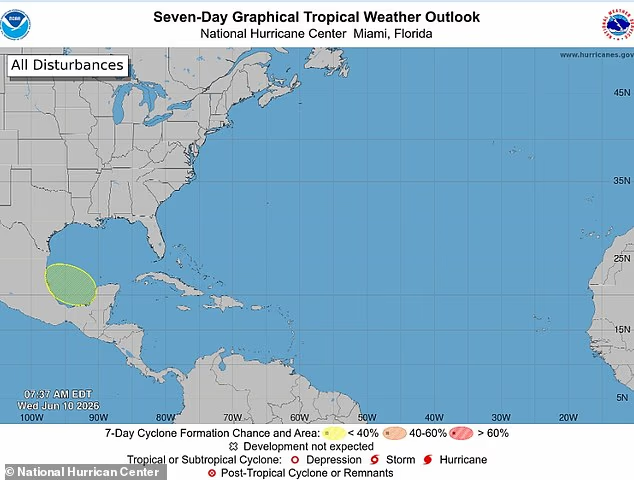
The National Hurricane Center (NHC) posted its first tropical outlook on Wednesday, identifying a disturbance brewing in the Gulf of America with a 10 percent chance of developing over the next seven days.
Forecasters said a broad area of low pressure could begin organizing over the Bay of Campeche later this week.
While the system is not expected to strengthen significantly, meteorologists are monitoring it as the first potential tropical threat of the Atlantic season before it moves inland over eastern Mexico this weekend.
If the disturbance reaches tropical-storm strength, it would be named Arthur, the first storm on this year’s Atlantic list.
Forecasters said the system could still bring widespread thunderstorms, gusty winds and rough seas to parts of the western and central Gulf through the weekend.
However, meteorologists said the greater concern is the potential for heavy rain and flash flooding across northern Mexico and parts of South Texas, regardless of whether the disturbance becomes a tropical depression or storm.
They stressed that the system poses no threat to Florida.
The National Hurricane Center (NHC) posted its first tropical outlook on Wednesday, identifying a disturbance brewing in the Gulf of America with a 10 percent chance of developing over the next seven days
The NHC’s report stated that moderate to fresh winds are continuing across the Gulf of America as forecasters keep a close eye on unsettled weather developing in the region.
Thunderstorms are already flaring across the southwestern Gulf near the coasts of Tabasco and Veracruz in Mexico, while additional showers and storms have formed farther north.
Weather experts expect high pressure to remain the dominant feature across the Gulf through the rest of the week, bringing generally manageable conditions for most areas.
However, attention is turning to the Bay of Campeche, where a trough or weak area of low pressure could emerge from the Yucatán Peninsula between Thursday and Friday night.
Meteorologist Ryan Cedergren for 16WAPT News in Mississippi said on X: ‘The first area to watch [in] 2026 was just posted by the National Hurricane Center.
‘As Tropical Storm Christina crosses Central America, the low will enter the Bay of Campeche and has a low chance of development in the Gulf.
‘Regardless of development, it will bring increased moisture into the Gulf Coast, increasing rain chances into the late weekend and early next week.’
Hurricane season officially began on June 1 and runs through November 30, with activity typically ramping up in mid-August and peaking through October.

Meteorologists said the greater concern is the potential for heavy rain and flash flooding across northern Mexico and parts of South Texas, regardless of whether the disturbance becomes a tropical depression or storm
Despite the early-season disturbance in the Gulf of America, forecasters expect 2026 to be a quieter-than-average year.
In its outlook released in late May, the National Oceanic and Atmospheric Administration (NOAA) predicted between eight and 14 named storms, with three to six strengthening into hurricanes.
Of those, one to three are forecast to become major hurricanes, reaching at least Category 3 strength with sustained winds of 111mph or higher.
AccuWeather Lead Hurricane Expert Alex DaSilva said: ‘It’s very important that everybody from South Texas all the way to Maine prepares equally for every hurricane season, regardless of the forecast.’
Meteorologists are forecasting a near- to below-historical-average season in 2026, but warned the risk of US impacts remains elevated.
The AccuWeather team urged Americans, particularly in Virginia, the Carolinas, Florida, Alabama, Mississippi and Louisiana, to start preparing for potentially devastating weather, as even a small number of hurricanes could be deadly and cause billions of dollars in damage.
‘There is no reason to let your guard down this year. It only takes one storm to cause major damage, disruption and heartache,’ DaSilva warned. ‘Review your insurance coverage, safety plans, and local evacuation routes now. Make sure your emergency supplies are stocked up.’