Multiple counties in Texas have been quarantined as a potentially deadly infestation that can infect people has crossed the US border and is spreading through the South.
The Texas Animal Health Commission has issued an animal quarantine across parts of La Salle, Uvalde, Webb and Zavala Counties due to the spread of New World Screwworms over the last week.
Four cases among local livestock have been confirmed in Texas, and another case in a dog was announced in New Mexico on Monday.
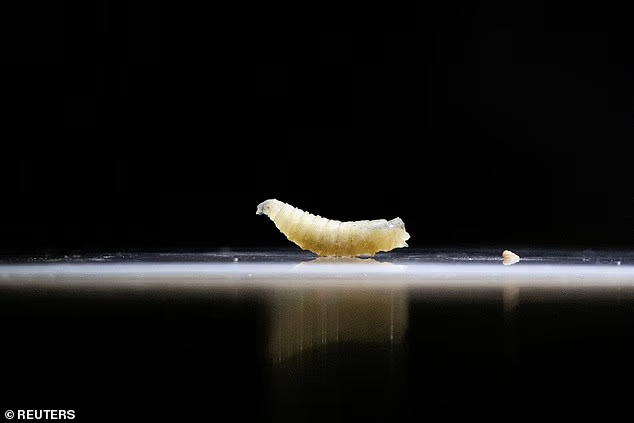
The New World Screwworm (NWS) are flies that lay hundreds of their larvae in the wounds of animals and people. The parasites hatch within hours and start consuming the victim’s flesh.
These infestations can lead to deep, painful wounds that become infected and often result in death if left untreated.
The four Texas counties are home to over 300,000 people and are less than 100 miles from San Antonio, which has nearly three million people living in its greater metropolitan area.
The quarantine specifically restricts the movement of all warm-blooded animals out of the designated zones. This includes cattle, horses, goats, dogs and other wildlife.
The quarantine does not apply to Texas residents in the zones, although people can carry the infestations and the CDC has reported that more than 2,100 people have been infected with screwworms in Mexico and Central America this year.
This is a breaking story. More details to follow.
The New World Screwworm has been confirmed in New Mexico and Texas by the US Department of Agriculture

Texas officials have issued a full animal quarantine in four counties to prevent the spread of the deadly parasites throughout the South (Stock Image)
While the quarantine is in place, animals cannot leave the zone without permission from Texas Animal Health Commission. Owners must call TAHC for an inspection before transporting their livestock or pets elsewhere.
If approved, officials will issue a movement certificate after checking the animals for any signs of screwworms.
The goal is to protect livestock, pets and people from a widespread outbreak that may devastate the US meat supply in the South and potentially jump to humans as well.
So far, no cases of screwworms have been found in people in the US. There have been more than 185,000 cases of the parasite infestations discovered in Mexico and Central America as of June 8.
The US Department of Agriculture said in a statement: ‘This situation is evolving, and we expect new information to emerge as our investigation continues.’
‘We are working closely with our partners in New Mexico, Texas, and across the region to ensure we identify, contain, and respond to any potential cases as swiftly as possible.’
To protect yourself in areas where New World screwworm flies are present, the CDC recommended keeping any open wounds clean and covered. You should also wear loose-fitting long sleeve shirts, pants, hats and socks to minimize exposed skin.
Early symptoms of a screwworm infection include unexplained painful wounds or sores that do not heal, a foul-smelling odor or bleeding from the site or seeing and feeling maggots or movement in a wound or around the nose, mouth, eyes or ears.

The four counties affected by the Texas quarantine are less than 100 miles from the major populated area on San Antonio, home to nearly three million people in its metro area

Livestock in the South (Pictured) is at high risk of being infected by the parasites, which have crossed over from Mexico and can kill untreated victims
One year ago, officials in Mexico discovered several NWS cases in the country’s southern states of Chiapas, Oaxaca, and Veracruz – all of which were part of the migrant caravan route used by millions to cross the US border illegally over the last decade.
Researchers at the time feared there may be no way of stopping the flies at the US-Mexico border, which they said could start infesting the South within two decades due to rising temperatures.
Research has indicated that states along the Gulf, including Texas, Florida and Louisiana, are all at risk of seeing the parasites potentially killing cattle and people by 2055.
Before last week’s first cases, NWS infections were last detected in Texas 60 years ago.
Screwworms first became a major problem for the US in the early 1900s, costing $200 million, roughly $1.8 billion today, in infected livestock, according to the University of Texas at Austin.
However, the species was wiped out in the US by 1982 using a clever method of sterilizing male flies using radioactive gamma rays so they could not produce any offspring with the parasite-laying females.

Female New World Screwworms can lay over 300 eggs in the open wounds of animals and humans, which hatch within 24 hours and begin eating the victim’s tissue

Pictured: The border of Zavala County in Texas. Officials have imposed a quarantine preventing animals from leaving Zavala due to the risk of spreading New World Screwworms
TAHC noted in their quarantine declaration that cases of NWS have skyrocketed in Central America since 2023, spreading across Belize, Costa Rica, El Salvador, Guatemala, Honduras and Nicaragua.
‘In November 2024, NWS was detected in a cow at an inspection checkpoint in Chiapas, Mexico. Progressive Northern spread of NWS has been confirmed in Mexico since the original detection,’ Texas officials added.