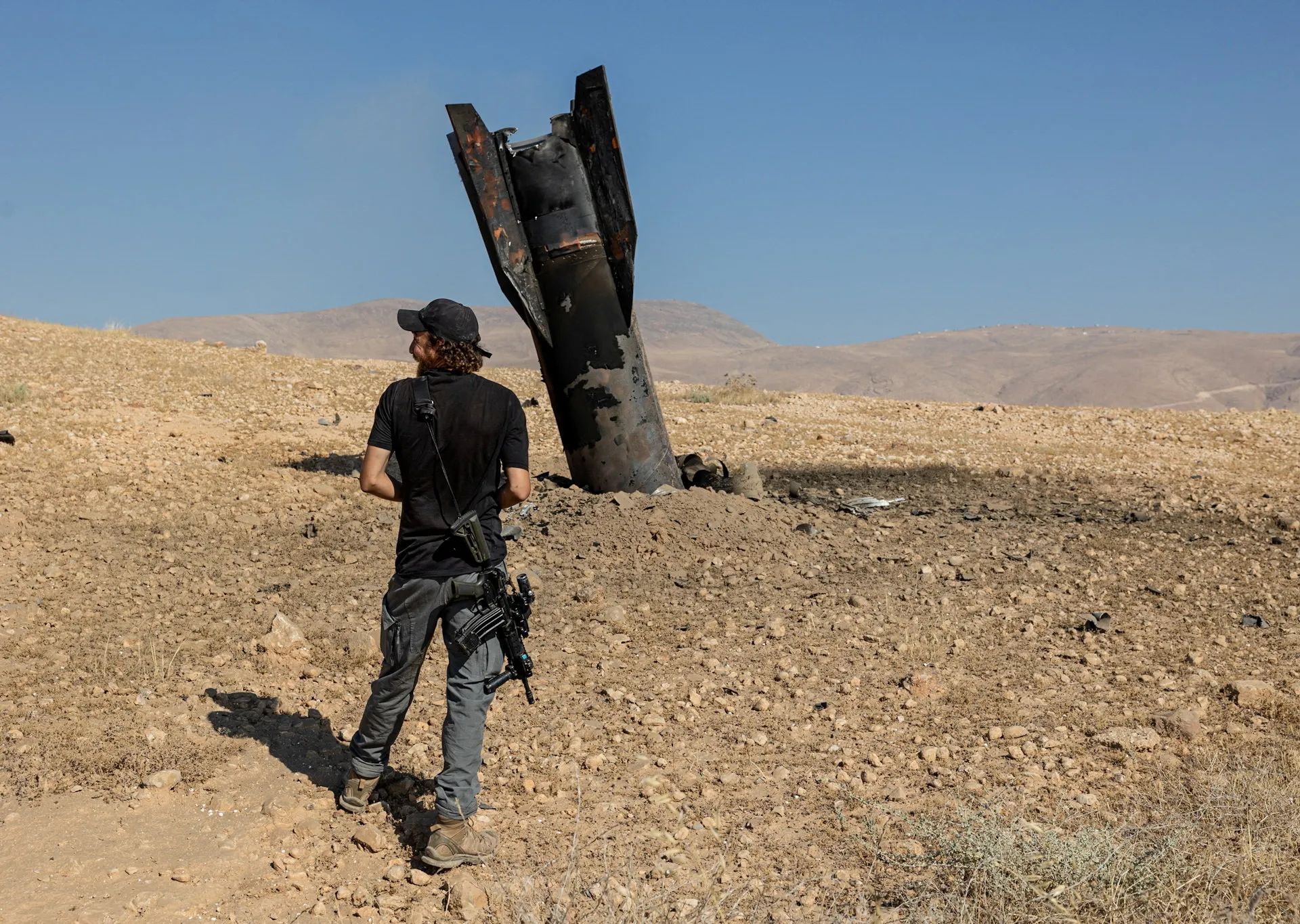
In effort to contain escalation, US President Donald Trump spoke with Israel’s Benjamin Netanyahu, US media reported.
Published On 8 Jun 2026
Israel has traded attacks with Iran and Yemen’s Houthi rebels launched a missile at Israel, threatening a faltering ceasefire and raising fears of a return to full-blown war in the region.
Iran’s Islamic Revolutionary Guard Corps (IRGC) said early on Monday that it had launched attacks on Israel’s Nevatim and Tel Nof airbases in response to Israeli air attacks overnight on radar sites across Iran. Shortly afterwards, Israel’s army said it had detected a new barrage of missiles launched from Iran.
Recommended Stories
list of 3 itemsend of list
The Israeli military earlier said its forces struck several targets at the petrochemical complex in Mahshahr in southwestern Iran, after hitting military targets elsewhere in the country in response to an Iranian barrage against northern Israel, which caused no injuries. Iranian media reported that several explosions were heard in the capital Tehran, as well as in Tabriz and Isfahan.
In Yemen, the Iran-aligned Houthis said they had fired a salvo against Israel and announced they would ban Israeli maritime navigation in the Red Sea.
The conflict escalated on Sunday as Iranian forces launched a wave of missiles at northern Israel, the first such attack since a truce with the United States and Israel was agreed in April, in retaliation for Israeli attacks on Beirut’s southern suburbs. Israel said it was targeting positions of the Iran-aligned group Hezbollah. The attacks were the first on the Lebanese capital since Washington announced a ceasefire extension in Lebanon last week.
Iran’s Central Command spokesperson, Ebrahim Zolfaghari, accused the US of giving Israel permission to attack Beirut.
Tehran has long insisted that a truce with Washington includes a halt to hostilities in Lebanon. Since the start of the truce between Iran and the US, Israel has continued attacking Lebanon and has, in recent weeks, expanded the area it occupies in the country’s south, saying it is acting in pursuit of Hezbollah fighters who continue to fire rockets and drones at northern Israel.
Israeli Prime Minister Benjamin Netanyahu has not yet commented publicly on the attacks, but multiple Israeli media reports say he will convene a security cabinet meeting at 11am local time (08:00 GMT).
The exchange of fire comes as Washington and Tehran are discussing an extension of the ceasefire agreement aimed at reopening the Strait of Hormuz and easing energy prices, which have surged since Iran blocked the waterway following joint US-Israel attacks on its territory on February 28. After the two sides exchanged fire on Monday, Brent crude, the international benchmark, jumped above $97 a barrel.
Trump has not commented publicly on the latest attacks. However, US media reported that he spoke with Netanyahu on Sunday night and urged him to avoid further military action. “Tehran must burn,” far-right Israeli National Security Minister Itamar Ben-Gvir wrote on X.
In an interview with the Financial Times, Trump said the latest flare-up would not affect negotiations with Iran. “I call the shots. I call all the shots. He doesn’t call the shots,” Trump said, referring to Netanyahu. In a separate interview with Fox News, he said he had told Netanyahu not to retaliate against Iran.